Course Introduction
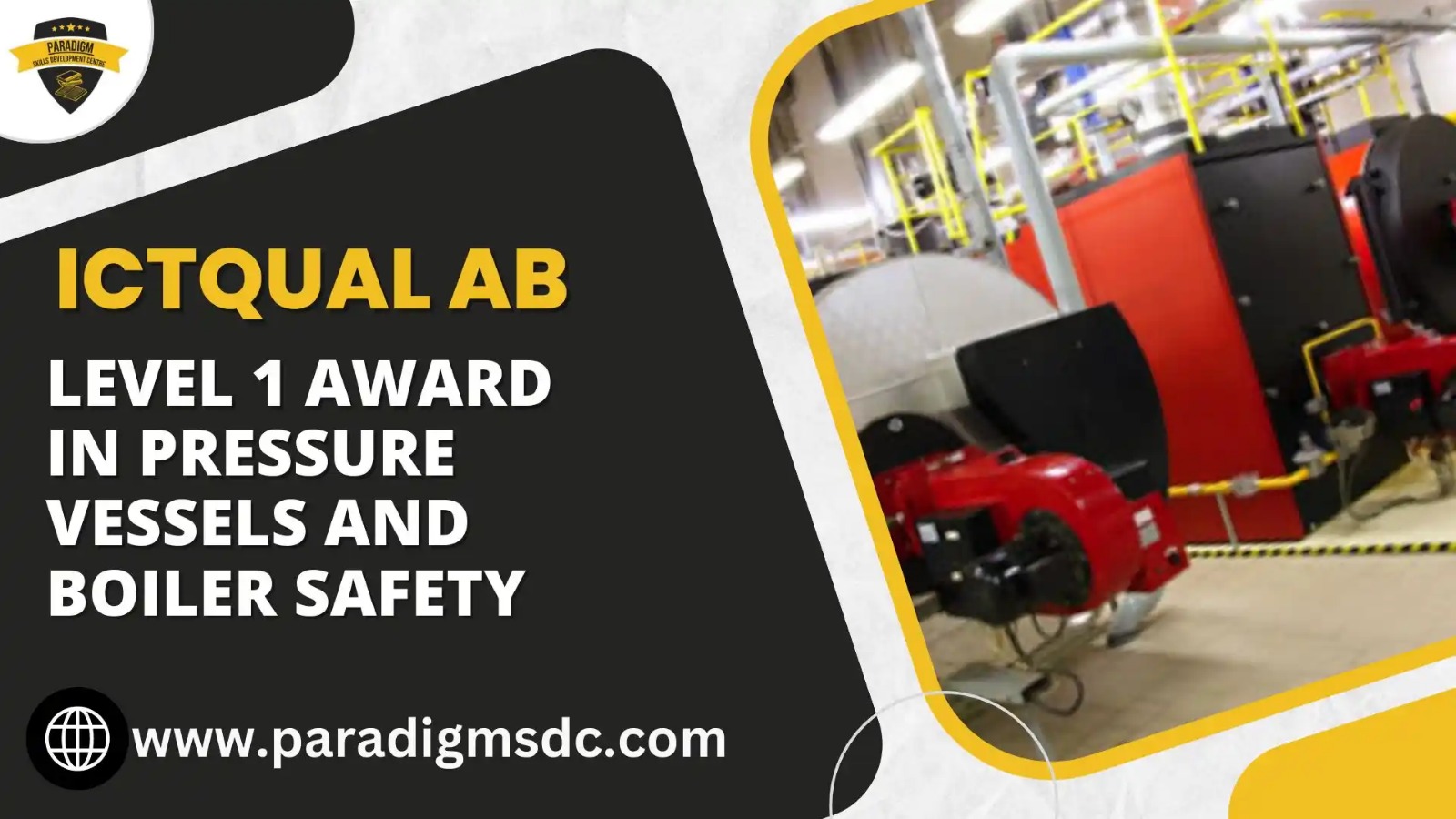
In industrial settings, pressure vessels and boilers are critical components that require stringent safety measures to prevent accidents and ensure operational efficiency. The ICTQual Level 1 Award in Pressure Vessels and Boiler Safety course is designed to provide foundational knowledge and practical skills necessary to maintain and operate these systems safely. This entry-level course is ideal for individuals seeking to start a career in industrial safety and operations.
Course Overview
The ICTQual Level 1 Award in Pressure Vessels and Boiler Safety covers essential principles and practices for the safe operation, maintenance, and inspection of pressure vessels and boilers. Participants will gain an understanding of safety regulations, risk assessment procedures, and emergency response strategies. The course combines theoretical knowledge with practical training to ensure a comprehensive learning experience.
Course Study Units
- Introduction to Pressure Vessels and Boilers
- Regulatory Framework and Standards
- Risk Assessment and Hazard Identification
- Safety Procedures and Practices
- Emergency Response and Incident Management
- Inspection and Testing
- Documentation and Record Keeping
- Safety Culture and Continuous Improvement
Learning Outcomes
Upon completion of the ICTQual Level 1 Award in Pressure Vessels and Boiler Safety, participants will:
- Introduction to Pressure Vessels and Boilers:
- Understand the functions and components of pressure vessels and boilers.
- Identify the importance of pressure vessel and boiler safety in industrial settings.
- Describe the basic principles underlying the operation and maintenance of pressure vessels and boilers.
- Regulatory Framework and Standards:
- Explain regulatory requirements governing the design, construction, and operation of pressure vessels and boilers.
- Identify relevant industry standards, such as the ASME Boiler and Pressure Vessel Code, and their implications for safety compliance.
- Understand the importance of adhering to legal and regulatory standards in ensuring pressure vessel and boiler safety.
- Risk Assessment and Hazard Identification:
- Conduct risk assessments to identify potential hazards and risks associated with pressure vessels and boilers.
- Implement risk mitigation strategies to minimize the likelihood and impact of safety incidents.
- Apply hazard identification techniques to proactively address safety risks in pressure vessel and boiler operations.
- Safety Procedures and Practices:
- Implement installation procedures for pressure vessels and boilers in compliance with safety standards and regulations.
- Demonstrate knowledge of operational safety protocols and best practices to ensure safe handling and operation of pressure vessels and boilers.
- Execute maintenance procedures and preventive maintenance schedules to sustain the integrity and reliability of pressure vessels and boilers.
- Emergency Response and Incident Management:
- Develop emergency response protocols for handling pressure vessel and boiler incidents, including shutdown procedures and evacuation measures.
- Apply incident management procedures to effectively respond to and mitigate the consequences of pressure vessel and boiler emergencies.
- Implement incident reporting and investigation protocols to learn from safety incidents and prevent recurrence.
- Inspection and Testing:
- Conduct inspections of pressure vessels and boilers using appropriate techniques and methodologies.
- Perform testing procedures to assess the condition and performance of pressure vessels and boilers.
- Interpret inspection and testing results to identify potential safety issues and take corrective actions as needed.
- Documentation and Record Keeping:
- Maintain accurate documentation of pressure vessel and boiler installations, operations, maintenance activities, and safety incidents.
- Demonstrate proficiency in record-keeping practices and documentation management to ensure compliance and facilitate safety monitoring.
- Understand the importance of documentation in providing a comprehensive audit trail for pressure vessel and boiler safety.
- Safety Culture and Continuous Improvement:
- Foster a safety culture within organizations by promoting awareness, accountability, and proactive safety initiatives.
- Encourage employee involvement in safety programs and initiatives to enhance safety performance and communication.
- Implement continuous improvement strategies to identify opportunities for enhancing pressure vessel and boiler safety and performance.
Course Benefits
- Foundational Knowledge: Gain essential knowledge of pressure vessels and boiler safety.
- Practical Skills: Develop hands-on skills for inspection, maintenance, and risk management.
- Safety Compliance: Ensure compliance with industry safety standards and regulations.
- Career Entry: Establish a strong foundation for a career in industrial safety and operations.
- Networking Opportunities: Connect with industry professionals and experts in pressure vessel and boiler safety.
Who is this Course For?
This course is ideal for:
- Entry-level professionals seeking to start a career in industrial safety and operations.
- Maintenance personnel responsible for the upkeep of pressure vessels and boilers.
- Safety officers and compliance managers in industrial settings.
- Individuals interested in gaining foundational knowledge of pressure vessel and boiler safety.
Future Progression
Upon completing the ICTQual Level 1 Award in Pressure Vessels and Boiler Safety, participants can pursue further qualifications and career advancements, such as:
- ICTQual Level 2 Award in Pressure Vessels and Boiler Safety: Advanced knowledge and skills for more complex safety challenges.
- Specialized Certifications: Focused training in areas such as pressure vessel inspection or boiler operation.
- Higher Education: Pursue degrees or diplomas in industrial safety, engineering, or related fields.
- Professional Development: Opportunities to advance into senior safety roles or specialized technical positions.
Investing in the ICTQual Level 1 Award in Pressure Vessels and Boiler Safety is a crucial step towards ensuring safety and operational efficiency in industrial environments. By acquiring foundational knowledge and practical skills, participants will be well-equipped to contribute to safer workplaces and more reliable operations.