Course Introduction
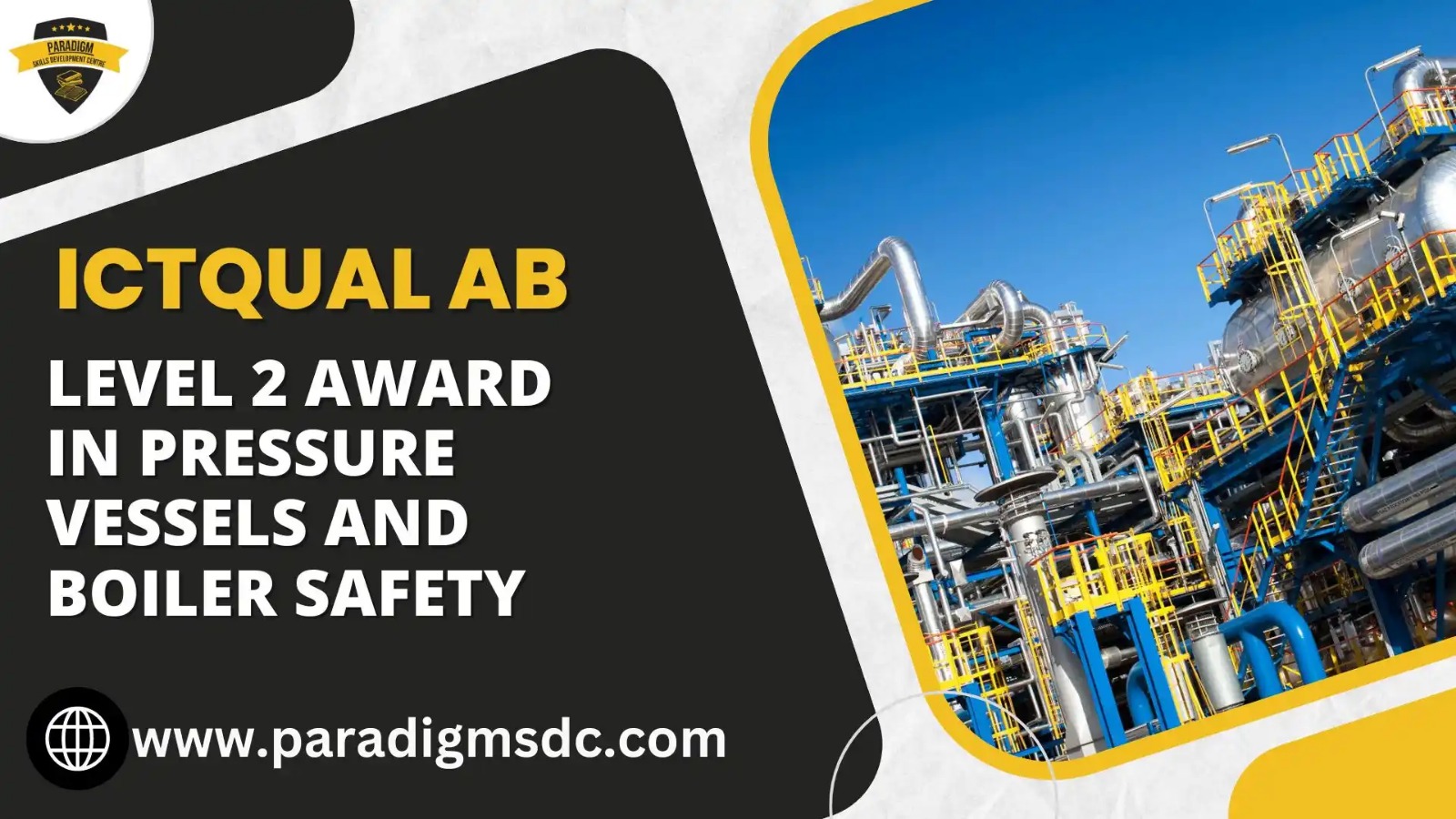
Building on the foundational knowledge acquired in the Level 1 Award, the ICTQual Level 2 Award in Pressure Vessels and Boiler Safety is designed for professionals seeking to deepen their expertise in the safe operation, maintenance, and inspection of pressure vessels and boilers. This course delves into advanced concepts and practices, preparing participants to handle more complex safety challenges in industrial environments.
Course Overview
The ICTQual Level 2 Award in Pressure Vessels and Boiler Safety provides an in-depth exploration of advanced safety measures, regulatory compliance, risk management, and emergency response strategies. Participants will engage in comprehensive theoretical and practical training, equipping them with the skills necessary to ensure the safe and efficient operation of pressure vessels and boilers.
Course Study Units
- Advanced Technical Knowledge
- Regulatory Compliance and Standards
- Risk Management and Safety Strategies
- Emergency Response and Incident Investigation
- Advanced Inspection and Testing Methods
- Advanced Documentation and Compliance Management
- Safety Culture and Leadership
Learning Outcomes
Upon completion of the ICTQual Level 2 Award in Pressure Vessels and Boiler Safety, participants will:
- Advanced Technical Knowledge:
- Demonstrate an understanding of advanced principles governing pressure vessel and boiler design.
- Evaluate materials selection criteria and their impact on pressure vessel and boiler performance.
- Apply advanced techniques for thermal stress analysis and fatigue assessment.
- Implement advanced welding techniques and procedures for pressure vessel and boiler fabrication.
- Regulatory Compliance and Standards:
- Interpret and apply complex regulatory requirements governing pressure vessel and boiler safety.
- Analyze industry standards such as the ASME Boiler and Pressure Vessel Code and European Pressure Equipment Directive.
- Ensure compliance with international codes and directives relevant to pressure vessel and boiler operations.
- Evaluate the regulatory implications for the design, construction, and operation of pressure vessels and boilers.
- Risk Management and Safety Strategies:
- Utilize advanced risk assessment methodologies to identify and mitigate safety hazards associated with pressure vessels and boilers.
- Apply reliability engineering principles to enhance the safety and reliability of pressure vessel and boiler systems.
- Implement safety management systems to proactively manage risks and improve safety performance.
- Develop strategies for hazardous area classification and the deployment of safety instrumentation.
- Emergency Response and Incident Investigation:
- Lead advanced emergency response protocols for pressure vessel and boiler incidents.
- Apply incident command system principles to effectively manage emergency situations.
- Conduct root cause analysis using advanced techniques to determine the underlying causes of incidents.
- Develop comprehensive corrective action plans to prevent recurrence of pressure vessel and boiler incidents.
- Advanced Inspection and Testing Methods:
- Utilize advanced non-destructive testing techniques such as ultrasonic testing and radiography for pressure vessel and boiler inspections.
- Implement advanced inspection procedures and methodologies to assess the condition and integrity of pressure vessels and boilers.
- Apply condition monitoring strategies to identify potential defects or failures in pressure vessel and boiler systems.
- Perform fitness-for-service assessments to evaluate the continued fitness of pressure vessels and boilers for service.
- Advanced Documentation and Compliance Management:
- Develop and maintain advanced documentation systems to ensure compliance with regulatory requirements.
- Manage compliance audits and inspections effectively, ensuring adherence to regulatory standards.
- Compile regulatory reports accurately and in a timely manner, demonstrating compliance with regulatory requirements.
- Implement best practices for record-keeping and documentation management to support pressure vessel and boiler safety efforts.
- Safety Culture and Leadership:
- Foster a positive safety culture within organizations, promoting awareness, accountability, and continuous improvement.
- Demonstrate leadership skills in promoting safety excellence and encouraging employee engagement in safety initiatives.
- Empower employees to take ownership of safety responsibilities and actively contribute to safety improvement efforts.
- Implement continuous improvement initiatives to enhance safety culture and leadership within organizations.
Course Benefits
- Advanced Expertise: Gain in-depth knowledge and skills in pressure vessel and boiler safety.
- Career Advancement: Enhance career prospects and qualify for more advanced roles in industrial safety.
- Regulatory Compliance: Ensure adherence to stringent safety standards and regulations.
- Practical Application: Apply advanced theoretical knowledge to real-world safety challenges.
- Professional Networking: Connect with industry experts and professionals in advanced safety roles.
Who is this Course For?
This course is ideal for:
- Professionals who have completed the Level 1 Award and seek advanced training.
- Maintenance and safety personnel responsible for complex pressure vessel and boiler systems.
- Safety officers and compliance managers in industrial settings looking to enhance their expertise.
- Engineers and technical staff aiming to specialize in pressure vessel and boiler safety.
Future Progression
Upon completing the ICTQual Level 2 Award in Pressure Vessels and Boiler Safety, participants can pursue further qualifications and career advancements, such as:
- ICTQual Level 3 Certification in Pressure Vessels and Boiler Safety: Advanced technical and managerial skills for leading safety initiatives.
- Specialized Certifications: Focused training in areas such as advanced inspection techniques or safety engineering.
- Higher Education: Degrees or diplomas in industrial safety, mechanical engineering, or related fields.
- Professional Development: Opportunities to advance into senior safety management roles or specialized technical positions.
Investing in the ICTQual Level 2 Award in Pressure Vessels and Boiler Safety is a significant step towards mastering safety and operational excellence in industrial environments. This course equips participants with advanced skills and knowledge, enabling them to tackle complex safety challenges and contribute to the efficiency and reliability of pressure vessel and boiler operations.