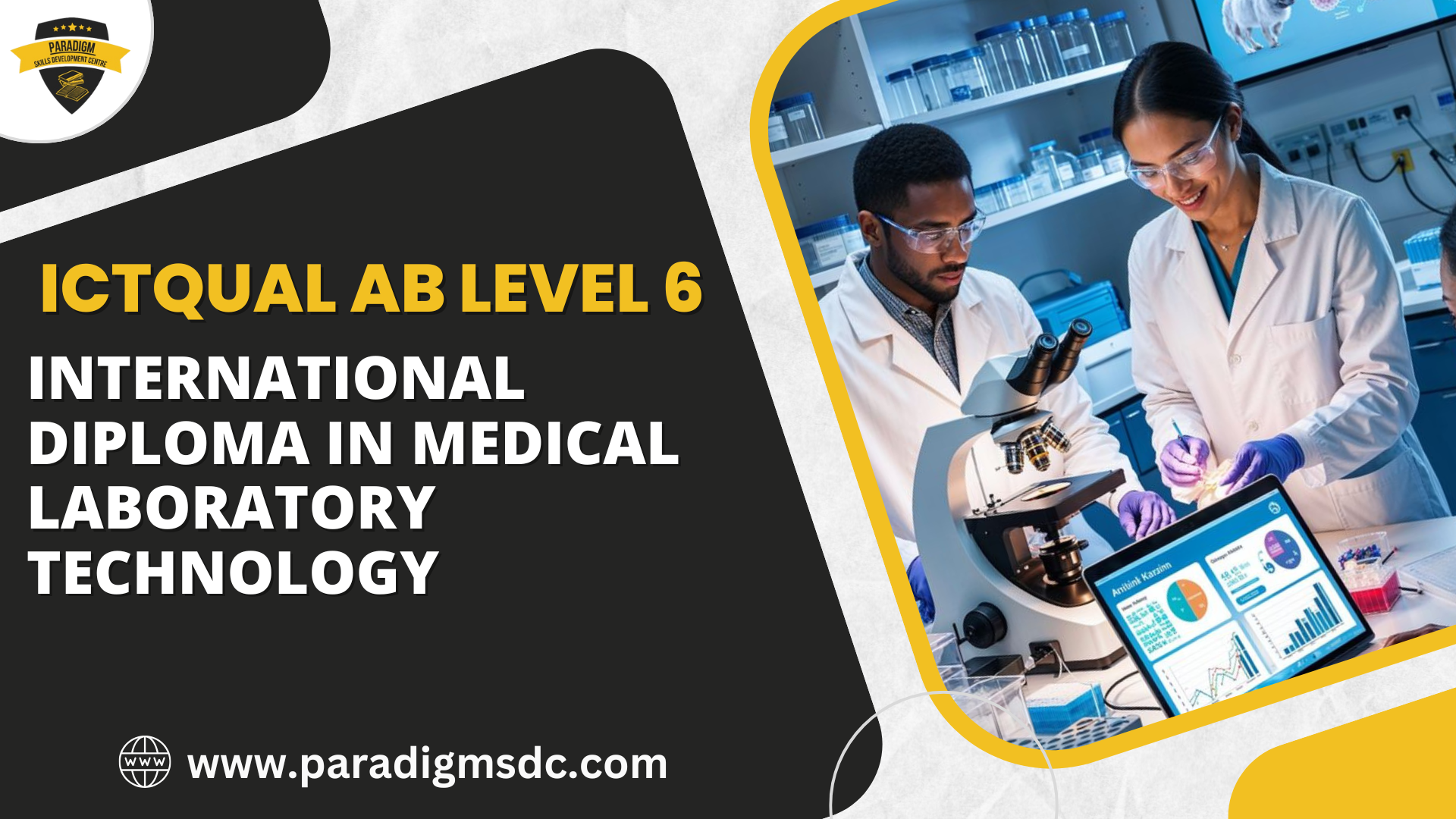
The ICTQual AB Level 6 International Diploma in Medical Laboratory Technology is a comprehensive three-year, 360-credit programme designed to develop advanced skills and knowledge in clinical and diagnostic sciences. This internationally recognised qualification prepares learners to play a vital role in modern healthcare by performing accurate laboratory testing and analysis, which form the foundation for effective diagnosis and treatment.
Learners gain expertise in clinical biochemistry, microbiology, haematology, immunology, molecular diagnostics, histopathology, and transfusion science, along with professional competencies in laboratory management, safety, and research. The programme blends theory, laboratory practice, and real-world application, ensuring graduates are equipped to contribute to hospitals, public health laboratories, research institutions, and pharmaceutical industries.
Entry Requirements
- Age Requirement: Minimum 18 years at the time of registration.
- Educational Background: High school diploma or equivalent. Strong foundation in biology, chemistry, or life sciences is recommended.
- Professional Experience: Relevant experience in healthcare, clinical laboratories, or pharmaceutical services is required. Minimum of 1–2 years preferred.
- English Proficiency: IELTS 5.5 or equivalent, or prior study/work in an English-speaking environment.
- Additional Requirement: Access to a computer with reliable internet connectivity. Interest in medical sciences and laboratory diagnostics is encouraged.
Programme Structure
The qualification consists of 36 mandatory study units, spread over three years.
Year 1 – Foundation in Medical Laboratory Technology
- Fundamentals of Medical Laboratory Science
- Human Anatomy and Physiology
- General Biochemistry
- Principles of Microbiology
- Immunology and Serology
- Introduction to Pathology
- Basic Haematology
- Laboratory Safety and Quality Assurance
- Computer Applications in Laboratory Practice
- Communication Skills for Healthcare Professionals
- Medical Ethics and Professional Conduct
- Research Methods in Health Sciences
Year 2 – Intermediate Laboratory Applications
- Clinical Biochemistry Techniques
- Advanced Microbiology
- Diagnostic Parasitology
- Molecular Biology Basics
- Blood Banking and Transfusion Science
- Clinical Haematology
- Histopathology Techniques
- Cytology and Cytogenetics
- Instrumentation and Analytical Methods
- Epidemiology and Public Health
- Environmental and Food Microbiology
- Clinical Laboratory Management
Year 3 – Advanced Laboratory Specialisation
- Advanced Molecular Diagnostics
- Clinical Immunology
- Advanced Histopathology
- Clinical Virology
- Toxicology and Forensic Science
- Advanced Parasitology
- Automation in Medical Laboratories
- Advanced Transfusion Medicine
- Laboratory Data Analysis and Interpretation
- Emerging Diseases and Diagnostic Innovations
- Research Project / Dissertation
- Professional Practice and Internship
Professional Career Progression
Graduates of this diploma are well-prepared for specialised roles such as:
- Clinical Laboratory Specialist – Conduct and supervise diagnostic testing.
- Medical Laboratory Manager – Manage laboratory operations, quality assurance, and staff.
- Diagnostic Scientist – Perform advanced laboratory analyses across disciplines.
- Blood Bank and Transfusion Officer – Manage transfusion services and safety protocols.
- Forensic and Toxicology Analyst – Support investigations through advanced laboratory testing.
- Public Health Laboratory Technician – Contribute to disease surveillance and outbreak investigations.
Specialised Certifications & CPD
Learners can progress further by pursuing:
- Certification in Molecular Diagnostics or Clinical Immunology.
- Diplomas in Advanced Haematology or Histopathology.
- Professional training in Laboratory Automation.
- CPD in Emerging Diagnostic Innovations.
Research and Development Opportunities
Graduates are also prepared for:
- Clinical trials and laboratory-based research projects.
- Pharmaceutical and biotechnological development.
- Laboratory process improvement and quality assurance.
Global Opportunities
This internationally recognised qualification enables graduates to:
- Work in hospitals and clinical laboratories worldwide.
- Join global research institutions and public health organisations.
- Contribute to healthcare and diagnostic initiatives in both developed and developing countries.
- Provide expertise in laboratory consultancy and advisory services.