Ensuring safety and managing risks in industrial environments is a critical responsibility across manufacturing, construction, energy, and other high-risk sectors worldwide.
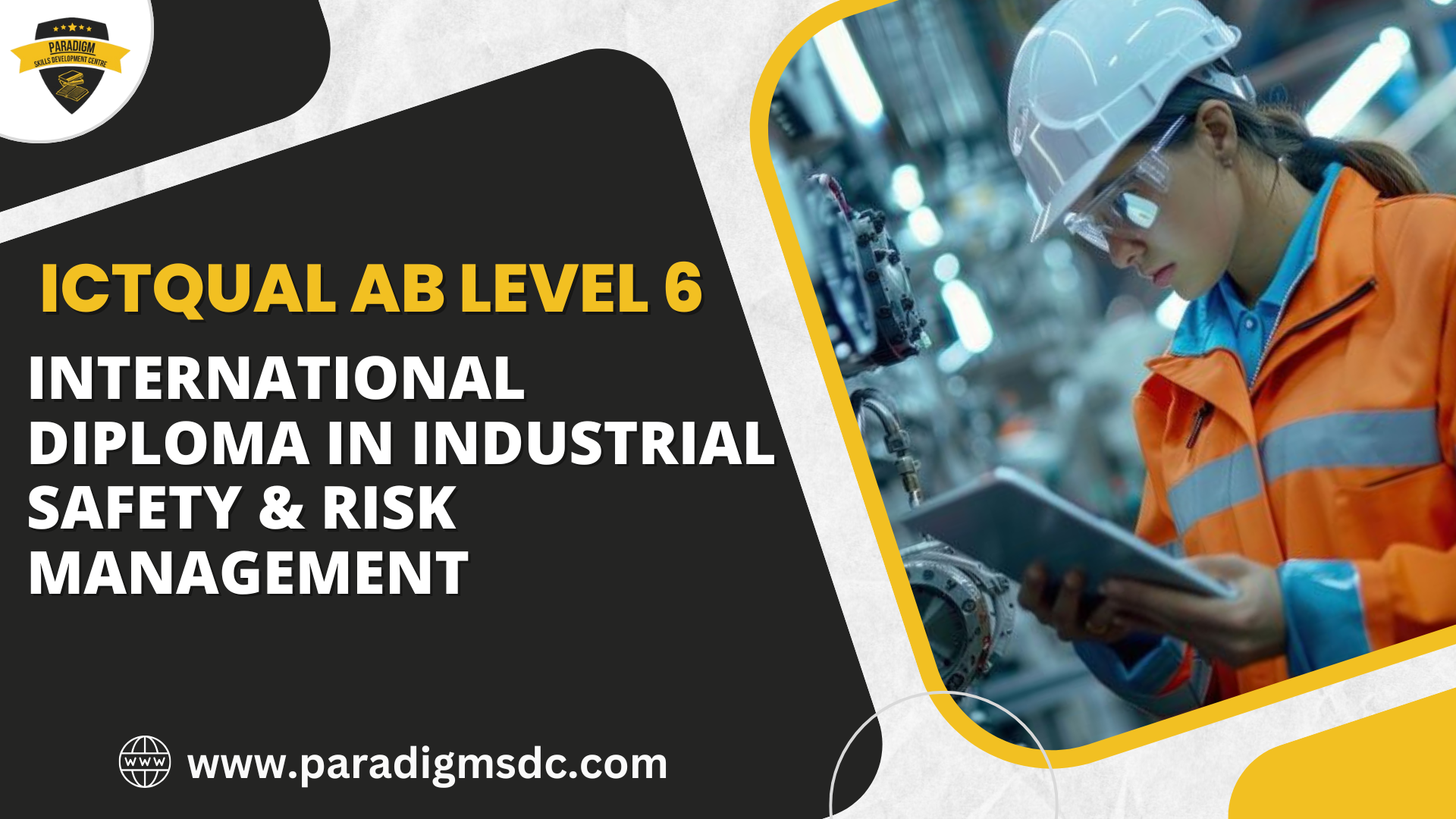
The ICTQual AB Level 6 International Diploma in Industrial Safety & Risk Management is a three-year, 360-credit programme designed to equip learners with advanced expertise in safety leadership, hazard control, and risk management. This globally recognised qualification combines theoretical depth with practical application, enabling learners to implement safety strategies, comply with international standards, and lead organisational risk management initiatives.
The diploma is suitable for:
- Fresh learners – who wish to gain structured knowledge of safety principles, risk management, and compliance.
- Experienced professionals – who can leverage prior industry experience to progress into advanced strategic and leadership roles.
Graduates will develop the ability to:
- Identify and mitigate workplace hazards.
- Conduct safety audits and risk assessments.
- Lead emergency planning and crisis response.
- Promote safety culture and sustainable practices.
- Apply international frameworks and modern safety technologies.
Entry Requirements
- Age Requirement: Minimum 18 years at the time of registration.
- Educational Background: A recognised Level 5 qualification in industrial safety, occupational health, risk management, engineering, or a related discipline. Candidates without formal qualifications but with relevant professional experience may also be considered.
- Professional Experience:
- Fresh learners: No prior experience required.
- Experienced professionals: 3–5 years of relevant experience in industrial safety, risk management, or supervisory roles preferred.
- English Proficiency: Proof of English language ability (e.g., IELTS 5.5 or equivalent) or prior study/work in English.
- Additional Requirement: Commitment to completing the three-year, 360-credit programme. Access to a workplace or industrial/simulated environment is advantageous.
Programme Structure (36 Mandatory Units)
Year 1 – Foundation of Industrial Safety & Risk Management
- Principles of Industrial Safety Management
- Introduction to Risk Management in Industrial Environments
- Occupational Health and Industrial Hygiene Fundamentals
- Workplace Hazards Identification and Control Measures
- Safety Legislation and Regulatory Compliance
- Fire Safety and Emergency Preparedness
- Manual Handling and Ergonomic Safety
- Communication and Reporting in Safety Management
- Introduction to Environmental Safety and Sustainability
- Electrical and Mechanical Safety Awareness
- Incident Investigation and Root Cause Analysis
- Professional Ethics and Responsibility in Safety Practice
Year 2 – Applied Industrial Safety & Risk Management
- Advanced Risk Assessment and Hazard Control
- Safety Performance Monitoring and Auditing
- Process Safety Management and Hazardous Substances
- Industrial Safety in Manufacturing and Heavy Industries
- Safety Management in Construction and Energy Sectors
- Occupational Diseases and Preventive Measures
- Behavioural Safety and Human Factors
- Safety Culture Development and Change Management
- Safety Technology and Digital Tools
- Emergency Response Planning and Crisis Management
- Legal and Regulatory Frameworks (International Perspective)
- Research Methods and Data Analysis for Safety Management
Year 3 – Strategic Leadership in Industrial Safety & Risk Management
- Strategic Safety Leadership and Governance
- Integrated Management Systems (ISO 45001, ISO 14001, ISO 9001)
- Business Risk Management and Sustainability
- Advanced Occupational Health & Wellbeing Strategies
- Safety in Large-Scale Industrial Projects
- Corporate Social Responsibility and Ethical Safety Practices
- International Standards and Global Safety Frameworks
- Digital Transformation and Emerging Trends in Safety
- Policy Development and Implementation in Safety Management
- Research Project / Dissertation in Industrial Safety
- Professional Development and Lifelong Learning
- Capstone Project: Practical Application of Safety Leadership
Career Progression Opportunities
Graduates of this diploma are prepared to move into senior and strategic positions across industries, such as:
- Senior Occupational Safety Roles – Industrial Safety Manager, Risk & Compliance Manager, Senior Safety Officer.
- Specialised Certifications – Process safety, fire safety, environmental management, auditing.
- Consultancy & Advisory Roles – Advising organisations on compliance, hazard mitigation, and risk strategies.
- Safety Leadership & Policy Development – Influencing corporate safety governance and organisational frameworks.
- Emergency Planning & Crisis Management – Leading response strategies for industrial incidents and disasters.
- Professional Membership & Recognition – Eligibility for membership in international safety bodies.
- Continuous Professional Development (CPD) – Ongoing training, seminars, and workshops.
- Project & Risk Management Leadership – Overseeing complex industrial projects and aligning safety with organisational goals.