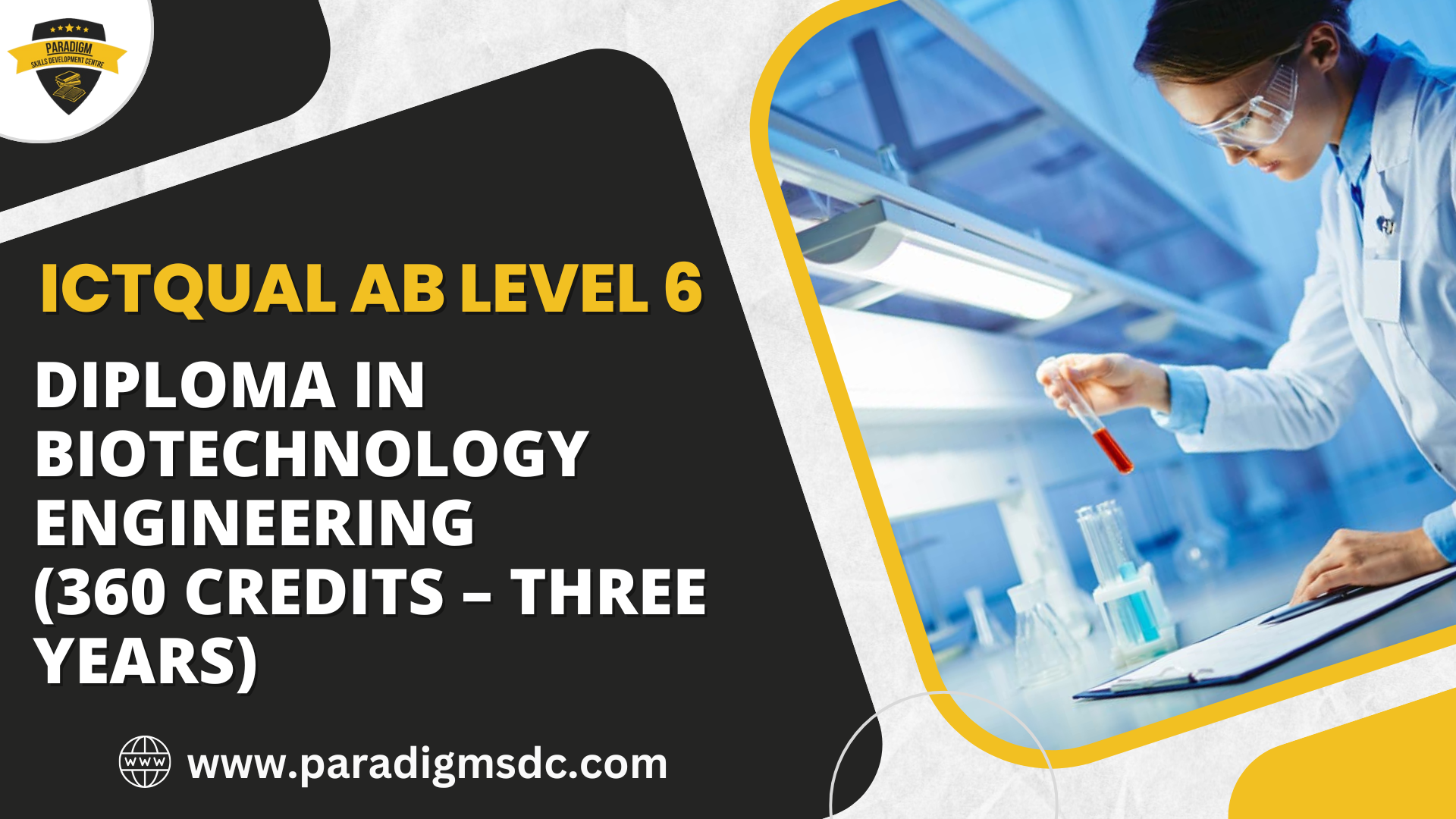
Biotechnology is at the forefront of innovation, shaping solutions for some of the world’s biggest challenges in healthcare, agriculture, and environmental sustainability. The ICTQual Level 6 Diploma in Biotechnology Engineering (360 Credits – Three Years) is a comprehensive qualification designed to prepare learners with the advanced knowledge, laboratory expertise, and engineering skills needed to excel in this fast-evolving sector.
This internationally recognised diploma blends scientific theory with hands-on laboratory training. Learners will develop competencies in molecular biology, genetic engineering, bioinformatics, pharmaceutical biotechnology, and bioprocessing technologies, all while exploring the ethical and sustainable dimensions of modern biotechnology.
Graduates of this three-year programme will be equipped to take on roles in pharmaceutical companies, research institutes, agricultural innovation, and environmental biotechnology, or progress into higher academic pathways such as postgraduate studies.
Entry Requirements
To enrol in the ICTQual Level 6 Diploma in Biotechnology Engineering (360 Credits – Three Years), applicants must meet the following requirements:
- Minimum Age: 18 years old.
- Academic Background: A Level 5 qualification (or equivalent) in a related field such as science, biotechnology, or engineering.
- Subject Knowledge: Strong foundation in subjects like molecular biology, chemistry, biochemistry, or physics.
- Scientific Aptitude: Evidence of analytical and problem-solving ability in scientific contexts.
- English Proficiency: For non-native speakers, proof of English language proficiency (e.g., IELTS 6.0 or TOEFL equivalent) may be required.
Programme Structure
The diploma is structured into 36 mandatory units, providing a solid foundation and advanced expertise across three years.
Year 1 – Foundations of Biotechnology Engineering
- Introduction to Biotechnology
- Principles of Molecular Biology
- Basics of Biochemistry
- Fundamentals of Microbiology
- Genetics and Genomics
- Cell Biology
- Mathematics for Biotechnology
- Biostatistics Fundamentals
- Engineering Principles in Biotechnology
- Analytical Techniques in Biotechnology
- Introduction to Bioinformatics
- Environmental Science and Sustainability
Year 2 – Intermediate Biotechnology Concepts
- Bioprocess Engineering and Design
- Applied Microbiology and Industrial Applications
- Recombinant DNA Technology
- Biomaterials and Nanotechnology
- Immunology and Vaccine Development
- Protein Engineering and Enzyme Technology
- Applied Bioinformatics
- Environmental Biotechnology and Waste Management
- Bioreactors and Fermentation Technology
- Basics of Biomedical Engineering
- Advanced Biostatistics and Data Analysis
- Ethical and Regulatory Issues in Biotechnology
Year 3 – Advanced Topics and Specialisation
- Genetic Engineering and Genomic Editing
- Advanced Bioprocess Engineering
- Biotechnology Research Methods
- Pharmaceutical Biotechnology and Drug Development
- Systems Biology and Computational Modelling
- Agricultural Biotechnology and GMOs
- Industrial Biotechnology and the Bioeconomy
- Synthetic Biology Applications
- Advanced Environmental Biotechnology
- Innovation and Entrepreneurship in Biotechnology
- Biotechnology Project Management
- Final Year Research Project
Career Progression Opportunities
Graduates of the ICTQual Level 6 Diploma in Biotechnology Engineering will be well-positioned for careers in research, development, and applied biotechnology industries, or for pursuing advanced academic pathways.
Professional Roles
- Biotechnology Engineer – Develop and optimise biotechnological processes.
- Research Scientist – Conduct research in genetic engineering, immunology, or environmental biotech.
- Quality Control/Assurance Specialist – Oversee compliance in biotech manufacturing.
- Bioinformatics Analyst – Apply computational tools to analyse biological data.
- Environmental Biotechnologist – Work on sustainability, bioremediation, and waste management projects.
Entrepreneurship
- Launch biotech startups in biofuels, biodegradable materials, agricultural solutions, or pharmaceuticals.
- Provide consultancy services in biotechnology innovation and industrial applications.
Academic and Teaching Roles
- Teach biotechnology and related sciences in vocational or higher education institutions.
- Support professional training programmes for industry specialists.
Industry-Specific Opportunities
- Pharmaceutical & Healthcare – Focus on drug discovery, vaccine development, and biologics production.
- Agriculture & Food – Work on GMOs, sustainable crop development, or food biotechnology.
- Environmental Organisations – Drive eco-innovations addressing pollution, climate change, and sustainability.