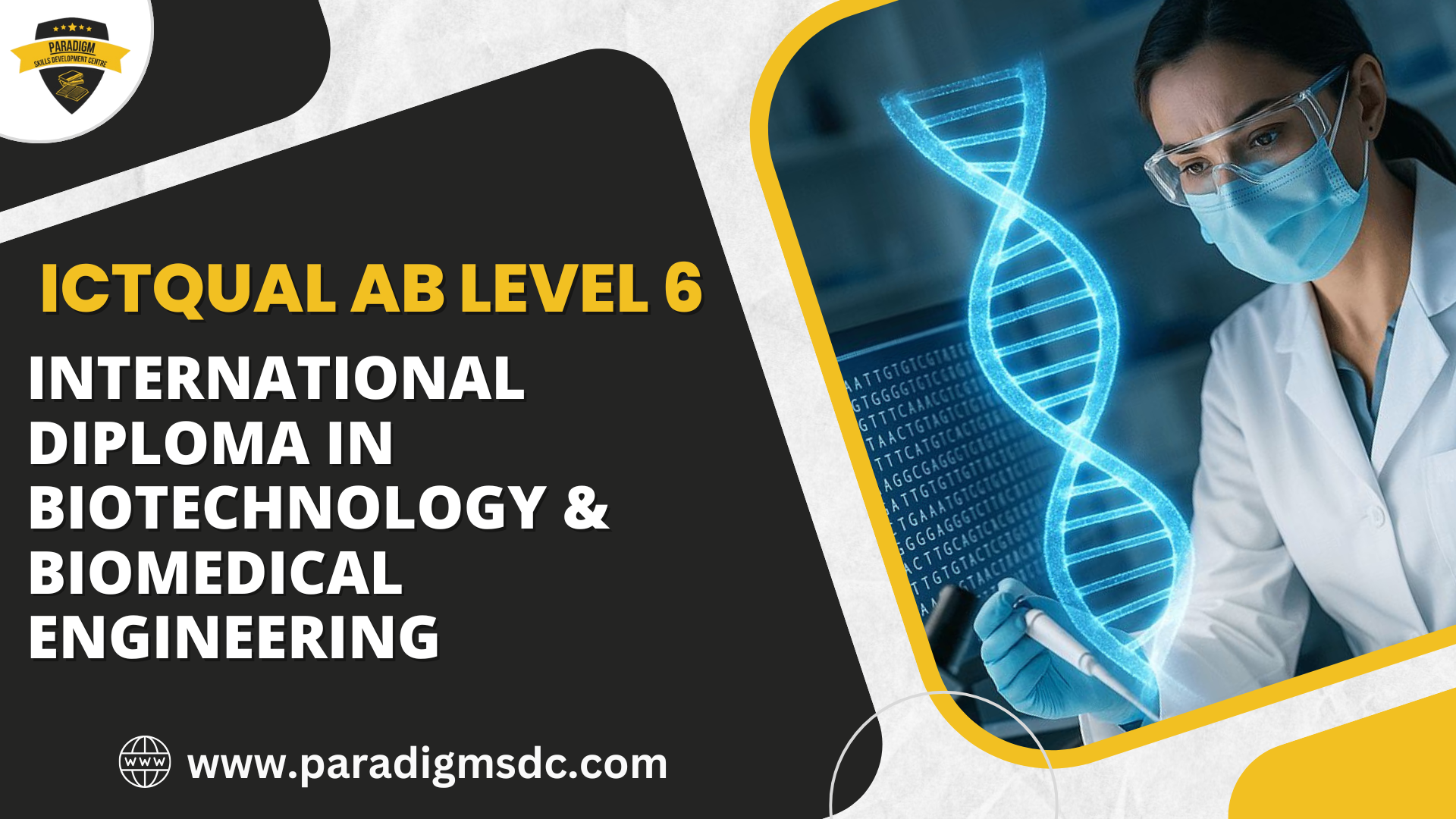
The ICTQual AB Level 6 International Diploma in Biotechnology & Biomedical Engineering is a three-year, 360-credit programme designed to equip learners with advanced expertise in biotechnology, life sciences, and biomedical engineering applications. This internationally recognised qualification blends scientific foundations with engineering innovation, preparing learners to contribute to healthcare, pharmaceuticals, medical devices, and biotechnology research.
Learners gain in-depth knowledge of molecular biology, genetics, immunology, bioinformatics, bioprocessing, and biomedical instrumentation, alongside essential practical and research skills. The programme emphasises real-world applications, ensuring graduates can design solutions, operate advanced laboratory systems, and apply cutting-edge technologies to improve healthcare outcomes.
By completing this diploma, learners are empowered to advance their careers, pursue specialist certifications, and remain at the forefront of rapidly evolving biomedical and biotechnological industries.
Entry Requirements
- Age Requirement: Minimum 18 years old at the time of registration.
- Educational Background: High school diploma or equivalent. Prior knowledge in biology, chemistry, physics, or mathematics is recommended.
- Professional Experience: Relevant experience in laboratory work, healthcare, or biomedical research is required.
- English Proficiency: IELTS 5.5 or equivalent recommended.
- Additional Requirement: Access to a computer with internet connectivity; strong interest in biotechnology and biomedical sciences.
Programme Structure
The diploma consists of 36 mandatory units, delivered across three years.
Year 1 – Foundation in Biotechnology & Biomedical Engineering
- Introduction to Biotechnology and Biomedical Engineering
- Fundamentals of Human Anatomy and Physiology
- Principles of Molecular Biology and Genetics
- Biochemistry for Life Sciences
- Microbiology and Infection Control
- Laboratory Safety and Quality Assurance
- Principles of Pharmacology and Therapeutics
- Mathematics and Statistics for Biomedical Applications
- Computer Applications in Biotechnology
- Communication Skills for Science and Healthcare Professionals
- Introduction to Research and Evidence-Based Practice
- Ethics and Professional Conduct in Biomedical Sciences
Year 2 – Intermediate Applications
- Genetic Engineering and Recombinant DNA Technology
- Cell Biology and Tissue Engineering
- Clinical Biochemistry and Diagnostic Techniques
- Immunology and Serology
- Instrumentation and Analytical Methods in Biotechnology
- Microbial Biotechnology and Industrial Applications
- Molecular Diagnostics and Laboratory Techniques
- Bioprocess Engineering and Biomanufacturing
- Data Analysis and Biomedical Informatics
- Health and Safety in Biomedical Laboratories
- Leadership and Teamwork in Scientific Practice
- Applied Research Methods and Experimental Design
Year 3 – Advanced Specialisation and Professional Practice
- Advanced Molecular Biology and Genomics
- Advanced Immunology and Clinical Applications
- Biomedical Device Engineering and Design
- Advanced Bioprocessing and Biopharmaceutical Production
- Stem Cell Technology and Regenerative Medicine
- Bioinformatics and Computational Biology
- Clinical Trial Design and Regulatory Compliance
- Advanced Laboratory Techniques and Automation
- Quality Management and Risk Assessment in Biomedicine
- Emerging Technologies in Biotechnology and Healthcare
- Research Project / Dissertation
- Professional Practice and Practical Competency Assessment
Career Opportunities
Graduates can pursue advanced roles such as:
- Biomedical Laboratory Scientist – Conduct diagnostic and experimental work.
- Biotechnology Research Associate – Engage in R&D for biotechnology companies.
- Clinical Research Technician – Support clinical trials and biomedical studies.
- Biomedical Equipment Specialist – Operate and manage medical devices.
- Quality Control/Assurance Officer – Ensure compliance in labs and biopharma industries.
Specialised Technical Roles
- Molecular Diagnostics Technician – Apply genetic and molecular testing methods.
- Tissue Engineering & Regenerative Medicine Technician – Work with stem cell and tissue development.
- Bioinformatics Analyst – Analyse biological data using computational tools.
- Bioprocess Engineer – Support production and optimisation of biopharmaceutical processes.
Research & Development Pathways
Learners will be able to:
- Contribute to drug development, genomic research, and therapeutic innovations.
- Participate in clinical trials and device development.
- Drive laboratory-based problem-solving projects.
Professional Development & CPD
The diploma also supports continuous growth by:
- Enhancing leadership and laboratory management skills.
- Keeping learners updated with emerging technologies.
- Enabling CPD for long-term career relevance.
Global Relevance
This qualification prepares learners to:
- Work in hospitals, pharmaceutical companies, and R&D organisations worldwide.
- Contribute to international healthcare and biotechnological projects.
- Pursue higher education or specialised certifications in biotechnology and biomedical sciences.