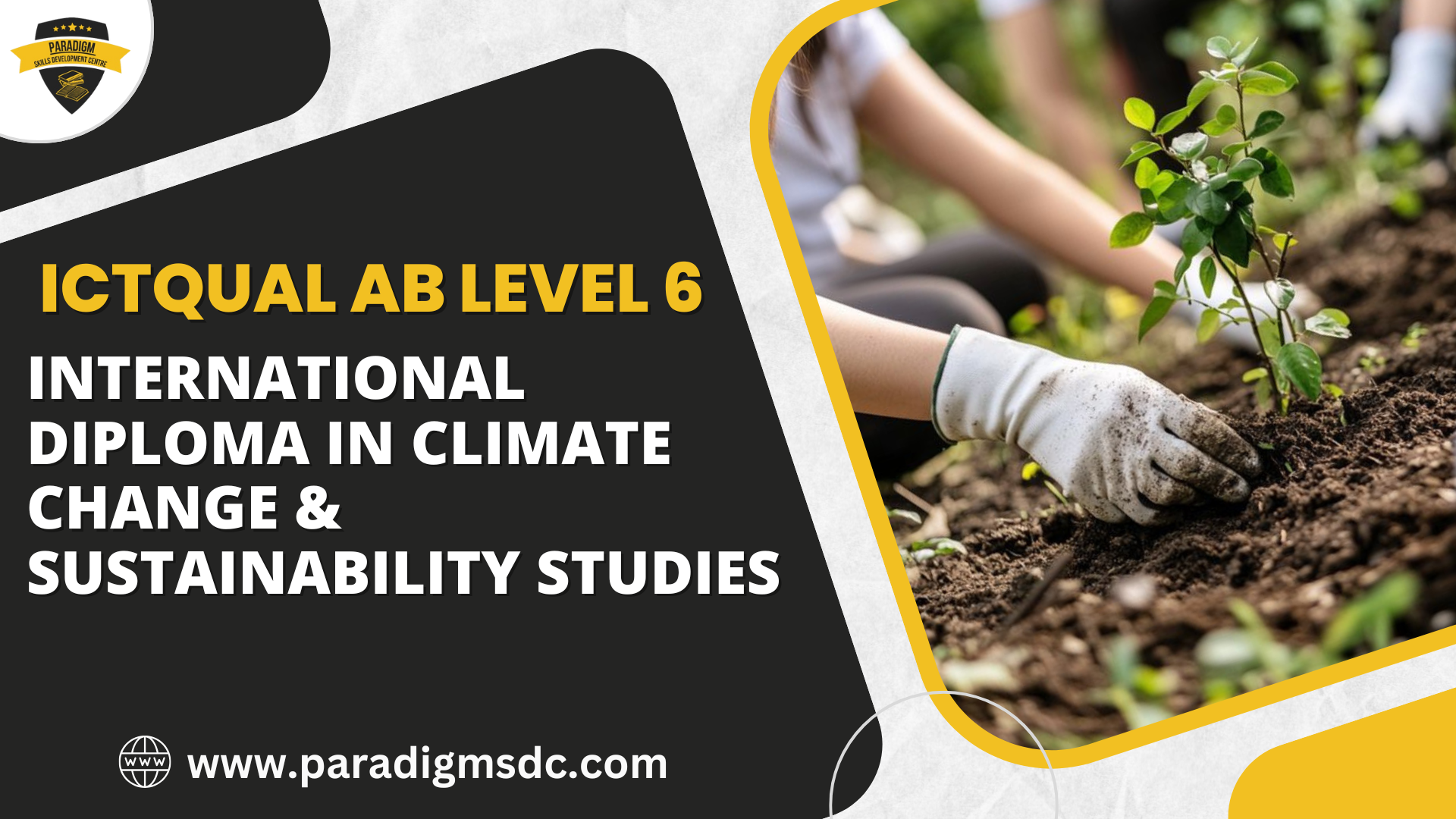
The ICTQual AB Level 6 International Diploma in Climate Change & Sustainability Studies is a three-year, 360-credit international qualification designed to provide learners with advanced expertise in climate science, sustainability strategies, and environmental management.
This programme responds to the urgent global demand for professionals who can address climate challenges, implement sustainable practices, and support organisations in achieving environmental and social responsibility goals.
Learners will explore:
- Climate change science and adaptation strategies
- Global and national policy frameworks
- Carbon management and greenhouse gas accounting
- Renewable energy systems and integration
- Sustainable development practices across industries
The diploma combines theoretical foundations with practical applications, ensuring graduates can analyse data, design strategies, and lead sustainability projects aligned with international standards and best practices.
Entry Requirements
- Age Requirement: Minimum 18 years old at registration.
- Educational Background: Level 5 qualification in environmental science, climate studies, sustainability, engineering, or a related field.
- Professional Experience:
- Fresh learners: No prior experience required.
- Experienced professionals: 3–5 years in sustainability, climate, or environmental management preferred.
- English Proficiency: IELTS 5.5 (or equivalent) or evidence of prior education/work in English.
- Commitment: Completion of the 3-year (360-credit) programme, including theory and practice. Access to sustainability projects or simulated environments is advantageous.
Programme Structure
This qualification consists of 36 mandatory study units delivered over three years.
Year 1 – Foundations of Climate Change & Sustainability
- Introduction to Climate Change Science
- Principles of Sustainability and Environmental Management
- Global Environmental Policies and Governance
- Carbon Footprint and Greenhouse Gas Accounting
- Renewable Energy Fundamentals
- Climate Change Impacts and Adaptation Strategies
- Environmental Ethics and Professional Responsibility
- Sustainable Resource Management
- Environmental Monitoring and Data Analysis
- Introduction to Project Planning in Climate Initiatives
- Environmental Communication and Stakeholder Engagement
- Introduction to Risk Assessment in Environmental Management
Year 2 – Applied Climate Change & Sustainability Practices
- Advanced Climate Change Mitigation Strategies
- Sustainable Urban and Industrial Development
- Environmental Impact Assessment (EIA)
- Carbon Management and Trading
- Energy Efficiency and Renewable Integration
- Climate Policy Implementation and Compliance
- Waste Management and Circular Economy Principles
- Environmental Auditing and Reporting Techniques
- Digital Tools and Technologies for Sustainability
- Organisational Behaviour and Sustainability Leadership
- Research Methods in Climate and Sustainability Projects
- Applied Project Planning and Operational Management
Year 3 – Strategic Leadership in Climate Change & Sustainability
- Strategic Sustainability Leadership
- International Climate Agreements and Standards
- Environmental Risk and Crisis Management
- Corporate Social Responsibility (CSR) and Sustainability Strategy
- Sustainable Supply Chain and Resource Management
- Innovation and Emerging Technologies in Sustainability
- Climate Change Policy Development and Implementation
- Environmental Governance and Ethics in Leadership
- Advanced Project Management for Sustainability Initiatives
- Renewable Energy Systems and Integration Strategies
- Independent Research Project in Climate Change & Sustainability
- Capstone Project: Applied Climate Change & Sustainability Studies
Career Opportunities
Graduates will be well-positioned for roles such as:
- Sustainability and Environmental Manager – Lead sustainability strategies, monitor performance, and ensure compliance with global standards.
- Climate Change Analyst / Advisor – Analyse data, advise on carbon reduction, and support adaptation and mitigation policies.
- Renewable Energy and Resource Management Specialist – Manage renewable energy projects, implement efficiency measures, and assess impact.
- Environmental Risk and Compliance Officer – Conduct risk assessments and ensure regulatory compliance.
- Sustainability Project Leader – Plan and lead sustainability-focused projects within organisations or communities.
- CSR and Sustainability Consultant – Develop CSR initiatives and report on environmental and social impacts.
- Environmental Policy and Governance Specialist – Contribute to policy development, compliance, and governance frameworks.
- Innovation and Green Technology Coordinator – Identify and integrate emerging technologies for sustainable development.