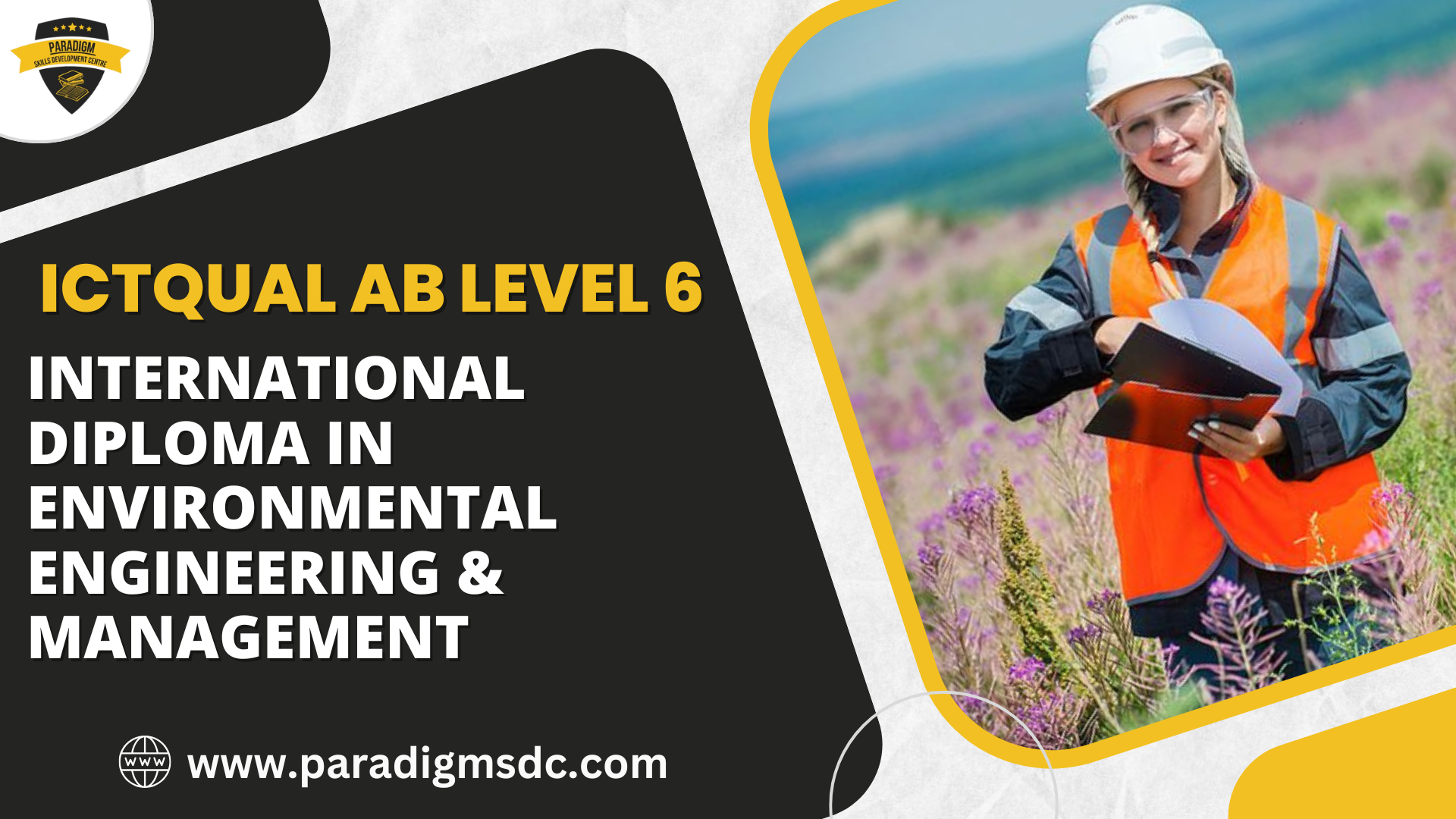
The ICTQual AB Level 6 International Diploma in Environmental Engineering & Management is a three-year, 360-credit programme designed to prepare learners with advanced knowledge and skills in environmental engineering, sustainability, and management practices.
This qualification responds to the global demand for professionals capable of designing and implementing environmentally responsible engineering solutions, ensuring compliance with regulations, and leading sustainability initiatives in industrial, urban, and governmental contexts.
Learners will develop expertise in:
- Environmental impact assessment (EIA)
- Waste and resource management
- Water and air quality control
- Renewable energy systems
- Sustainable infrastructure and project planning
By combining technical engineering principles with strategic management approaches, the programme empowers graduates to deliver innovative and sustainable environmental solutions.
This diploma is suitable for:
- Fresh learners – building strong foundations in environmental science, engineering, and compliance frameworks.
- Experienced professionals – enhancing leadership capacity and advanced knowledge to address complex environmental challenges.
Graduates will be equipped to lead sustainable projects, reduce ecological impact, and ensure regulatory compliance while contributing to international environmental and sustainability goals.
Entry Requirements
- Age Requirement: Minimum 18 years at the time of registration.
- Educational Background: A recognised Level 5 qualification in environmental engineering, environmental science, engineering, or a related field. Candidates with significant professional experience but no formal academic qualifications may be considered.
- Professional Experience:
- Fresh learners: No prior experience required.
- Experienced professionals: 3–5 years of relevant experience in environmental engineering, safety, risk management, or related roles is recommended. Supervisory or managerial experience is advantageous.
- English Proficiency: Proof of English ability (e.g., IELTS 5.5 or equivalent) or evidence of prior study/work conducted in English.
- Additional Requirement: Commitment to completing the three-year (360-credit) programme. Access to a workplace, industrial environment, or simulated practice setting is advantageous.
Programme Structure (36 Mandatory Units)
Year 1 – Foundation of Environmental Engineering & Management
- Principles of Environmental Engineering
- Introduction to Environmental Science and Sustainability
- Environmental Legislation and Regulatory Compliance
- Environmental Impact Assessment (EIA) Fundamentals
- Waste Management and Pollution Control
- Water Quality Management and Treatment
- Air Quality Monitoring and Control
- Soil and Groundwater Protection
- Renewable Energy Systems and Applications
- Occupational Health, Safety, and Environmental Awareness
- Communication and Reporting in Environmental Management
- Professional Ethics and Responsibility in Environmental Practice
Year 2 – Applied Environmental Engineering & Management
- Advanced Environmental Risk Assessment
- Industrial Wastewater and Effluent Management
- Solid and Hazardous Waste Engineering
- Environmental Monitoring and Audit Techniques
- Sustainable Resource Management and Conservation
- Climate Change Mitigation and Adaptation Strategies
- Environmental Modelling and Data Analysis
- Green Building and Sustainable Infrastructure
- Environmental Management in Manufacturing and Energy Sectors
- Behavioural and Organisational Approaches to Environmental Safety
- Digital Tools and Technologies in Environmental Engineering
- Research Methods and Environmental Project Planning
Year 3 – Strategic Environmental Leadership & Management
- Strategic Environmental Management and Governance
- Integrated Environmental Management Systems (ISO 14001, ISO 50001)
- Environmental Policy Development and Implementation
- Sustainability Leadership and Corporate Social Responsibility (CSR)
- Environmental Risk Management in Large-Scale Projects
- Renewable Energy Project Management
- International Environmental Standards and Best Practices
- Environmental Innovation and Emerging Technologies
- Environmental Crisis Management and Emergency Planning
- Advanced Occupational Health & Environmental Wellbeing Strategies
- Independent Research Project in Environmental Engineering
- Capstone Project: Applied Environmental Engineering & Management
Career Progression Opportunities
Graduates of this programme will be equipped to progress into senior and leadership roles in environmental engineering and sustainability, including:
- Senior Environmental Engineering Roles – Environmental Engineer, Senior Environmental Officer, Environmental Project Manager.
- Sustainability and Environmental Consultancy – Advising organisations on compliance, sustainable practices, and risk mitigation.
- Environmental Policy Development & Leadership – Designing and implementing organisational sustainability policies.
- Renewable Energy & Resource Management – Leading renewable energy integration and resource efficiency projects.
- Environmental Auditing & Compliance Roles – Conducting environmental audits to ensure regulatory alignment.
- Crisis Management & Emergency Planning – Managing environmental incidents and developing damage-reduction strategies.
- Professional Recognition & Membership – Eligibility for membership in international environmental professional bodies.
- Continuous Professional Development (CPD) – Ongoing training, workshops, and certifications to stay current with emerging environmental technologies and global standards.