Course Introduction
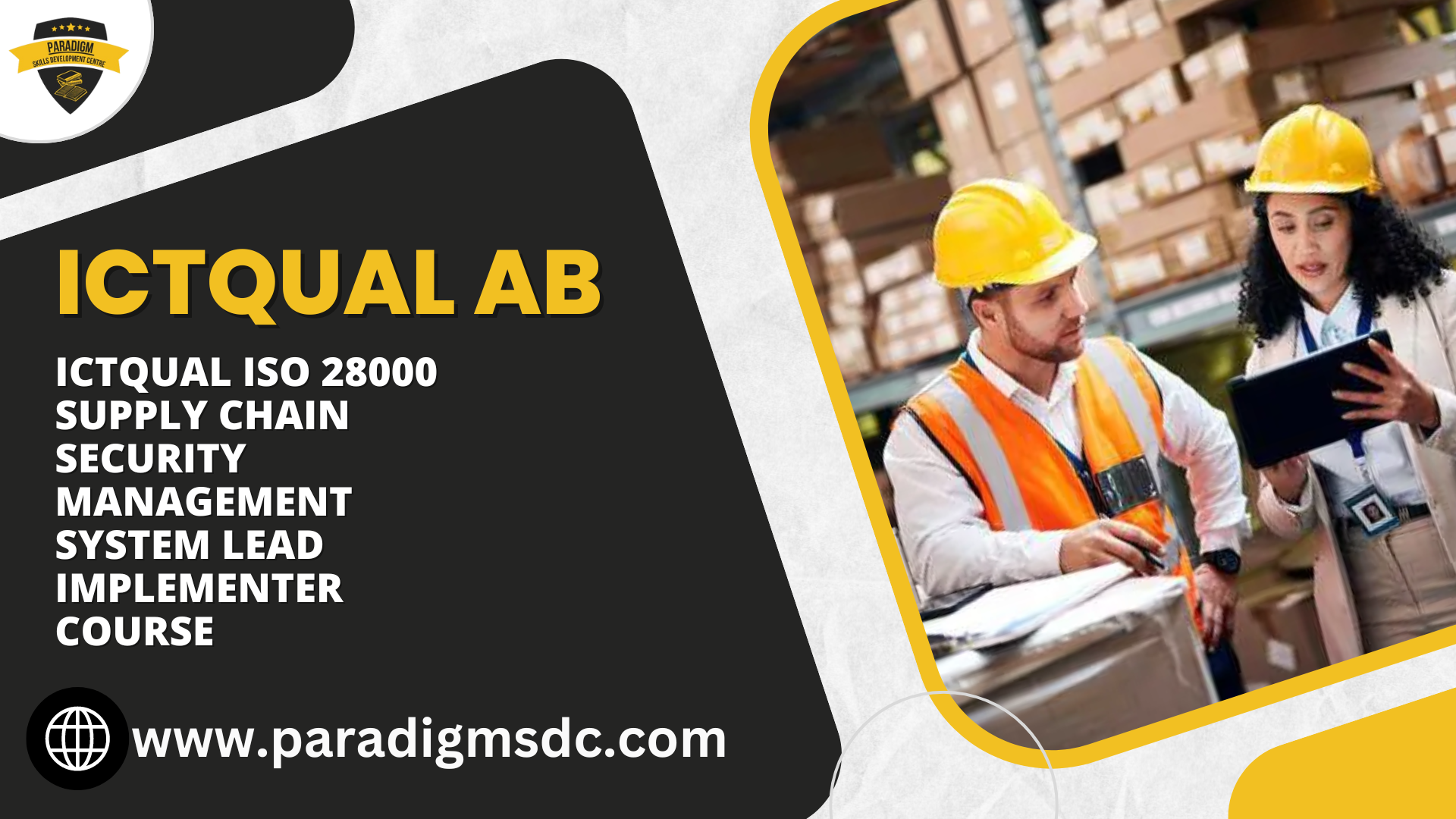
The ICTQual ISO 28000 Lead Implementer Course is designed for professionals seeking to enhance their expertise in managing supply chain security through the ISO 28000 standard. ISO 28000 provides a framework for establishing, implementing, operating, monitoring, reviewing, maintaining, and improving an effective supply chain security management system (SCSMS). This course is essential for those responsible for safeguarding their organization’s supply chain from various security risks, including physical threats, cyber-attacks, and operational disruptions.
Course Overview
The course covers the comprehensive process of implementing an SCSMS based on ISO 28000. Participants will gain a deep understanding of the standard’s requirements and learn how to apply them effectively within their organizations. The course combines theoretical knowledge with practical application, ensuring that learners can translate their skills into actionable strategies for enhancing supply chain security.
Course Study Units
- Introduction to ISO 28000
- Fundamentals of Supply Chain Security
- Implementing ISO 28000 Management System
- Risk Assessment and Management
- Supply Chain Security Controls
- Monitoring, Measurement, and Performance Evaluation
- Documentation and Record Keeping
- Training and Awareness
- Supply Chain Security Incident Management
- Future Trends in Supply Chain Security
Learning Outcomes
Upon completion of the ICTQual ISO 28000 Lead Implementer Course, participants will be able to:
- Introduction to ISO 28000
- Understand the purpose and scope of ISO 28000.
- Explain the benefits of implementing ISO 28000 for supply chain security.
- Identify the key components and structure of ISO 28000.
- Recognize the importance of ISO standards in enhancing supply chain security.
- Fundamentals of Supply Chain Security
- Define supply chain security and its significance in modern business operations.
- Identify potential risks and vulnerabilities within a supply chain.
- Explain the legal and regulatory requirements related to supply chain security.
- Assess the impact of supply chain security breaches on organizations and stakeholders.
- Implementing ISO 28000 Management System
- Describe the steps involved in implementing an ISO 28000 management system.
- Establish the context of the organization for supply chain security.
- Demonstrate leadership and commitment to supply chain security management.
- Develop a plan for designing and implementing a supply chain security management system.
- Risk Assessment and Management
- Conduct risk assessments within a supply chain context.
- Identify threats, vulnerabilities, and potential impacts on supply chain security.
- Evaluate risk management strategies and select appropriate controls.
- Develop risk treatment plans to mitigate supply chain security risks effectively.
- Supply Chain Security Controls
- Differentiate between physical, procedural, and information security controls.
- Implement appropriate security measures to protect the supply chain.
- Evaluate the effectiveness of security controls in mitigating risks.
- Develop strategies for integrating security controls into existing supply chain processes.
- Monitoring, Measurement, and Performance Evaluation
- Establish performance metrics and indicators for supply chain security.
- Monitor and measure supply chain security performance against established criteria.
- Conduct internal audits to evaluate compliance with ISO 28000 requirements.
- Continuously improve the supply chain security management system based on performance feedback.
- Documentation and Record Keeping
- Develop documentation required for ISO 28000 compliance, including policies, procedures, and records.
- Implement document control processes to ensure accuracy and accessibility of information.
- Demonstrate compliance with documentation requirements during audits and reviews.
- Maintain records of activities related to supply chain security management.
- Training and Awareness
- Identify the training needs of employees and stakeholders involved in the supply chain.
- Develop and implement training programs to increase awareness of supply chain security.
- Communicate supply chain security policies and procedures effectively to relevant parties.
- Evaluate the effectiveness of training activities in enhancing supply chain security awareness.
- Supply Chain Security Incident Management
- Develop procedures for responding to and reporting supply chain security incidents.
- Investigate security incidents to determine root causes and impacts.
- Implement corrective actions to prevent recurrence of security incidents.
- Develop business continuity plans to ensure resilience against supply chain disruptions.
- Future Trends in Supply Chain Security
- Identify emerging trends and technologies influencing supply chain security.
- Assess the implications of globalization and digitalization on supply chain security.
- Develop strategies for adapting ISO 28000 to address future challenges and opportunities.
- Stay informed about industry developments and best practices in supply chain security management.
Course Benefits
- Enhanced Knowledge: Gain in-depth knowledge of ISO 28000 and its application in supply chain security.
- Practical Skills: Develop hands-on skills for implementing and managing a supply chain security management system.
- Career Advancement: Increase your career prospects and opportunities in the field of supply chain security.
- Organizational Impact: Contribute to your organization’s resilience by improving its supply chain security measures.
- Certification Preparation: Equip yourself with the knowledge needed to support ISO 28000 certification and maintain compliance.
Who is This Course For?
The ICTQual ISO 28000 Lead Implementer Course is ideal for:
- Supply Chain Managers: Professionals responsible for managing and securing supply chain operations.
- Security Managers: Individuals focused on enhancing security measures within organizations.
- Compliance Officers: Those tasked with ensuring adherence to regulatory and security standards.
- Consultants: Experts providing advice on supply chain security and management systems.
- Business Owners and Executives: Leaders looking to understand and implement supply chain security strategies within their organizations.
Future Progression
After completing the ICTQual ISO 28000 Lead Implementer Course, participants can further their career by:
- Pursuing ISO 28000 Lead Auditor Training: Expand your expertise to include auditing skills for assessing supply chain security management systems.
- Obtaining Related Certifications: Consider additional certifications in areas such as risk management, security management, or other ISO standards.
- Advancing to Higher Management Roles: Leverage your new skills to take on more senior positions within the field of supply chain security or risk management.
- Engaging in Professional Development: Stay updated with the latest developments and best practices in supply chain security through continued education and training.
The ICTQual ISO 28000 Supply Chain Security Management System Lead Implementer Course is a valuable investment for professionals dedicated to enhancing their organization’s security posture. By equipping yourself with the knowledge and skills needed to implement and manage a robust security management system, you contribute to a more secure and resilient supply chain.