Course Introduction
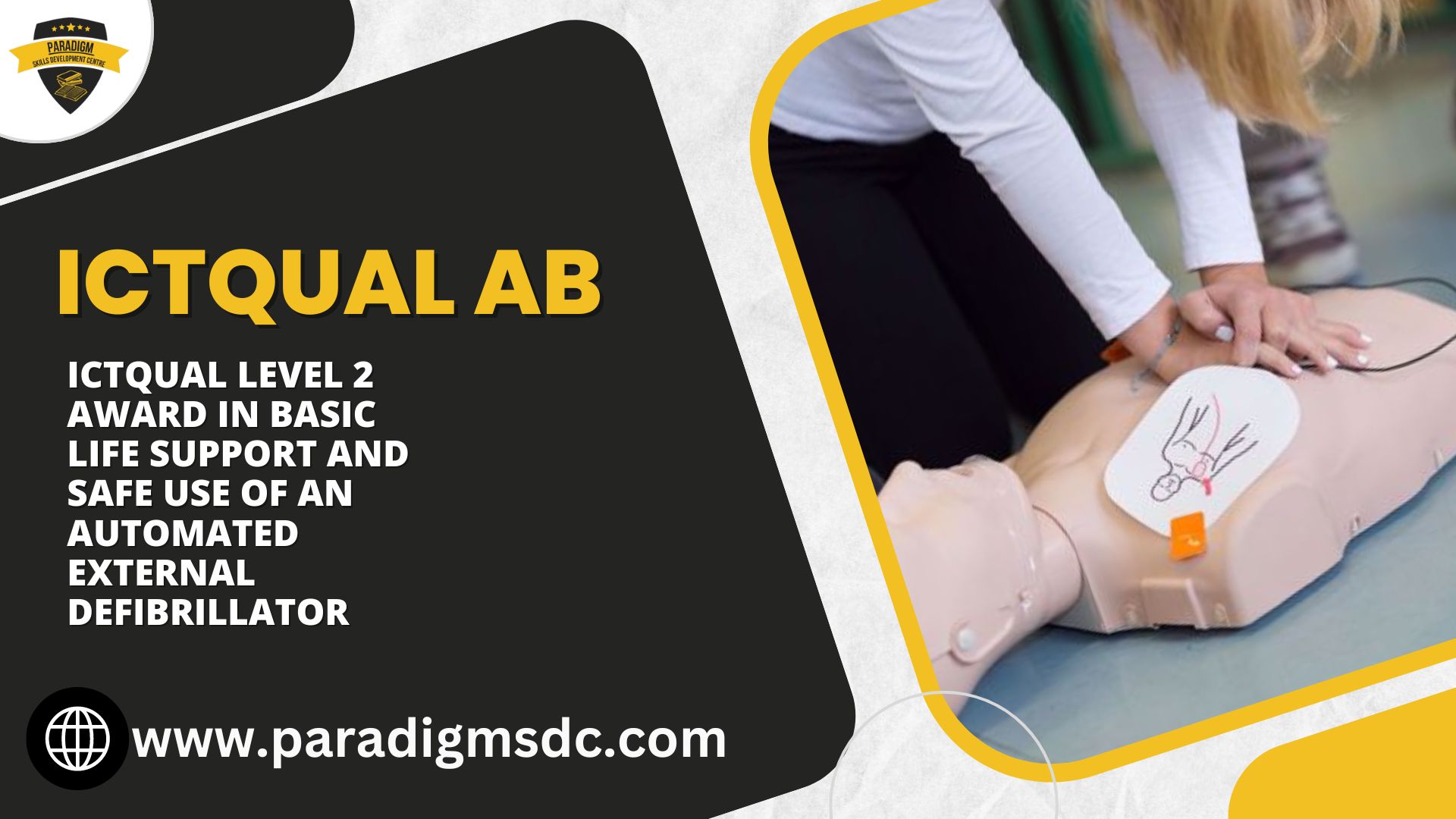
The ICTQual Level 2 Award in Cardiopulmonary Resuscitation (CPR) and Automated External Defibrillation (AED) is a vital certification designed for individuals who wish to acquire life-saving skills. This course equips participants with the knowledge and practical ability to perform CPR and use an AED effectively, making a significant difference in emergency situations. Whether you’re a healthcare professional, a first responder, or simply a concerned citizen, this award can empower you to save lives.
Course Overview
This comprehensive course provides participants with hands-on training in both CPR and AED use. It covers essential concepts and techniques to ensure that learners can respond confidently and competently during cardiac emergencies. The training is designed to be interactive, combining theoretical knowledge with practical exercises to reinforce learning.
Course Study Units
The ICTQual Level 2 Award in CPR and AED includes the following study units:
- Introduction to Basic Life Support (BLS)
- Cardiopulmonary Resuscitation (CPR)
- Management of Choking
- Automated External Defibrillator (AED) Use
- Recovery Position
- Legal and Ethical Considerations
Learning Outcomes
Upon successful completion of the course, participants will be able to:
Introduction to Basic Life Support (BLS)
- Understanding BLS Principles: Participants will understand the fundamental principles and importance of basic life support, including the chain of survival.
- Role of a First Aider: Participants will be able to describe the responsibilities and duties of a first aider in emergency situations.
- Emergency Response: Participants will recognize the critical need for immediate action when encountering a person in need of BLS.
Cardiopulmonary Resuscitation (CPR)
- CPR Techniques: Participants will be proficient in performing CPR on adults, children, and infants, including the correct ratio of chest compressions to rescue breaths.
- Effective Compressions: Participants will demonstrate the ability to perform effective chest compressions with appropriate depth and rate.
- Rescue Breaths: Participants will know how to give effective rescue breaths, ensuring airway management and ventilation.
- Sequential CPR: Participants will be able to execute the complete CPR sequence in various scenarios, ensuring a systematic and effective approach.
Management of Choking
- Choking Identification: Participants will recognize the signs and symptoms of choking in adults, children, and infants.
- Choking Interventions: Participants will demonstrate the correct techniques for assisting a choking victim, including back blows and abdominal thrusts.
- Adapted Techniques: Participants will understand how to adapt choking management techniques for different age groups and physical conditions.
Automated External Defibrillator (AED) Use
- AED Familiarity: Participants will become familiar with the components and functions of an AED.
- Safe AED Use: Participants will demonstrate the safe and effective use of an AED, including proper pad placement and following device prompts.
- Post-Shock Procedures: Participants will understand and perform necessary actions following an AED shock, including continued CPR and monitoring the victim.
Recovery Position
- Proper Positioning: Participants will learn how to correctly place a casualty in the recovery position to ensure their airway remains open and clear.
- Casualty Monitoring: Participants will demonstrate how to monitor and assess a casualty in the recovery position, ensuring their condition does not deteriorate.
Legal and Ethical Considerations
- Legal Responsibilities: Participants will understand the legal implications and responsibilities involved in providing first aid and BLS.
- Consent and Confidentiality: Participants will know how to obtain consent from a casualty and the importance of maintaining confidentiality.
- Record Keeping: Participants will recognize the importance of accurate and thorough record-keeping following an incident involving first aid and BLS.
Course Benefits
The ICTQual Level 2 Award in CPR and AED offers numerous benefits, including:
- Life-Saving Skills: Gain the ability to respond effectively in cardiac emergencies, potentially saving lives.
- Confidence and Competence: Build confidence in your ability to perform CPR and use an AED correctly.
- Certification: Receive a recognized certification that validates your skills and knowledge.
- Enhanced Employability: Improve your prospects in roles that require CPR and AED training, such as healthcare, education, and public safety.
- Personal Fulfillment: Experience the satisfaction of being prepared to help others in critical situations.
Who Is This Course For?
This course is ideal for:
- Healthcare Professionals: Nurses, doctors, paramedics, and other medical staff who need to maintain their CPR and AED skills.
- First Responders: Firefighters, police officers, and emergency medical technicians.
- Teachers and Childcare Providers: Individuals responsible for the care and safety of children.
- Fitness and Sports Instructors: Coaches, trainers, and gym staff who may encounter cardiac emergencies.
- General Public: Anyone who wants to be prepared to assist in a cardiac emergency.
Future Progression
Upon completing the ICTQual Level 2 Award in CPR and AED, participants may consider further training to expand their emergency response skills. Potential progression includes:
- ICTQual Level 3 Award in Emergency Paediatric First Aid: Focus on providing first aid to infants and children.
- ICTQual Level 3 Award in Administering Emergency Oxygen: Learn how to administer emergency oxygen in various situations.
- ICTQual Level 3 Diploma in Health Safety and Environment: Broaden your knowledge in health and safety practices across different environments.
- Advanced Life Support (ALS) Courses: For those looking to deepen their expertise in advanced emergency care techniques.
Embark on this life-changing journey with the ICTQual Level 2 Award in Cardiopulmonary Resuscitation and Automated External Defibrillation, and become a vital link in the chain of survival.
This post outlines the importance, structure, and benefits of the ICTQual Level 2 Award in CPR and AED, aiming to attract individuals who are passionate about acquiring critical life-saving skills.