Course Introduction
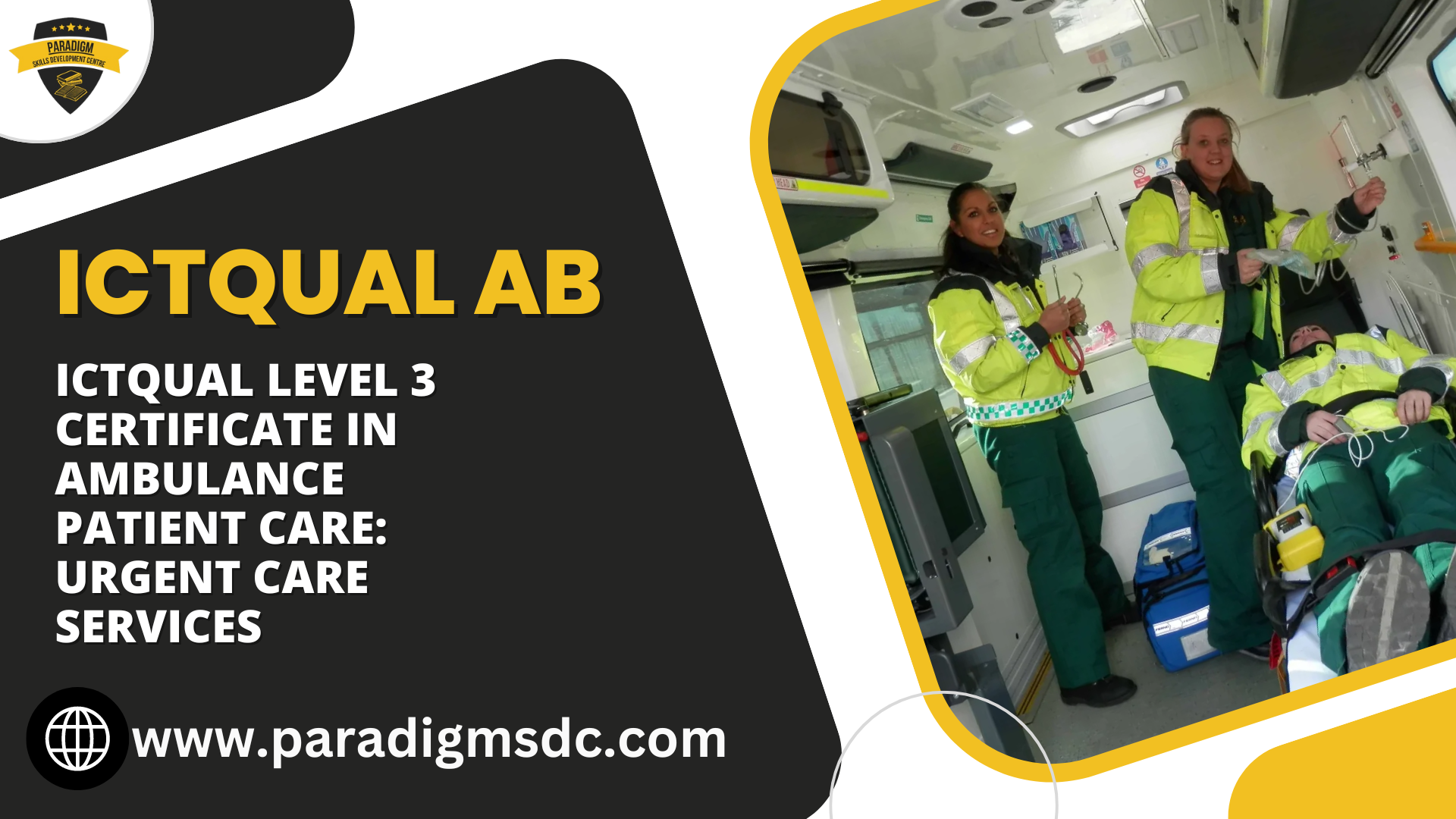
The ICTQual Level 3 Certificate in Ambulance Patient Care: Urgent Care Services is designed for individuals seeking to advance their career in pre-hospital care, particularly in urgent care environments. This comprehensive qualification equips learners with the skills and knowledge required to provide high-quality care to patients in emergency situations, preparing them for the demanding and dynamic nature of ambulance services. It is ideal for those already working in the healthcare sector who wish to specialize further in urgent care or for those aspiring to enter this crucial field.
Course Overview
This course focuses on the essential aspects of patient care within ambulance and urgent care settings. It covers a range of topics from the basic principles of urgent care to advanced patient management techniques. The program is designed to provide both theoretical knowledge and practical skills, ensuring that learners can handle a variety of scenarios they might encounter in urgent care situations.
The course is structured to balance classroom-based learning with hands-on experience, allowing students to apply their knowledge in real-life contexts. This practical approach helps build confidence and competence in delivering patient care in high-pressure environments.
Course Study Units
- Foundations of Emergency Medical Services (EMS)
- Patient Assessment and Triage
- Medical Emergencies
- Trauma Management
- Pharmacology and Medication Administration
- Special Patient Populations
- Technological Innovations in EMS
Learning Outcomes
Upon successful completion of the ICTQual Level 3 Certificate in Ambulance Patient Care: Urgent Care Services, learners will be able to:
Foundations of Emergency Medical Services (EMS):
- Understanding EMS: Students will grasp the historical development, organizational structure, and key components of emergency medical services (EMS).
- Roles and Responsibilities: Gain insight into the roles and responsibilities of EMS professionals, including legal and ethical considerations.
- Communication and Documentation: Develop effective communication skills and learn the importance of accurate documentation in EMS practice.
- Public Health and Safety: Understand the role of EMS in public health and safety, including disaster preparedness and community education initiatives.
- Professional Development: Recognize the significance of lifelong learning and professional development in maintaining competency and advancing EMS practice.
Patient Assessment and Triage:
- Comprehensive Assessment: Acquire the skills necessary to perform systematic and comprehensive patient assessments, including primary and secondary surveys.
- Triage Principles: Understand the principles of triage and prioritization in emergency situations, including the identification of life-threatening conditions.
- Critical Thinking and Decision Making: Develop critical thinking skills to rapidly evaluate and prioritize patient care needs based on assessment findings.
- Communication with Patients and Families: Learn effective communication techniques to obtain patient histories, provide reassurance, and involve patients and families in decision-making processes.
- Documentation and Reporting: Master the art of accurate and timely documentation of assessment findings, interventions, and patient outcomes to facilitate continuity of care.
Medical Emergencies:
- Pathophysiology and Etiology: Gain a deep understanding of the pathophysiology and etiology of common medical emergencies encountered in EMS practice.
- Recognition and Assessment: Learn to recognize the signs and symptoms of medical emergencies and conduct appropriate assessments to determine the severity of the condition.
- Evidence-Based Interventions: Acquire knowledge of evidence-based interventions and treatment modalities for medical emergencies, adhering to established clinical practice guidelines.
- Patient Monitoring and Reassessment: Develop skills in ongoing patient monitoring and reassessment to evaluate the effectiveness of interventions and identify potential complications.
- Interdisciplinary Collaboration: Understand the importance of interdisciplinary collaboration in the management of medical emergencies, including communication with receiving facilities and other healthcare providers.
Trauma Management:
- Trauma Systems and Principles: Understand the principles of trauma systems and the role of EMS in the management of traumatic injuries within the trauma continuum of care.
- Mechanisms of Injury: Identify common mechanisms of injury and associated injury patterns to anticipate potential life-threatening injuries.
- Rapid Assessment and Stabilization: Develop proficiency in rapid trauma assessment and stabilization techniques, including airway management, hemorrhage control, and spinal immobilization.
- Transport Considerations: Learn to make transport decisions based on injury severity, patient condition, and destination capabilities, ensuring optimal patient outcomes.
- Ethical and Legal Considerations: Recognize ethical and legal considerations in trauma management, including consent, refusal of treatment, and documentation of traumatic injuries.
Pharmacology and Medication Administration:
- Drug Classifications and Mechanisms of Action: Understand the classifications and mechanisms of action of commonly used medications in EMS practice.
- Safe Medication Administration: Acquire the skills necessary for safe medication administration, including dosage calculation, medication preparation, and route selection.
- Adverse Reactions and Complications: Recognize potential adverse reactions and complications associated with medication administration and implement appropriate interventions.
- Patient Education and Counseling: Provide patient education and counseling regarding medication use, side effects, and adherence to prescribed regimens.
- Documentation and Reporting: Document medication administration accurately and comprehensively, including medication names, dosages, routes, and patient responses, in accordance with legal and regulatory requirements.
Special Patient Populations:
- Pediatric Patients: Develop specialized skills in assessing and managing pediatric patients, considering age-specific physiological and psychological differences.
- Geriatric Patients: Understand the unique healthcare needs of geriatric patients and adapt care approaches to address age-related challenges and comorbidities.
- Obstetric Patients: Acquire knowledge of obstetric emergencies and interventions to ensure safe maternal and fetal outcomes during prehospital care.
- Cultural Competence: Cultivate cultural competence to provide patient-centered care that respects diverse beliefs, values, and practices.
- End-of-Life Care: Develop skills in providing compassionate end-of-life care, including symptom management, communication with patients and families, and support for advance care planning.
Technological Innovations in EMS:
- Telemedicine and Telehealth: Understand the role of telemedicine and telehealth technologies in enhancing access to care, facilitating remote consultations, and improving patient outcomes.
- Point-of-Care Testing: Explore the use of point-of-care testing devices for rapid diagnostic assessments and treatment decisions in prehospital and urgent care settings.
- Mobile Health Applications: Learn about the integration of mobile health applications and wearable devices in patient monitoring, health tracking, and chronic disease management.
- Data Management and Information Systems: Acquire skills in utilizing data management and information systems to streamline documentation, track patient outcomes, and identify trends for quality improvement initiatives.
- Simulation and Virtual Reality: Engage in simulation-based training and virtual reality simulations to enhance clinical decision-making, procedural skills, and teamwork in controlled environments.
Course Benefits
- Enhanced Skills and Knowledge: Gain in-depth understanding and practical skills relevant to urgent care environments.
- Career Advancement: Improve your career prospects in the ambulance and urgent care sectors.
- Practical Experience: Benefit from hands-on training and real-world scenario practice.
- Professional Development: Equip yourself with advanced techniques and knowledge to meet the demands of urgent care roles.
Who is this Course For?
The ICTQual Level 3 Certificate in Ambulance Patient Care: Urgent Care Services is suited for:
- Current ambulance service personnel looking to specialize in urgent care.
- Healthcare professionals seeking to transition into pre-hospital and emergency care roles.
- Individuals aiming to enhance their qualifications and career opportunities in urgent care settings.
- Those interested in working with ambulance services or urgent care providers.
Future Progression
Completing this course opens up several pathways for further development and specialization:
- Higher-Level Qualifications: Pursue advanced certificates or diplomas in ambulance and emergency care or paramedic science.
- Specialized Roles: Move into specialized roles within ambulance services, such as paramedic or advanced clinical practitioner positions.
- Leadership and Management: Consider further training in leadership or management within healthcare or emergency services.
By acquiring the ICTQual Level 3 Certificate in Ambulance Patient Care: Urgent Care Services, you position yourself as a skilled professional ready to excel in the demanding field of urgent care. This qualification not only enhances your expertise but also significantly boosts your career prospects in the dynamic healthcare sector.