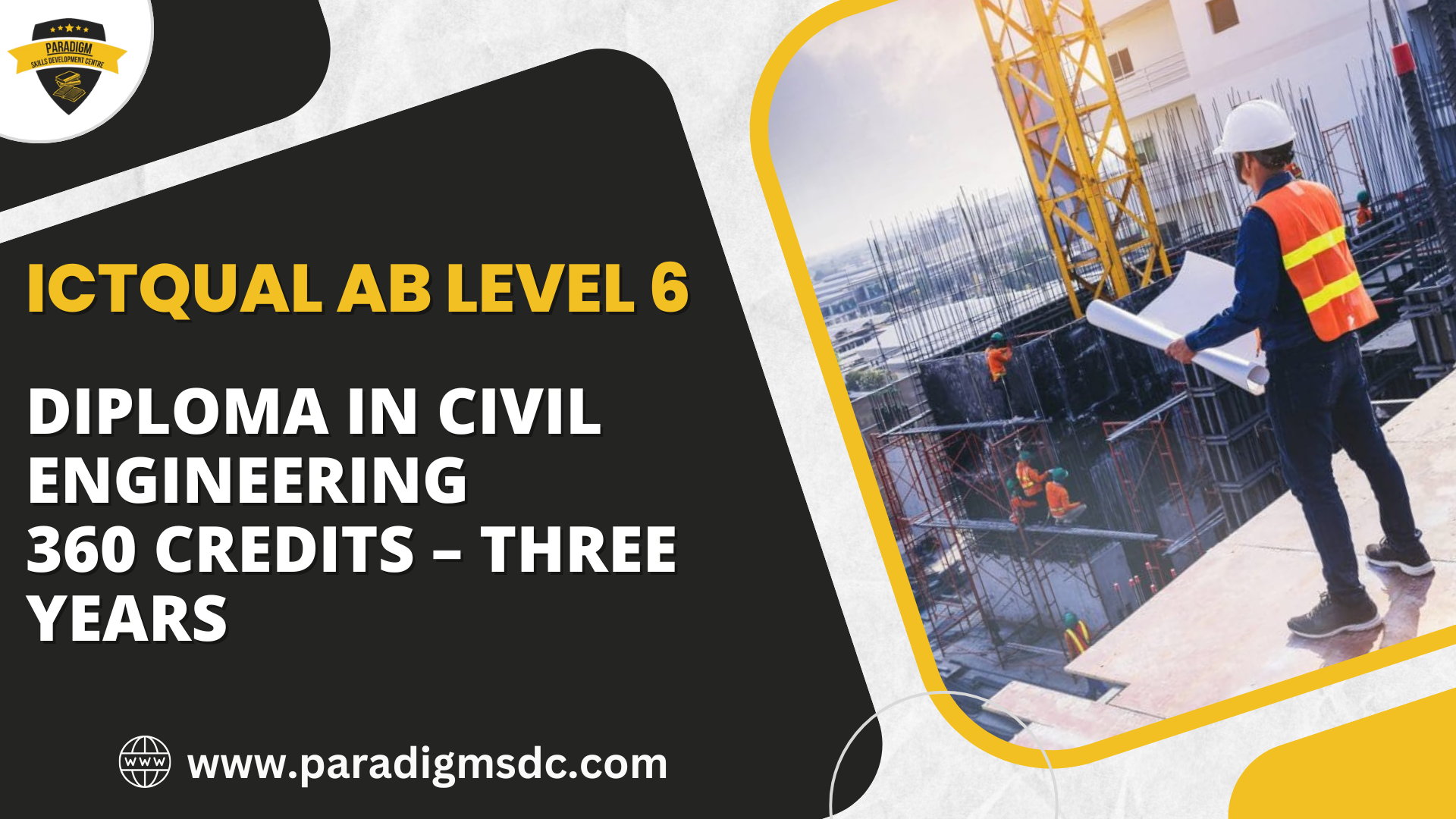
The ICTQual Level 6 Diploma in Civil Engineering is an advanced three-year qualification designed for individuals who aspire to build successful careers in the ever-evolving civil engineering sector. With 360 credits and a curriculum carefully structured to balance theory with practical applications, this program prepares graduates to manage complex engineering projects and contribute to building sustainable infrastructure worldwide.
Why Choose the ICTQual Level 6 Diploma in Civil Engineering?
Civil engineering is at the heart of modern society, from roads and bridges to skyscrapers and smart cities. This diploma equips learners with a comprehensive skill set that blends technical expertise, problem-solving, project management, and leadership skills. Students not only gain in-depth knowledge of engineering principles but also develop the ability to apply these concepts to real-world projects through case studies, practical work, and industry placements.
Course Structure
The program is divided into three years, each worth 120 credits, covering both foundational and advanced topics.
Year 1: Foundation and Core Engineering Concepts (120 Credits)
- Introduction to Civil Engineering
- Mathematics for Engineers
- Engineering Mechanics
- Construction Materials
- Surveying and Measurement
- Environmental Science for Engineers
- Technical Drawing and CAD
- Hydraulics and Fluid Mechanics
- Geology and Soil Mechanics
- Health and Safety in Construction
- Construction Methods and Technologies
- Communication and Professional Skills
Year 2: Advanced Engineering Topics and Specializations (120 Credits)
- Structural Analysis and Design
- Geotechnical Engineering
- Transportation Engineering
- Water Resources Engineering
- Building Information Modeling (BIM)
- Advanced Surveying and GPS Technologies
- Steel and Concrete Structures
- Sustainable Construction Practices
- Highway Design and Maintenance
- Construction Contracts and Law
- Project Planning and Management
- Engineering Economics
Year 3: Professional Practice, Innovation, and Capstone Projects (120 Credits)
- Professional Ethics and Responsibilities
- Advanced Structural Engineering Applications
- Bridge Design and Construction Management
- Foundation Engineering for Complex Projects
- Urban Infrastructure Planning and Development
- Earthquake-Resistant Structural Design
- Construction Site Management
- Environmental Impact Assessment
- Risk Assessment and Mitigation
- Entrepreneurship and Leadership in Civil Engineering
- Smart Cities and Sustainable Infrastructure
- Capstone Project (Professional Practice)
Entry Requirements
To enroll in this program, candidates should meet the following criteria:
- A Level 5 qualification (e.g., HND, NVQ Level 5, or equivalent) in a related field such as civil engineering or construction management.
- Minimum age: 16 years.
- Proficiency in English, particularly in technical terminology and academic writing.
- Strong background in mathematics and physics, especially in structural analysis and mechanics.
- Basic understanding of civil engineering principles, surveying, and engineering drawings.
Career Opportunities
Graduates of the ICTQual Level 6 Diploma in Civil Engineering are highly employable and can pursue roles such as:
- Civil Engineer – designing and managing infrastructure projects.
- Structural Engineer – ensuring the safety and stability of buildings and bridges.
- Geotechnical Engineer – specializing in soil mechanics and foundation design.
- Environmental Engineer – working on sustainable and eco-friendly solutions.
- Transportation Engineer – developing efficient transport systems.
- Project or Construction Manager – overseeing projects from start to finish.
Progression Pathways
Beyond employment, graduates can further their qualifications and professional standing:
- Professional Certifications – such as Project Management Professional (PMP), BIM certification, or health and safety credentials.
- Entrepreneurship – starting their own consultancy or construction firm.
- International Opportunities – civil engineers are in high demand globally, opening doors to careers across multiple countries.