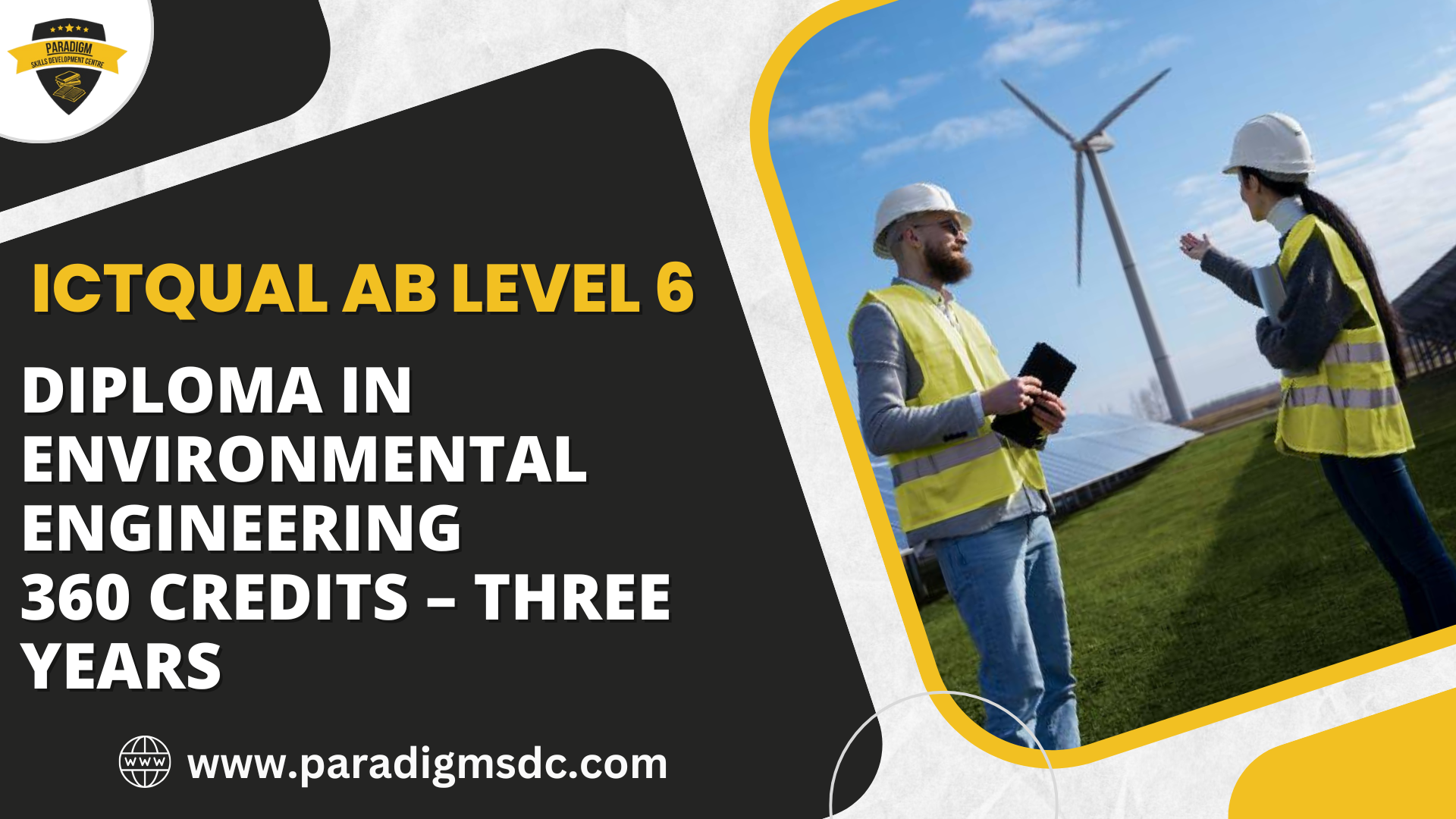
The ICTQual Level 6 Diploma in Environmental Engineering is a specialized qualification designed for individuals who want to combine engineering expertise with a passion for sustainability. Spanning three years and consisting of 360 credits, this diploma equips learners with the knowledge and practical skills required to address today’s most pressing environmental challenges.
From pollution control and waste management to renewable energy systems and sustainable infrastructure, the program provides a comprehensive foundation in environmental engineering principles. By integrating theory with hands-on training, students gain the ability to design, implement, and manage engineering solutions that protect natural resources and promote sustainability.
Course Overview
This diploma focuses on equipping students with the skills to understand and solve complex environmental issues. Learners study a wide range of subjects, including:
- Water and wastewater engineering
- Air pollution control and climate change adaptation
- Sustainable resource management and eco-design
- Environmental laws, policies, and ethics
- Green building technologies and renewable energy
Through laboratory work, field projects, and internships, students acquire real-world experience and develop the critical thinking, problem-solving, and project management skills essential for a successful career in the environmental sector.
Why Choose This Diploma?
- Future-Focused Learning – Gain expertise in areas that are central to tackling global sustainability challenges.
- Practical Training – Engage in real-world projects, internships, and research opportunities.
- Global Career Relevance – Prepare for opportunities in industries worldwide, from construction to energy.
- Professional Recognition – Build a strong foundation for certifications such as Chartered Environmentalist (CEnv) or LEED accreditation.
Entry Requirements
To enrol in the ICTQual Level 6 Diploma in Environmental Engineering, applicants must:
- Be at least 18 years old.
- Hold a Level 5 qualification (or equivalent) in a related subject, such as environmental science, engineering, or a technical discipline.
- Alternatively, have relevant work experience in environmental or engineering fields.
- Possess a strong foundation in Mathematics, Science, and English (Grade C or above).
- Non-native English speakers may need to provide proof of language proficiency.
Program Structure
The diploma is structured into 36 mandatory units over three years:
Year 1: Foundations of Environmental Engineering
- Introduction to Environmental Engineering
- Environmental Science Principles
- Basics of Environmental Chemistry
- Introduction to Renewable Energy Systems
- Mathematics for Environmental Engineers
- Engineering Mechanics and Materials
- Introduction to Fluid Mechanics
- Pollution Control and Prevention
- Environmental Regulations and Standards
- Soil Science and Geotechnical Engineering
- Introduction to Sustainable Development
- Communication Skills for Engineers
Year 2: Specialized Environmental Engineering Topics
- Advanced Water Supply and Wastewater Treatment
- Air Pollution Control and Management
- Waste Management and Recycling Techniques
- Hydrology and Water Resources Management
- Advanced Renewable Energy Technologies
- Environmental Impact Assessment (EIA)
- Risk Management in Environmental Engineering
- Environmental Economics and Policy
- Sustainable Infrastructure and Urban Planning
- Climate Change and Environmental Adaptation
- Environmental Data Collection and Analysis
- Environmental Project Management
Year 3: Advanced Studies and Applications
- Sustainable Resource Management
- Advanced Environmental Chemistry
- Energy Efficiency and Green Technologies
- Environmental Monitoring and Data Systems
- Life Cycle Assessment and Eco-Design
- Green Building and Construction Techniques
- Environmental Biotechnology
- Environmental Law and Ethics
- Research Methodology in Environmental Engineering
- Environmental Engineering Design Projects
- Industrial Internship in Environmental Engineering
- Research Project and Dissertation
Career Pathways & Progression
Graduates of this program have multiple opportunities to advance their careers and education:
1. Career Roles
- Environmental Engineer – Design and implement systems for pollution control, waste treatment, and resource conservation.
- Water Resources Engineer – Manage water supply and wastewater systems.
- Air Quality Specialist – Monitor and design strategies for improving air quality.
- Sustainability Consultant – Advise organizations on eco-friendly policies and green technologies.
- Environmental Compliance Officer – Ensure businesses meet environmental standards and legislation.
2. Professional Certifications
- Chartered Environmentalist (CEnv) status.
- LEED Certification for green building and construction.
- Project Management (PRINCE2, PMP) for leadership in large-scale environmental projects.
3. Entrepreneurship
Graduates may start their own consultancy or green tech ventures, offering solutions in renewable energy, waste reduction, and sustainable infrastructure.
4. Research and Development
Opportunities in R&D projects with universities, NGOs, or private industries, focusing on climate change solutions, eco-design, or environmental biotechnology.
5. International Opportunities
With sustainability at the forefront of global development, graduates can pursue careers abroad in multinational corporations, NGOs, and international agencies working on green initiatives.