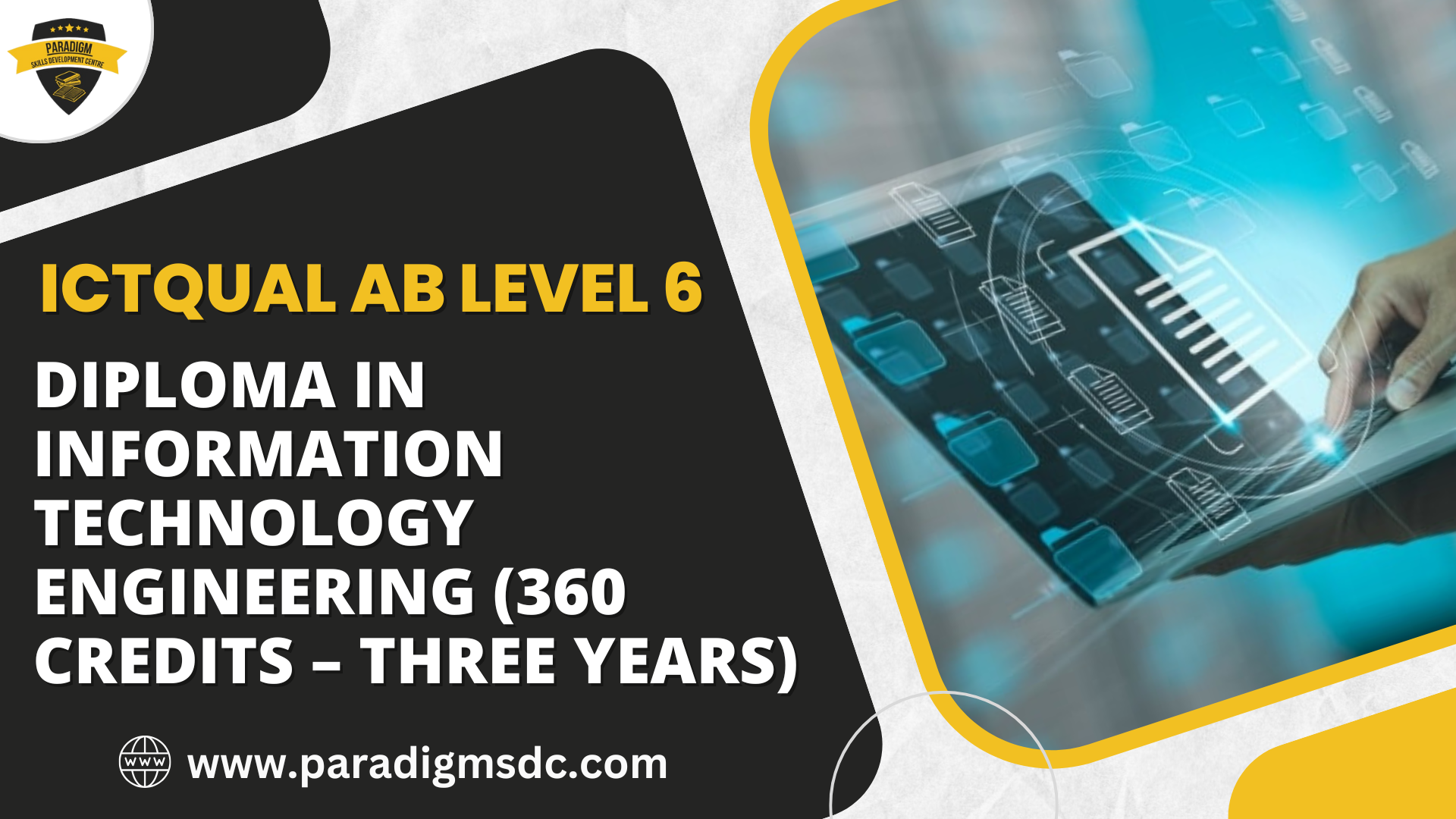
In today’s technology-driven world, Information Technology (IT) professionals play a vital role in shaping innovation and progress across industries. The ICTQual Level 6 Diploma in Information Technology Engineering is a comprehensive three-year programme with 360 credits, designed to provide learners with advanced technical expertise and practical skills in IT engineering.
This internationally recognised qualification equips learners with in-depth knowledge of systems design, network engineering, software development, cybersecurity, cloud technologies, and artificial intelligence. By blending theoretical frameworks with practical training, the programme prepares learners to become highly skilled IT professionals capable of tackling complex challenges in the fast-paced digital world.
The course is structured to ensure a balance of academic learning, hands-on projects, and real-world applications, making it suitable for fresh learners seeking a career in IT as well as professionals wishing to advance into higher technical or managerial roles. With growing global demand for IT engineers, this diploma provides a pathway to rewarding career opportunities in multiple sectors.
Entry Requirements
To enrol in the ICTQual Level 6 Diploma in Information Technology Engineering (360 Credits – Three Years), applicants must meet the following criteria:
- Age Requirement: Applicants must be at least 16 years old.
- Educational Background: A Level 5 qualification (or equivalent) in IT, Computing, or Engineering (e.g., A-Levels, BTEC National Diploma, or similar).
- Work Experience: Applicants with relevant technical or IT engineering experience may be considered on a case-by-case basis.
- Mathematics and English: A strong foundation in these subjects is required (typically GCSEs or equivalent).
- Basic IT Knowledge: Familiarity with computer systems, programming, or digital tools is recommended, though no advanced IT engineering experience is necessary.
- English Proficiency: Non-native speakers may be required to provide proof of English language ability.
Programme Structure
The diploma consists of 36 mandatory units, spread over three years:
Year 1 – Foundation and Core Concepts
- Introduction to Information Technology
- Computer Architecture and Hardware
- Operating Systems Fundamentals
- Networking Fundamentals
- Programming Principles
- Database Design and Management
- Web Technologies and Development
- IT Support and Troubleshooting
- Mathematics for IT
- Introduction to Cybersecurity
- Systems Analysis and Design
- Project Management Fundamentals
Year 2 – Specialised IT Engineering
- Advanced Networking and Protocols
- Cloud Computing and Virtualisation
- Advanced Programming Techniques
- Advanced Database Systems
- Mobile Application Development
- System Security and Risk Management
- Enterprise IT Infrastructure
- Software Engineering and Development Lifecycle
- IT Management and Governance
- Business Intelligence and Data Analytics
- Human-Computer Interaction
- Ethical and Legal Issues in IT
Year 3 – Professional Development and Advanced Implementation
- Advanced Networking Technologies
- Artificial Intelligence and Machine Learning
- Cybersecurity for IT Professionals
- Cloud Infrastructure and Services
- Project Management for IT Projects
- Advanced Software Development Practices
- System Integration and Implementation
- IT Research Methodologies
- Professional Practice and Ethics
- Internship / Industry Placement
- Capstone Project I: System Design and Development
- Capstone Project II: Evaluation and Implementation
Career Progression Opportunities
Graduates of this diploma will have the technical expertise and industry-ready skills to pursue advanced professional roles or further academic pathways.
Professional Certifications
- Cisco Certified Network Associate (CCNA) – Specialise in networking.
- CompTIA Security+ – Enhance skills in cybersecurity.
- CISSP (Certified Information Systems Security Professional) – For advanced security and risk management roles.
- AWS Certified Solutions Architect – Specialisation in cloud computing and infrastructure.
Career Advancement in IT Engineering
- Network Engineer – Design and manage secure, scalable networks.
- Software Developer – Build applications using modern programming practices.
- IT Project Manager – Lead IT projects from design to delivery.
- Cybersecurity Analyst – Protect systems and data from cyber threats.
Entrepreneurship
- Start Your Own IT Business – Launch ventures in IT consulting, support services, or software development.
Specialised Roles
- Cloud Architect – Develop enterprise-level cloud infrastructure.
- Data Analyst / Scientist – Apply data science and analytics to business solutions.
- AI / ML Engineer – Design and implement intelligent systems.
Industry-Specific Opportunities
- Healthcare IT Specialist – Develop and maintain healthcare IT systems.
- FinTech Specialist – Create innovative solutions in the finance and technology sector.