Course Introduction
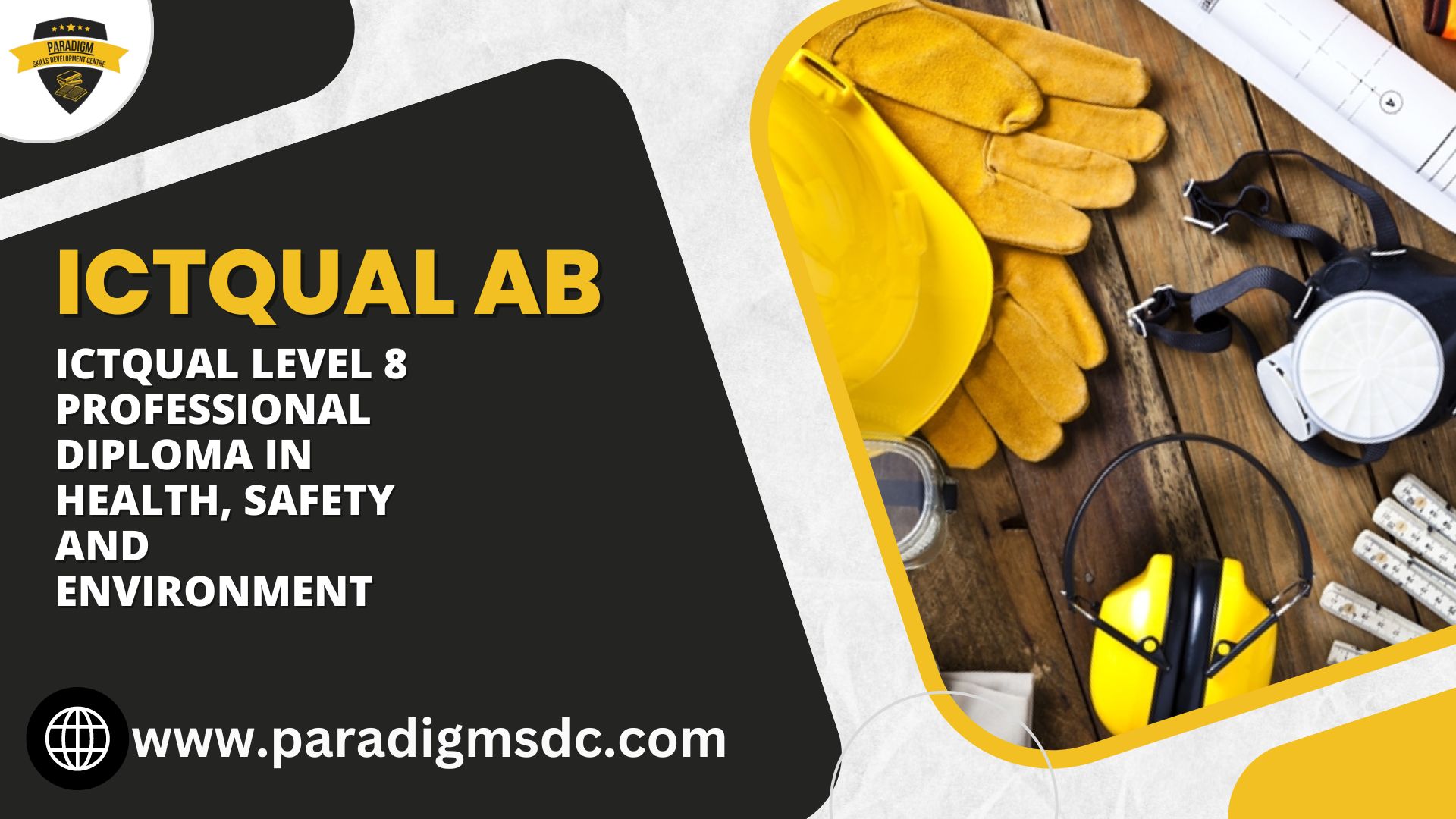
The ICTQual Level 8 Professional Diploma in Health, Safety, and Environment is designed for advanced professionals aiming to deepen their expertise in managing and leading health, safety, and environmental initiatives within diverse industries. This diploma integrates advanced theoretical knowledge with practical applications, preparing individuals to tackle complex challenges and drive sustainable practices in their organizations.
Course Overview
This comprehensive program covers an array of critical topics essential for high-level management and leadership roles in health, safety, and environment sectors. The curriculum is meticulously crafted to provide learners with a deep understanding of advanced risk management strategies, regulatory frameworks, and sustainable environmental practices. The course encourages critical thinking and problem-solving, equipping professionals with the skills needed to implement effective health, safety, and environmental policies.
Course Study Units
Study Unit 1: Advanced Risk Management and Assessment
- In-depth risk assessment techniques and methodologies
- Advanced hazard identification and risk control strategies
- Development and implementation of risk management frameworks
- Application of quantitative and qualitative risk analysis tools
- Case studies on managing complex risks in various industries
Study Unit 2: Legislative and Regulatory Frameworks in Health, Safety, and Environment
- Comprehensive overview of international and national HSE laws and regulations
- Detailed study of regulatory compliance requirements and best practices
- Impact of legislation on organizational HSE policies and procedures
- Strategies for effective implementation of legal and regulatory standards
- Comparative analysis of global HSE regulations
Study Unit 3: Environmental Management and Sustainability
- Principles of environmental management and sustainable practices
- Development and implementation of environmental management systems (EMS)
- Assessment of environmental impact and mitigation strategies
- Sustainable resource management and waste reduction techniques
- Case studies on successful environmental management initiatives
Study Unit 4: Health and Safety Leadership and Culture
- Leadership theories and practices in health, safety, and environmental management
- Building and sustaining a positive HSE culture within organizations
- Effective communication and training strategies for HSE
- Psychological and sociological aspects of workplace safety culture
- Case studies on successful HSE leadership and cultural transformatio
Research Project: Capstone Research in Health, Safety, and Environment
- Independent research on a contemporary issue in health, safety, and environmental management
- Application of advanced research methodologies and analytical tools
- Development of a research proposal, literature review, data collection, and analysis
- Presentation of findings and recommendations
- Contribution to the body of knowledge in the field of HSE management
Learning Outcomes
Upon completion of this diploma, participants will be able to:
Study Unit 1: Advanced Risk Management and Assessment
- Mastery of Advanced Techniques: Critically evaluate and apply sophisticated risk assessment techniques and methodologies to identify and control complex workplace hazards.
- Strategic Framework Development: Design and implement comprehensive risk management frameworks tailored to specific organizational contexts, ensuring effective hazard mitigation.
- Quantitative and Qualitative Analysis: Utilize and integrate advanced quantitative and qualitative risk analysis tools to assess risk scenarios accurately and develop robust control measures.
- Industry Case Studies: Analyze and synthesize case studies from diverse industries to derive best practices and innovative solutions for managing complex risks.
Study Unit 2: Legislative and Regulatory Frameworks in Health, Safety, and Environment
- Comprehensive Legal Knowledge: Demonstrate an in-depth understanding of international and national HSE laws and regulations, including their historical evolution and contemporary application.
- Regulatory Compliance Expertise: Develop and implement detailed compliance strategies that align with regulatory requirements and industry best practices, ensuring organizational adherence to legal standards.
- Impact Assessment: Critically assess the impact of HSE legislation on organizational policies and procedures, and devise strategies to integrate legal requirements seamlessly into business operations.
- Global Regulatory Analysis: Conduct a comparative analysis of global HSE regulations to identify differences and commonalities, enabling the formulation of globally compliant HSE strategies.
Study Unit 3: Environmental Management and Sustainability
- Sustainable Practices Mastery: Apply advanced principles of environmental management and sustainability to develop innovative solutions for contemporary environmental challenges.
- EMS Implementation: Design, implement, and evaluate comprehensive environmental management systems (EMS) that promote sustainability and regulatory compliance within organizations.
- Impact Mitigation: Assess environmental impacts using advanced methodologies and develop effective mitigation strategies to minimize organizational ecological footprints.
- Sustainable Resource Management: Implement cutting-edge techniques for sustainable resource management and waste reduction, drawing from successful environmental management initiatives.
Study Unit 4: Health and Safety Leadership and Culture
- Leadership Theory Application: Apply advanced leadership theories and practices to health, safety, and environmental management, fostering a culture of safety and sustainability within organizations.
- Cultural Transformation: Design and implement strategies to build and sustain a positive HSE culture, driving continuous improvement and engagement at all organizational levels.
- Communication and Training: Develop and execute effective communication and training programs that enhance HSE awareness and competence among employees.
- Psychosocial Insights: Analyze psychological and sociological aspects of workplace safety culture to develop interventions that address human factors and improve overall safety performance.
- Case Study Synthesis: Critically evaluate case studies of successful HSE leadership and cultural transformation to identify key success factors and best practices.
Research Project: Capstone Research in Health, Safety, and Environment
- Independent Research: Conduct independent, advanced-level research on a contemporary issue in health, safety, and environmental management, contributing new insights to the field.
- Research Methodologies: Apply rigorous research methodologies and analytical tools to investigate HSE topics, ensuring the validity and reliability of findings.
- Comprehensive Research Proposal: Develop a thorough research proposal, including a detailed literature review, robust data collection methods, and sophisticated data analysis techniques.
- Presentation and Dissemination: Present research findings and practical recommendations effectively to diverse stakeholders, showcasing the research’s relevance and applicability.
- Knowledge Contribution: Make a significant contribution to the body of knowledge in HSE management, addressing gaps and proposing innovative solutions to contemporary challenges.
These learning outcomes ensure that graduates of the Level 8 Professional Diploma in Health, Safety, and Environment are equipped with the advanced knowledge and skills necessary to excel in senior HSE roles, driving innovation and excellence in their organizations.
Course Benefits
- Professional Advancement: Equip yourself with the knowledge and skills required for senior management roles in health, safety, and environment sectors.
- Industry Recognition: Gain a qualification that is recognized and respected by employers worldwide.
- Comprehensive Learning: Benefit from a curriculum that blends theoretical knowledge with practical applications.
- Networking Opportunities: Connect with industry experts and fellow professionals, enhancing your professional network.
- Enhanced Decision-Making: Develop critical thinking and problem-solving skills essential for high-level decision-making.
Who is This Course For?
- Senior Health, Safety, and Environmental Managers: Professionals seeking to advance their careers and take on more complex responsibilities.
- Aspiring Leaders: Individuals aiming to move into senior leadership roles within the health, safety, and environment sectors.
- Consultants and Advisors: Professionals providing consultancy services who wish to deepen their expertise and offer more comprehensive solutions.
- Regulatory and Compliance Officers: Those responsible for ensuring organizational compliance with health, safety, and environmental regulations.
- Academics and Researchers: Individuals involved in research and teaching who seek to expand their knowledge and contribute to the field.
Future Progression
Graduates of the ICTQual Level 8 Professional Diploma in Health, Safety, and Environment can pursue various advanced career paths, including:
- Executive Roles: Such as Chief Safety Officer or Environmental Director.
- Specialized Consultancy: Offering expert advice to organizations on health, safety, and environmental matters.
- Academic and Research Positions: Contributing to academic knowledge and conducting high-level research in the field.
- Policy Development: Working with governmental and non-governmental organizations to develop and implement health, safety, and environmental policies.
The ICTQual Level 8 Professional Diploma in Health, Safety, and Environment is your gateway to becoming a leader in creating safe, healthy, and sustainable workplaces. Join this program to enhance your expertise and make a significant impact in your organization and beyond.