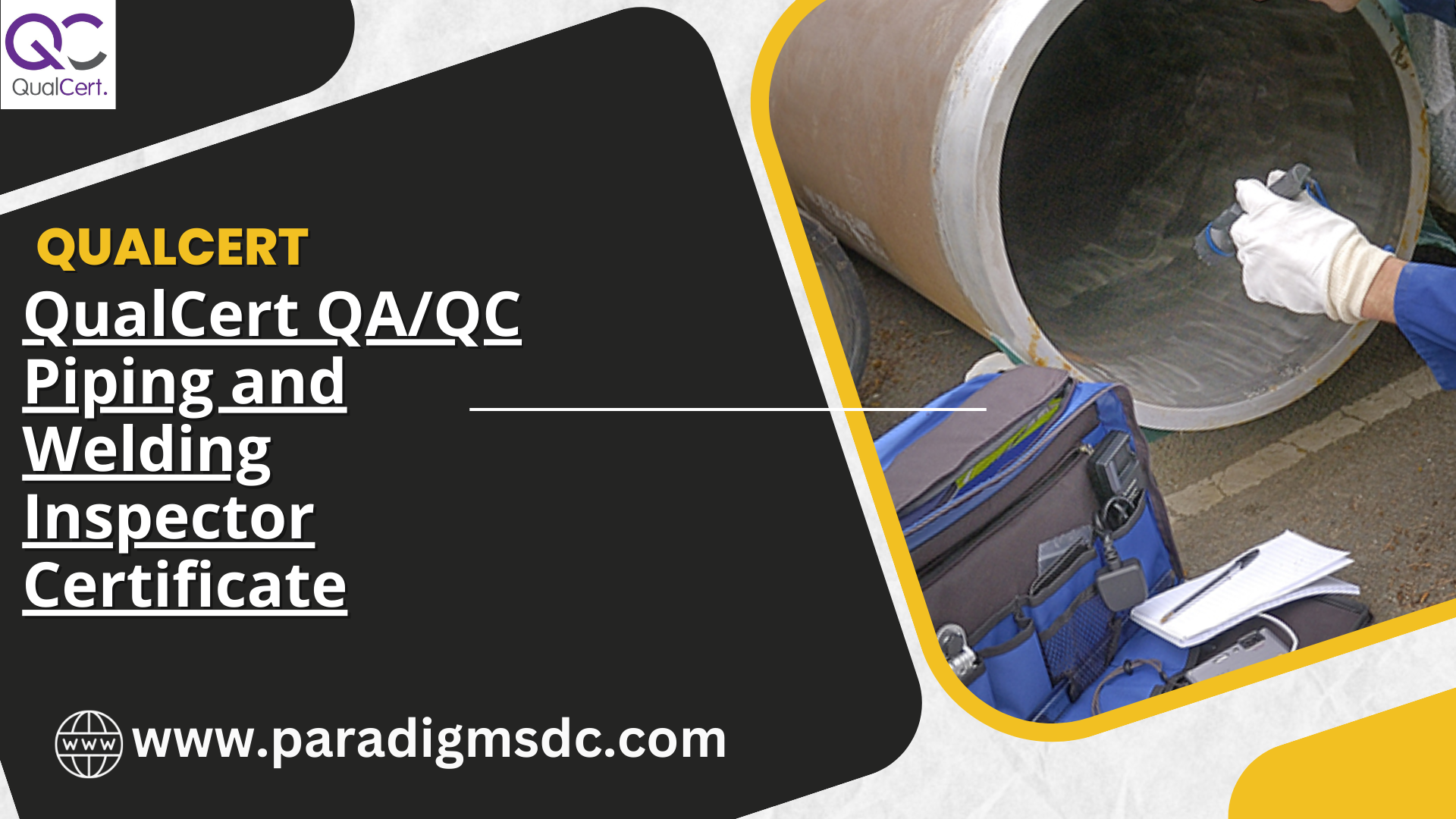
In today’s dynamic engineering and construction sectors, the demand for skilled QA/QC professionals in piping and welding inspection continues to grow across industries such as oil and gas, petrochemical, energy, and infrastructure. The QualCert QA/QC Piping and Welding Inspector Certificate is a comprehensive training programme designed to equip learners with the specialised skills, technical knowledge, and practical understanding necessary to excel in this critical role.
This qualification is aligned with international standards and offers professionals the tools to ensure quality control and assurance in high-pressure and high-risk environments where structural integrity and compliance are essential.
With the increasing complexity of industrial systems, the role of QA/QC professionals is more important than ever. The QualCert QA/QC Piping and Welding Inspector Certificate offers the expertise, credibility, and confidence needed to take on these critical responsibilities in a global context. By bridging the gap between technical education and on-site inspection realities, this course supports the next generation of quality professionals in delivering excellence, safety, and compliance across all sectors.
Study Units:
| Unit Ref# | Unit Title | Credit | GLH | TQT |
| QC01019 – 1 | Fundamentals of QA/QC in Piping and Welding Systems | 5 | 20 | 30 |
| QC01019 – 2 | Piping Materials, Codes, and Dimensional Inspection | 5 | 20 | 30 |
| QC01019 – 3 | Welding Inspection, Symbols, and Quality Assessment | 5 | 20 | 30 |
| QC01019– 4 | Piping Fabrication, Installation, and Erection Standards | 5 | 20 | 30 |
| QC01019 – 5 | Non-Destructive Testing (NDT) and Hydrostatic Pressure Testing | 5 | 20 | 30 |
| QC01019 – 6 | QA/QC Documentation, HSE Compliance, and Regulatory Frameworks | 5 | 20 | 30 |
Learning Outcome:
Fundamentals of QA/QC in Piping and Welding Systems
- Understand the roles and responsibilities of QA/QC inspectors in industrial piping and welding.
- Identify core concepts in quality assurance and quality control frameworks.
- Recognise industry-specific standards such as ISO, ASME, AWS, and API.
- Apply quality control procedures for welding and piping processes.
Piping Materials, Codes, and Dimensional Inspection
- Classify types of piping materials, grades, and their industrial applications.
- Interpret technical codes including ASME B31.1/B31.3, ASTM, and API.
- Perform visual and dimensional inspection of piping components.
- Assess compliance with technical specifications and drawings.
Welding Inspection, Symbols, and Quality Assessment
- Understand common welding processes including SMAW, GTAW, and MIG/MAG.
- Identify and interpret welding symbols and procedure specifications (WPS/PQR).
- Inspect welds for defects using visual and measurement techniques.
- Evaluate weld quality as per applicable standards.
Piping Fabrication, Installation, and Erection Standards
- Understand fabrication and installation techniques used in piping systems.
- Apply inspection protocols during pipe fit-up, alignment, and erection.
- Identify tolerances and deviations during construction.
- Monitor installation compliance with project specifications and standards.
Non-Destructive Testing (NDT) and Hydrostatic Pressure Testing
- Understand NDT methods such as RT, UT, PT, MT, and VT.
- Apply NDT techniques for inspecting welds and piping systems.
- Plan and supervise hydrostatic pressure testing procedures.
- Interpret NDT results and recommend corrective actions where needed.
QA/QC Documentation, HSE Compliance, and Regulatory Frameworks
- Maintain quality control documentation and inspection records.
- Prepare reports, test certificates, and traceability documentation.
- Apply HSE best practices during inspection and testing activities.
- Interpret legal and regulatory requirements related to piping and welding QA/QC.