Course Introduction
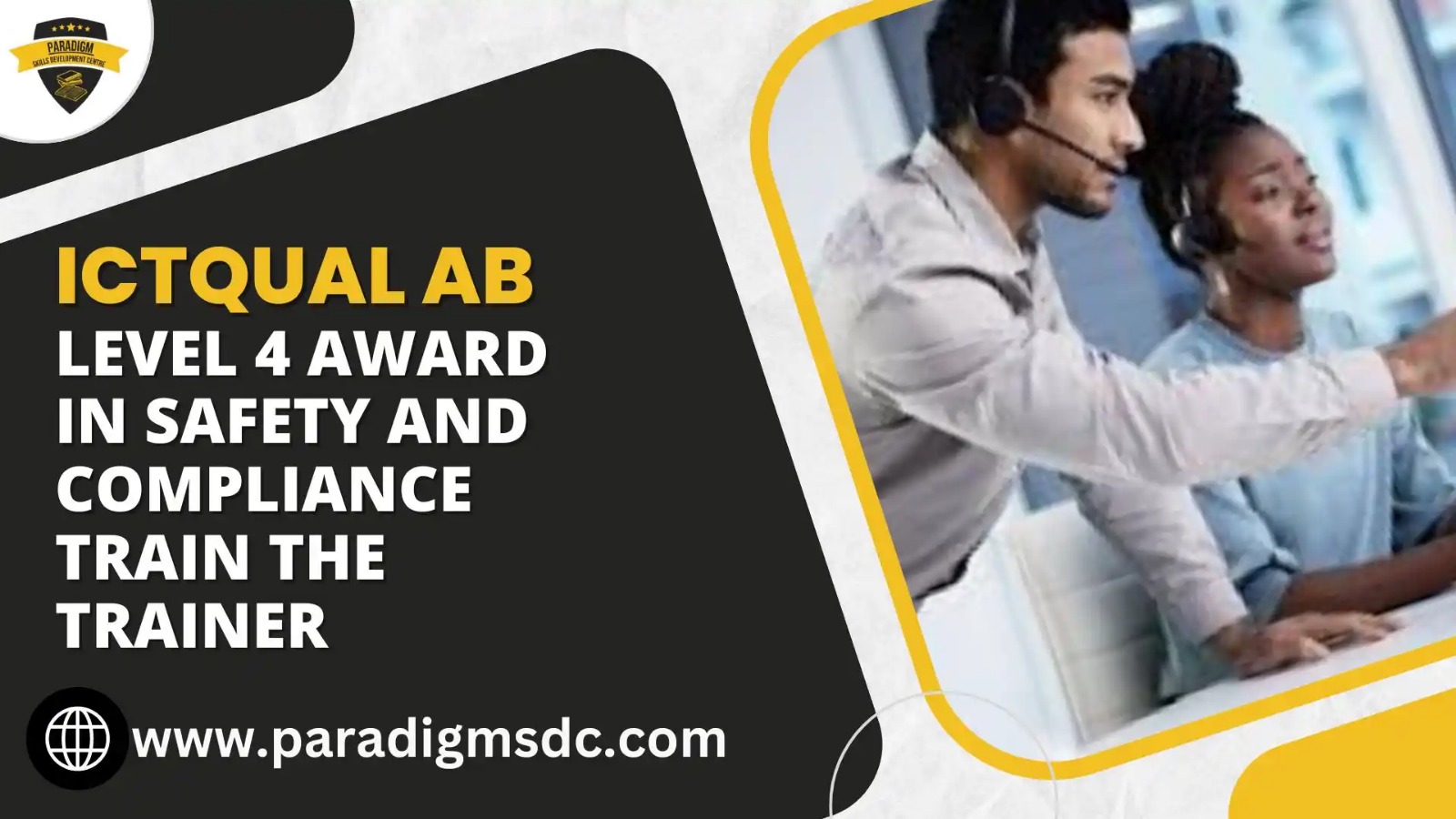
Ensuring safety and compliance in the workplace is critical for the well-being of employees and the success of any organization. The ICTQual Level 4 Award in Safety and Compliance Train the Trainer course is designed to provide professionals with the expertise needed to train others in these essential areas. This program aims to cultivate a group of skilled trainers who can promote a culture of safety and compliance, reducing risks and enhancing organizational performance.
Course Overview
The ICTQual Level 4 Award in Safety and Compliance Train the Trainer is a comprehensive program that covers all key aspects of workplace safety and regulatory compliance. The course combines theoretical knowledge with practical applications, ensuring that participants are well-prepared to train others in maintaining high standards of safety and compliance. The curriculum includes modules on safety management systems, risk assessment, legal requirements, and effective training methodologies.
Course Study Units
- Fundamentals of Safety and Compliance
- Risk Assessment and Hazard Identification
- Safety Training Design and Delivery
- Legal and Regulatory Compliance
- Incident Investigation and Reporting
- Emergency Preparedness and Response
- Behavioral Safety and Safety Culture
- Auditing and Compliance Monitoring
- Training Evaluation and Continuous Improvement
- Professional Development and Growth
Learning Outcomes
Upon completion of the course, participants will be able to:
- Fundamentals of Safety and Compliance
- Understand the basic principles and concepts of safety management systems and regulatory compliance.
- Recognize the importance of establishing and maintaining a culture of safety and compliance within organizations.
- Demonstrate knowledge of relevant legislation, regulations, and industry standards governing safety and compliance.
- Risk Assessment and Hazard Identification
- Develop skills in identifying hazards, assessing risks, and prioritizing control measures to mitigate risks effectively.
- Apply risk assessment methodologies to various workplace environments and scenarios.
- Implement strategies to proactively manage and reduce occupational health and safety risks.
- Safety Training Design and Delivery
- Design effective safety training programs that address the specific needs and objectives of learners.
- Develop engaging training materials, activities, and exercises that promote active learning and knowledge retention.
- Deliver training sessions using appropriate techniques and methodologies to maximize learner engagement and comprehension.
- Legal and Regulatory Compliance
- Understand the legal requirements and regulatory obligations related to safety and compliance in the workplace.
- Ensure compliance with relevant legislation, standards, and industry-specific regulations.
- Implement practices and procedures that align with legal and regulatory requirements to maintain a safe and compliant work environment.
- Incident Investigation and Reporting
- Conduct thorough incident investigations using root cause analysis techniques to identify underlying causes and contributing factors.
- Report incidents accurately and timely in accordance with regulatory requirements and organizational procedures.
- Implement corrective actions and preventive measures to prevent recurrence of incidents and improve safety performance.
- Emergency Preparedness and Response
- Develop emergency response plans and procedures to effectively address emergencies and crisis situations.
- Train employees on emergency procedures, evacuation protocols, and response strategies.
- Conduct emergency drills and exercises to test preparedness and response effectiveness.
- Behavioral Safety and Safety Culture
- Understand the influence of human behavior on safety performance and organizational culture.
- Implement strategies to promote a positive safety culture and encourage safe behaviors among employees.
- Engage employees in safety initiatives and empower them to take ownership of safety within the organization.
- Auditing and Compliance Monitoring
- Conduct safety audits, inspections, and compliance assessments to identify areas of non-compliance and opportunities for improvement.
- Monitor safety performance and compliance metrics to track progress and identify trends over time.
- Take corrective action as necessary to address non-compliance issues and improve overall safety performance.
- Training Evaluation and Continuous Improvement
- Develop and implement evaluation methods to assess the effectiveness of safety training programs and initiatives.
- Gather feedback from participants and stakeholders to identify strengths, weaknesses, and areas for improvement.
- Use evaluation results to make data-driven decisions and continuously improve safety training processes and outcomes.
- Professional Development and Growth
- Engage in continuous learning and professional development activities to stay updated with industry trends and best practices in safety and compliance.
- Pursue opportunities for career advancement and growth in safety and compliance roles.
- Demonstrate a commitment to lifelong learning and ongoing improvement in safety and compliance knowledge and skills.
Course Benefits
- Enhanced Knowledge: Gain a thorough understanding of safety and compliance principles and practices.
- Professional Development: Improve your credentials and career prospects in safety management and compliance.
- Practical Skills: Acquire practical training skills applicable in various organizational settings.
- Impactful Training: Learn to design and deliver training sessions that lead to significant improvements in workplace safety.
- Networking Opportunities: Connect with other professionals dedicated to safety and compliance.
Who is this Course For?
This course is ideal for:
- Safety officers and managers in various industries.
- Human resources professionals responsible for workplace safety training.
- Compliance officers and regulatory specialists.
- Trainers and educators in safety and compliance.
- Managers and supervisors looking to enhance workplace safety.
- Anyone committed to promoting a safe and compliant workplace.
Future Progression
Upon completing the ICTQual Level 4 Award in Safety and Compliance Train the Trainer, participants can pursue further qualifications and career advancements, such as:
- Advanced certifications in occupational safety and health.
- Leadership roles in safety management and compliance.
- Opportunities to contribute to policy development and implementation in workplace safety.
- Specialized training roles in larger organizations or safety consultancies.
Investing in the ICTQual Level 4 Award in Safety and Compliance Train the Trainer is a vital step towards becoming a leader in workplace safety and compliance. By gaining the expertise to train others, you will help ensure that safety and compliance standards are rigorously maintained, ultimately contributing to safer and more efficient workplaces.