The global economy relies heavily on efficient and resilient supply chains. Organisations require professionals with the expertise to design, optimise, and lead logistics networks that ensure smooth movement of goods, services, and information worldwide.
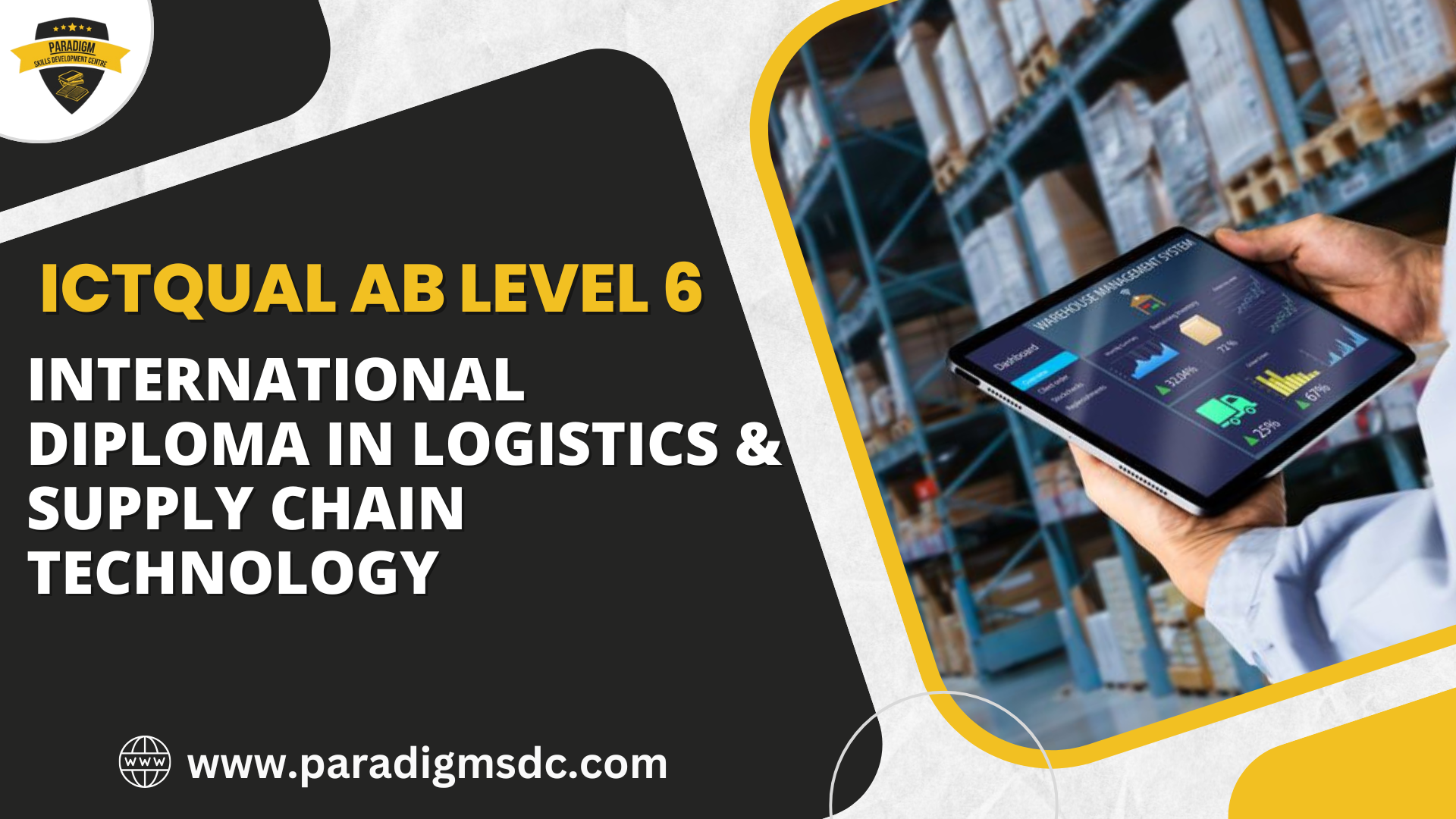
The ICTQual AB Level 6 International Diploma in Logistics & Supply Chain Technology is a three-year, 360-credit programme that equips learners with technical expertise, operational knowledge, and strategic leadership skills to thrive in the logistics and supply chain sector.
Learners will master areas such as procurement strategies, inventory management, transport coordination, warehouse optimisation, global trade, and technology-driven logistics solutions. The programme combines theoretical knowledge with applied learning, including simulations, case studies, projects, and research, preparing graduates to solve real-world challenges in complex supply chain networks.
Fresh learners will gain a strong foundation in supply chain operations and gradually advance to strategic planning, sustainability, and technology applications. Experienced professionals will leverage the programme to deepen their analytical, leadership, and innovation capabilities to drive efficiency and transformation in their organisations.
Entry Requirements
To enrol in the ICTQual AB Level 6 International Diploma in Logistics & Supply Chain Technology, learners must meet the following:
- Age Requirement: Minimum 18 years.
- Educational Background: Recognised Level 5 qualification in logistics, supply chain management, transport, business, or related fields.
- Candidates without formal qualifications but with substantial professional experience may be considered.
- Professional Experience:
- Fresh learners: No prior experience required.
- Experienced professionals: 3–5 years of relevant work in logistics, supply chain, procurement, or transport management is recommended.
- English Proficiency: IELTS 5.5 or equivalent, or evidence of prior study/work in English.
- Commitment: Ability to complete the full three-year (360-credit) programme, including theoretical and applied components.
Programme Structure
The diploma consists of 36 mandatory units delivered across three academic years.
Year 1 – Foundations of Logistics & Supply Chain
- Introduction to Logistics and Supply Chain Management
- Principles of Transport and Distribution
- Inventory Management and Control Systems
- Procurement and Supplier Management
- Basics of Warehouse Operations
- Supply Chain Economics and Policy
- Fundamentals of Risk Management in Logistics
- Business Communication and Professional Ethics
- Introduction to Global Trade and Regulations
- Sustainability and Environmental Management in Supply Chains
- Information Systems in Logistics
- Introduction to Project Management
Year 2 – Applied Logistics Operations & Management
- Advanced Supply Chain Planning and Scheduling
- Freight and Transportation Management
- Procurement Strategy and Supplier Evaluation
- Warehouse and Inventory Optimisation Techniques
- Logistics Technology and Digitalisation
- Safety, Compliance, and Risk Mitigation in Operations
- Logistics Performance Measurement and KPIs
- Lean and Six Sigma Applications in Supply Chains
- Global Logistics and International Trade Management
- Human Resource and Team Management in Logistics
- Applied Case Studies in Supply Chain Management
- Simulation Exercises in Logistics Operations
Year 3 – Strategic Leadership & Advanced Supply Chain Management
- Strategic Supply Chain Management
- Leadership and Decision-Making in Logistics
- Advanced Procurement and Contract Management
- Global Supply Chain Integration and Coordination
- Transport Network Design and Optimisation
- Risk Management and Crisis Response in Supply Chains
- Sustainability, Circular Economy, and Green Logistics
- Emerging Technologies and Innovation in Supply Chains
- Data Analysis and Research Methods for Logistics
- Independent Research Project in Logistics & Supply Chain
- Capstone Project: Applied Strategic Supply Chain Management
- Performance Audit and Continuous Improvement Strategies
Career Opportunities
Graduates will be equipped for senior and specialised roles in logistics, transport, and supply chain management, including:
- Supply Chain Manager – Oversee end-to-end operations, develop efficiency strategies, and implement sustainable practices.
- Logistics Coordinator – Manage transport, warehousing, and distribution while ensuring compliance and efficiency.
- Procurement & Sourcing Specialist – Lead supplier evaluation, contract negotiations, and strategic procurement initiatives.
- Operations Manager – Direct daily logistics operations, monitor KPIs, and manage teams for safe and efficient workflows.
- Inventory & Warehouse Manager – Optimise warehouse layouts, control inventory systems, and streamline distribution.
- Transport & Distribution Planner – Plan multimodal transport routes, manage fleets, and enhance delivery performance.
- Risk & Compliance Officer – Ensure legal/regulatory compliance, mitigate risks, and prepare contingency plans.
- Supply Chain Analyst – Analyse performance data, identify bottlenecks, and recommend technology-driven improvements.