Course Introduction
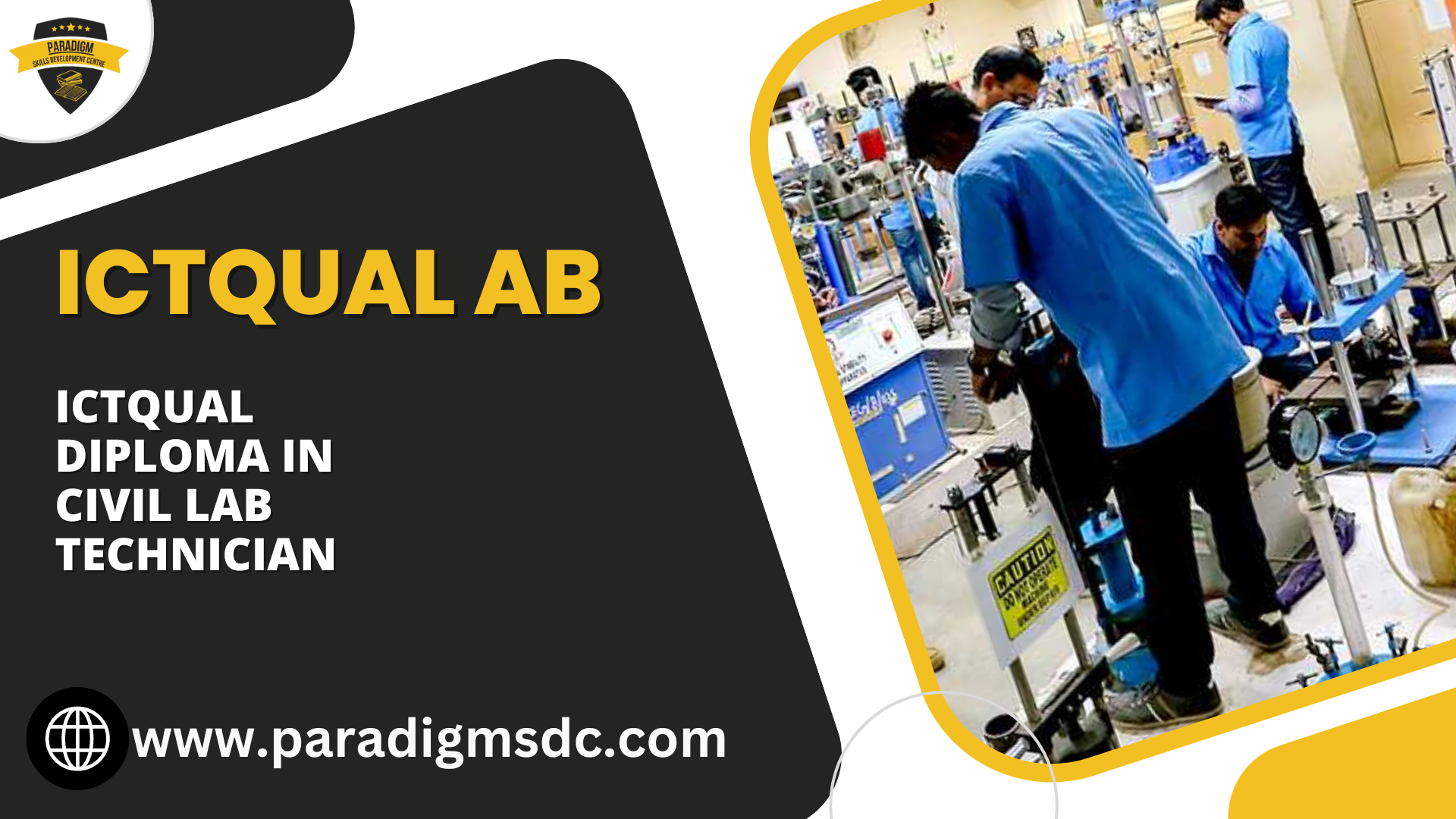
The ICTQual Diploma in Civil Lab Technician is a specialized program designed for individuals seeking to build a career in civil engineering laboratories. This diploma equips students with the practical skills and theoretical knowledge required to excel in testing, analyzing, and managing construction materials. Whether you’re aiming to work in a lab setting, construction site, or quality control role, this course offers a robust foundation for a successful career in civil engineering.
Course Overview
The ICTQual Diploma in Civil Lab Technician provides a blend of theoretical learning and hands-on experience in civil engineering laboratory practices. The curriculum is designed to cover various aspects of laboratory operations, including testing of construction materials, quality assurance, and compliance with industry standards. Students will engage in practical sessions and gain experience with state-of-the-art lab equipment, ensuring they are well-prepared for the demands of the industry.
Course Study Units
The course is structured into several key study units, each focusing on different aspects of civil lab technician duties:
- Introduction to Civil Engineering Materials
- Laboratory Safety and Procedures
- Concrete Technology and Testing
- Asphalt Technology and Testing
- Soil Mechanics and Testing
- Aggregate Testing and Quality Control
- Metals and Construction Materials Testing
- Non-Destructive Testing (NDT)
- Quality Assurance and Documentation
- Advanced Laboratory Techniques
Learning Outcomes
Upon completing the ICTQual Diploma in Civil Lab Technician, students will be able to:
- Introduction to Civil Engineering Materials
- Identify common construction materials used in civil engineering projects.
- Understand the basic properties, characteristics, and applications of civil engineering materials.
- Explain the importance of material testing and analysis in ensuring quality and performance in construction.
- Laboratory Safety and Procedures
- Demonstrate knowledge of laboratory safety protocols and procedures.
- Apply safe practices for handling hazardous materials, using laboratory equipment, and responding to emergencies.
- Maintain a safe and organized laboratory environment for conducting experiments and tests.
- Concrete Technology and Testing
- Understand the principles of concrete mix design and proportioning.
- Perform laboratory tests to evaluate fresh and hardened concrete properties.
- Interpret test results to assess concrete quality and suitability for construction applications.
- Asphalt Technology and Testing
- Describe the process of asphalt mix design and production.
- Conduct laboratory tests to assess asphalt properties and performance.
- Apply quality control measures to ensure the durability and longevity of asphalt pavements.
- Soil Mechanics and Testing
- Explain the fundamentals of soil classification, composition, and behavior.
- Perform laboratory tests to determine soil properties such as moisture content, density, and compaction.
- Analyze soil test results to assess soil suitability for construction and foundation design.
- Aggregate Testing and Quality Control
- Identify different types of aggregates used in construction.
- Conduct laboratory tests to evaluate aggregate properties such as gradation, specific gravity, and abrasion resistance.
- Implement quality control measures to ensure the quality and consistency of aggregates for concrete and asphalt production.
- Metals and Construction Materials Testing
- Describe the properties and characteristics of common metals used in construction.
- Perform laboratory tests to assess metal properties such as tensile strength, yield strength, and hardness.
- Apply quality assurance measures to ensure the integrity and reliability of metal components in construction projects.
- Non-Destructive Testing (NDT)
- Understand the principles and applications of non-destructive testing techniques such as ultrasonic testing, radiographic testing, and magnetic particle testing.
- Perform NDT inspections to detect defects, flaws, and discontinuities in materials and structures.
- Interpret NDT results to assess the condition and integrity of materials and components.
- Quality Assurance and Documentation
- Implement quality assurance procedures to maintain consistency and reliability in materials testing.
- Document test procedures, results, and compliance with industry standards and specifications.
- Prepare accurate and comprehensive test reports and documentation for regulatory compliance and project records.
- Advanced Laboratory Techniques
- Apply advanced laboratory techniques and instrumentation for specialized testing and analysis.
- Conduct research, development, and problem-solving in civil engineering materials.
- Demonstrate proficiency in advanced testing methods and their applications in industry and research settings.
Course Benefits
The ICTQual Diploma in Civil Lab Technician offers several advantages:
- Industry-Relevant Skills: Gain practical skills that are directly applicable to the civil engineering and construction industries.
- Hands-On Experience: Work with modern lab equipment and real-world materials to build confidence and competence.
- Career Opportunities: Open doors to a range of roles within civil engineering labs, quality control, and construction management.
- Professional Development: Enhance your credentials and stand out in the job market with a recognized diploma from ICTQual.
Who Is This Course For?
This course is ideal for:
- Aspiring Civil Lab Technicians: Individuals looking to start a career in civil engineering laboratories.
- Current Laboratory Staff: Those already working in related roles who want to formalize their qualifications.
- Engineering Graduates: Graduates of civil engineering or related fields seeking specialization in lab-based testing and analysis.
- Quality Control Professionals: Individuals interested in moving into the field of construction materials testing.
Future Progression
Graduates of the ICTQual Diploma in Civil Lab Technician have several paths for further advancement:
- Advanced Diplomas and Degrees: Pursue higher qualifications in civil engineering or related fields to enhance career prospects.
- Specialized Certifications: Obtain additional certifications in specific testing methods or quality management systems.
- Career Advancement: Move into more senior roles within laboratories, quality control departments, or construction project management.
- Professional Development: Engage in continuous learning and development opportunities to stay updated with industry advancements.
The ICTQual Diploma in Civil Lab Technician provides a solid foundation for a successful career in civil engineering laboratories. By combining theoretical knowledge with practical skills, this course ensures that graduates are well-prepared to meet the demands of the industry and contribute effectively to construction and quality control projects.