Course Introduction
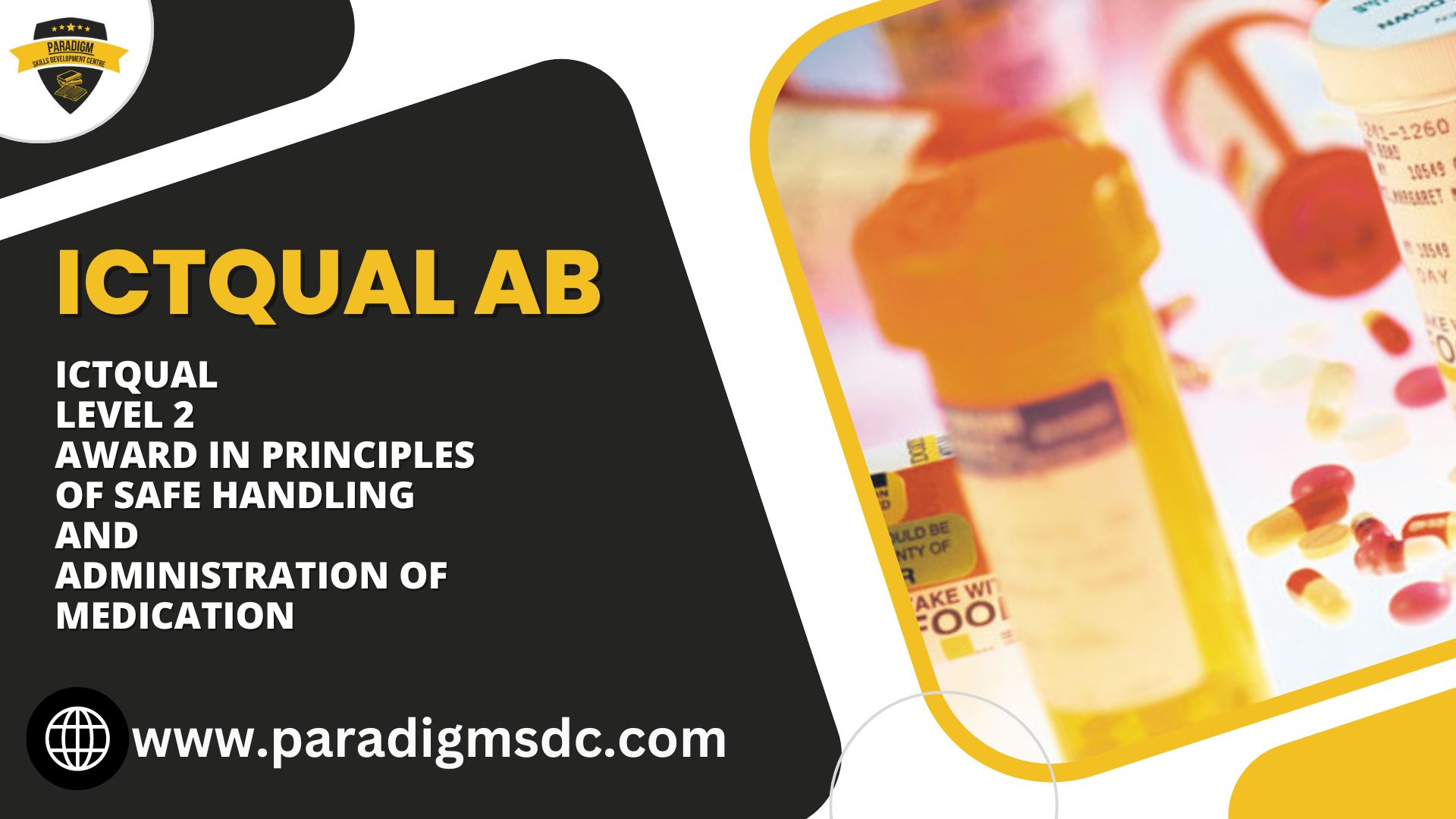
Proper handling and administration of medication are critical components of healthcare and social care settings. The ICTQual Level 2 Award in Principles of Safe Handling and Administration of Medication is designed to provide learners with essential knowledge and skills to ensure medications are managed safely and effectively. This course is vital for anyone involved in the handling, storage, and administration of medication, ensuring compliance with legal and regulatory standards.
Course Overview
The ICTQual Level 2 Award in Principles of Safe Handling and Administration of Medication offers comprehensive training on the principles and practices of medication management. It covers key areas such as legislation, types of medication, safe storage and disposal, and accurate administration techniques. The course ensures that learners are equipped to handle medication safely, reducing the risk of errors and promoting the well-being of individuals under their care.
Course Study Units
The course is divided into several study units, each focusing on crucial aspects of medication management:
- Introduction to Medication Management
- Medication Classification and Pharmacology
- Routes of Medication Administration
- Dosage Calculation and Measurement
- Risk Assessment and Management
- Documentation and Reporting
Learning Outcomes
Upon completing this course, learners will be able to:
Introduction to Medication Management
- Foundational Understanding:
- Gain a comprehensive understanding of medication management principles and their significance in healthcare settings.
- Recognize the importance of safe medication handling and administration in ensuring patient safety and positive outcomes.
- Legal and Ethical Considerations:
- Understand the legal and ethical obligations associated with medication management, including patient confidentiality, informed consent, and professional accountability.
- Appreciate the regulatory frameworks governing medication handling and administration to ensure compliance and mitigate legal risks.
- Role Clarity:
- Define the roles and responsibilities of healthcare professionals in medication management, including prescribing, dispensing, administering, and monitoring medications.
- Understand the importance of effective communication and collaboration among multidisciplinary healthcare teams in medication-related decision-making.
Medication Classification and Pharmacology
- Classification Mastery:
- Identify and classify medications based on their therapeutic effects, mechanisms of action, and pharmacological properties.
- Understand the rationale behind medication classifications and their implications for patient care and treatment outcomes.
- Pharmacological Understanding:
- Develop a comprehensive understanding of pharmacokinetics and pharmacodynamics, including drug absorption, distribution, metabolism, and excretion.
- Recognize the factors influencing medication efficacy, dosing regimens, and potential adverse effects.
- Medication Interactions:
- Identify common medication interactions, including drug-drug, drug-food, and drug-laboratory interactions.
- Understand strategies for managing and minimizing medication interactions to enhance patient safety and treatment effectiveness.
Routes of Medication Administration
- Route Selection:
- Understand the different routes of medication administration, including oral, topical, parenteral, and inhalation routes.
- Evaluate factors influencing route selection based on patient preferences, therapeutic goals, and medication properties.
- Administration Techniques:
- Master the techniques for administering medications via various routes, ensuring accuracy, safety, and patient comfort.
- Demonstrate proficiency in handling medication administration devices and equipment effectively.
Dosage Calculation and Measurement
- Mathematical Proficiency:
- Develop competency in performing dosage calculations and measurements accurately, incorporating patient-specific factors such as weight, age, and condition.
- Understand different units of measurement and conversion factors essential for dosage calculations.
- Error Prevention:
- Implement strategies to prevent dosage calculation errors, including double-checking calculations, using standardized dosing charts, and verifying calculations with colleagues.
Risk Assessment and Management
- Risk Identification:
- Conduct comprehensive risk assessments to identify potential hazards and risks associated with medication handling, administration, and storage.
- Recognize common risk factors contributing to medication errors, adverse drug reactions, and patient harm.
- Risk Mitigation:
- Implement effective risk mitigation strategies to minimize the likelihood of medication errors and adverse events.
- Establish protocols and procedures for handling high-risk medications and situations to ensure patient safety.
Documentation and Reporting
- Documentation Standards:
- Understand the importance of accurate and timely documentation in medication management, including medication administration records (MARs) and drug charts.
- Adhere to legal and regulatory requirements for documenting medication administration, including patient identifiers, medication details, administration times, and signatures.
- Reporting Protocols:
- Recognize the significance of reporting medication errors, near misses, adverse drug reactions, and incidents promptly and accurately.
- Follow established reporting protocols and procedures to facilitate timely investigation, analysis, and corrective action implementation.
Course Benefits
- Enhanced Knowledge: Gain a thorough understanding of medication management principles and practices.
- Practical Skills: Develop the ability to handle and administer medication safely and accurately.
- Professional Development: Improve your credentials and increase your employability in healthcare and social care settings.
- Legal Compliance: Ensure compliance with legal and regulatory standards.
- Confidence: Build confidence in managing medication, knowing you are equipped with the right knowledge and skills.
Who is this Course For?
This course is ideal for:
- Healthcare assistants and support workers
- Social care workers
- Residential and nursing home staff
- Community care workers
- Anyone responsible for handling and administering medication
Future Progression
Upon successful completion of the ICTQual Level 2 Award in Principles of Safe Handling and Administration of Medication, learners can progress to higher-level qualifications or specialized courses, such as:
- ICTQual Level 3 Award in Administering Medication
- ICTQual Level 3 Diploma in Health and Social Care
- Specialized courses in pharmacology, medication management, or healthcare administration
By advancing your knowledge and skills in medication management, you can take on more significant responsibilities in ensuring the safe and effective use of medication in healthcare and social care settings, ultimately contributing to the well-being and safety of individuals under your care.