Course Introduction
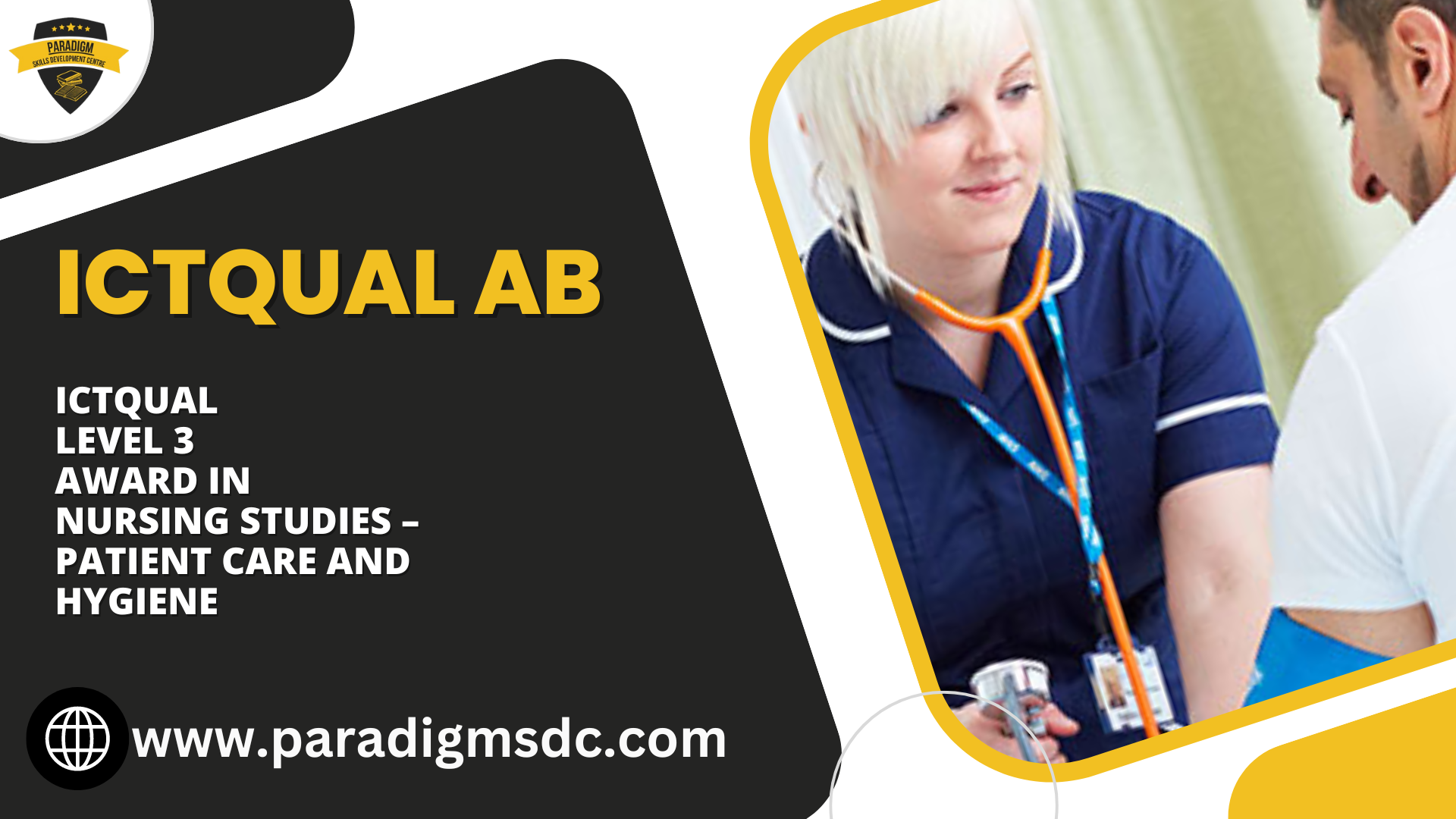
The ICTQual Level 3 Award in Nursing Studies – Patient Care and Hygiene is an advanced course aimed at nursing professionals who seek to enhance their expertise in patient care and hygiene practices. This course is particularly beneficial for those looking to ensure the highest standards of care in their practice, contributing to improved patient outcomes and overall healthcare quality.
Course Overview
This comprehensive course covers a wide range of topics related to patient care and hygiene, blending theoretical knowledge with practical applications. Participants will learn best practices for maintaining hygiene, managing patient care effectively, and ensuring a safe and supportive environment for patients.
Course Study Units
- Introduction to Nursing and Healthcare
- Human Anatomy and Physiology
- Patient Care and Support
- Hygiene and Infection Control
- Communication in Healthcare
- Basic Life Support and First Aid
- Medication Management
- Nutrition and Hydration
- Personal Development and Reflective Practice
Learning Outcomes
By the end of this course, participants will be able to:
Introduction to Nursing and Healthcare
- Understand the Structure of Healthcare Systems:
- Describe the different types of healthcare systems and their functions.
- Identify various healthcare settings and the roles they play in patient care.
- Recognize the Roles and Responsibilities of Nurses:
- Explain the scope of practice for nurses in various healthcare environments.
- Understand the responsibilities and duties of nurses, including patient advocacy and care coordination.
- Apply Ethical and Legal Principles in Nursing:
- Discuss ethical dilemmas commonly faced in nursing.
- Identify key legal issues in healthcare, including patient rights and professional responsibilities.
Human Anatomy and Physiology
- Understand Basic Human Anatomy and Physiology:
- Describe the structure and functions of the major body systems.
- Explain the interrelationship between different body systems.
- Identify Body System Functions and Common Disorders:
- Recognize the normal functions of body systems and identify common disorders.
- Understand how diseases impact the body’s homeostasis.
- Apply Knowledge of Physiology in Patient Care:
- Utilize knowledge of anatomy and physiology to assess patient conditions.
- Explain how physiological principles guide nursing interventions.
Patient Care and Support
- Perform Patient Assessments and Monitoring:
- Demonstrate techniques for assessing patient conditions and monitoring vital signs.
- Understand the importance of accurate documentation in patient care.
- Develop and Implement Care Plans:
- Create individualized care plans based on patient needs.
- Evaluate the effectiveness of care plans and make necessary adjustments.
- Deliver Basic Nursing Care:
- Provide essential nursing care, including assistance with daily living activities.
- Understand the principles of patient mobility and wound care.
Hygiene and Infection Control
- Understand Principles of Hygiene in Healthcare:
- Explain the importance of personal and environmental hygiene.
- Identify common hygiene practices in healthcare settings.
- Implement Infection Control Measures:
- Demonstrate proper hand hygiene and the use of personal protective equipment (PPE).
- Understand sterilization techniques and aseptic procedures.
- Apply Aseptic Techniques:
- Perform aseptic techniques to prevent contamination during medical procedures.
- Recognize the importance of infection control in patient safety.
Communication in Healthcare
- Develop Effective Communication Skills:
- Use verbal and non-verbal communication techniques effectively.
- Demonstrate active listening skills and empathy in patient interactions.
- Enhance Patient Interaction:
- Build rapport and trust with patients and their families.
- Communicate clearly and compassionately with diverse patient populations.
- Collaborate with Healthcare Teams:
- Work effectively within a multidisciplinary healthcare team.
- Understand the role of communication in ensuring coordinated patient care.
Basic Life Support and First Aid
- Perform CPR and Use AEDs:
- Demonstrate the steps of cardiopulmonary resuscitation (CPR) for adults, children, and infants.
- Understand the operation and application of automated external defibrillators (AEDs).
- Manage Medical Emergencies:
- Identify and provide initial care for common medical emergencies.
- Understand the principles of emergency first aid and patient stabilization.
- Recognize Early Signs of Deterioration:
- Identify early warning signs of patient deterioration.
- Implement appropriate interventions and escalate care when necessary.
Medication Management
- Understand Safe Medication Administration:
- Explain the principles of safe medication administration, including the “five rights”.
- Demonstrate accurate medication dosage calculations.
- Apply Pharmacology Basics in Nursing:
- Understand drug classifications, mechanisms of action, and side effects.
- Administer medications safely and monitor patient responses.
- Recognize and Report Medication Errors:
- Identify common causes of medication errors and strategies to prevent them.
- Understand the importance of reporting and documenting medication errors.
Nutrition and Hydration
- Understand Nutritional Needs of Patients:
- Explain the dietary requirements for different patient populations.
- Understand the role of nutrition in maintaining health and managing diseases.
- Promote Proper Hydration:
- Recognize the signs of dehydration and the importance of maintaining hydration.
- Assist patients with fluid intake and monitor hydration levels.
- Assist with Feeding and Dietary Plans:
- Provide assistance to patients with eating and ensure safe swallowing.
- Develop and implement dietary plans that meet patient needs.
Personal Development and Reflective Practice
- Engage in Self-Assessment and Reflective Practice:
- Use self-assessment tools to evaluate personal strengths and areas for improvement.
- Apply reflective practices to enhance nursing skills and professional growth.
- Pursue Professional Development Opportunities:
- Identify and participate in continuing education and professional development activities.
- Understand the importance of lifelong learning in nursing.
- Manage Work-Related Stress:
- Recognize the signs of work-related stress and employ stress management techniques.
- Develop resilience and coping strategies to maintain personal well-being.
Course Benefits
- Comprehensive Knowledge: Gain a thorough understanding of patient care and hygiene in nursing.
- Practical Skills: Develop practical skills for maintaining hygiene and delivering patient care.
- Enhanced Professionalism: Improve your professional standards and contribute to better patient outcomes.
- Career Advancement: Enhance your qualifications and career prospects in the nursing field.
Who is This Course For?
This course is ideal for:
- Registered nurses looking to enhance their patient care skills
- Nursing assistants and aides aiming to improve their practice
- Healthcare professionals seeking to specialize in patient care and hygiene
- Nursing students preparing for advanced roles in healthcare
- Any individuals interested in elevating their nursing practice standards
Future Progression
Completing the ICTQual Level 3 Award in Nursing Studies – Patient Care and Hygiene opens up several opportunities for further professional development:
- Advanced Nursing Courses: Pursue higher-level certifications and degrees in nursing and healthcare.
- Specialist Roles: Move into specialist roles such as infection control nurse, patient care coordinator, or hygiene specialist.
- Leadership Positions: Take on supervisory and leadership roles in healthcare institutions.
Conclusion
The ICTQual Level 3 Award in Nursing Studies – Patient Care and Hygiene is a crucial course for nursing professionals dedicated to providing exceptional care. By offering a blend of theoretical knowledge and practical skills, this course prepares participants to uphold the highest standards of patient care and hygiene. Whether you are a seasoned nurse, a nursing assistant, or a healthcare professional, this course will enhance your abilities and contribute to better patient outcomes. Elevate your nursing practice and make a significant impact on patient care with the ICTQual Level 3 Award in Nursing Studies – Patient Care and Hygiene.