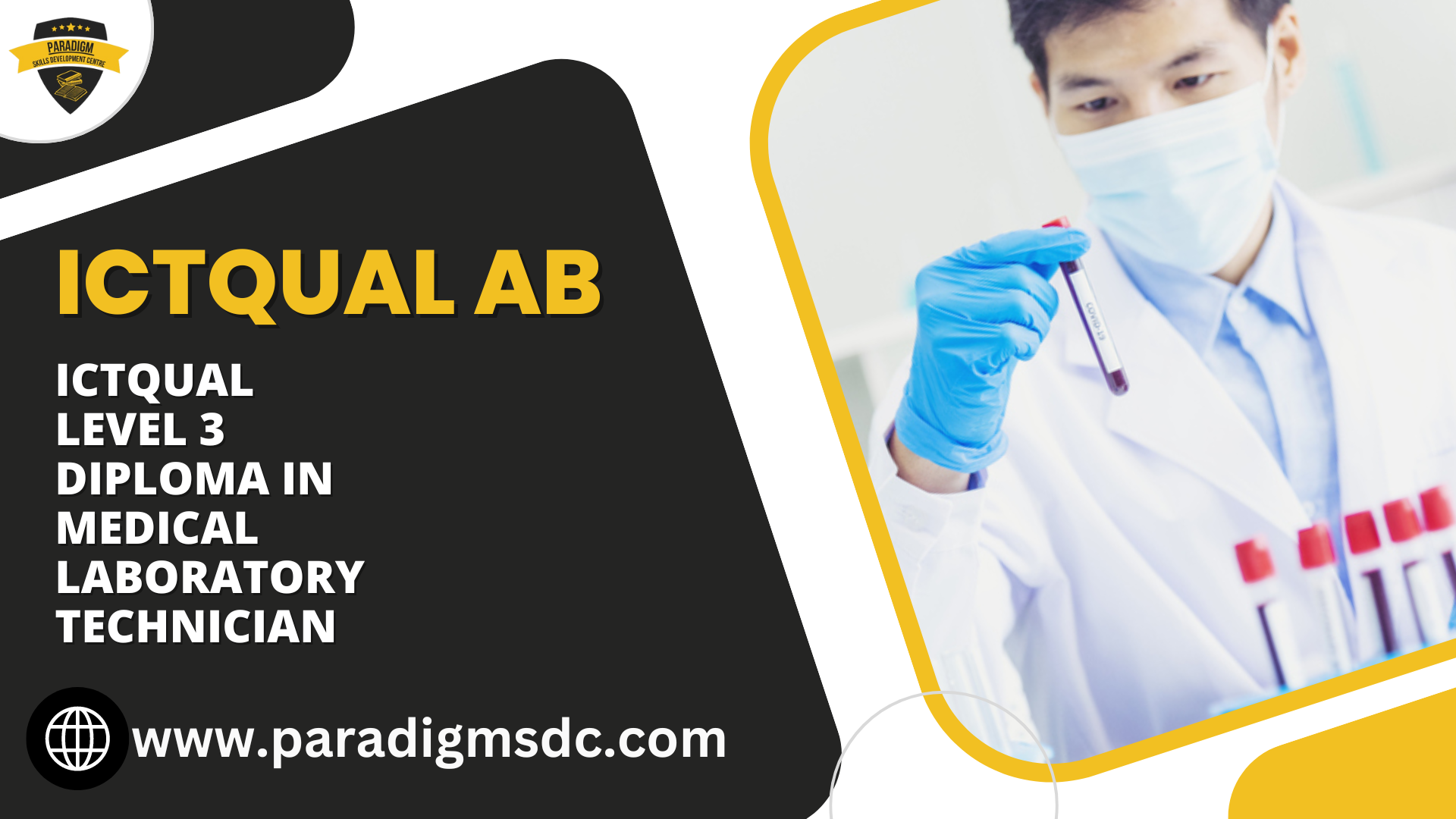
Course Introduction
The ICTQual Level 3 Diploma in Medical Laboratory Technician is an extensive program tailored for individuals aspiring to excel as medical laboratory technicians. This course offers an in-depth understanding of laboratory procedures, diagnostic testing, and patient care. By combining theoretical knowledge with practical training, students are well-prepared to enter the workforce as competent and skilled technicians.
Course Overview
Spanning several months, this diploma course covers a broad range of topics essential for a career in medical laboratory technology. The curriculum includes detailed studies of medical sciences, laboratory techniques, and the use of diagnostic equipment. Practical training sessions and clinical placements provide hands-on experience, ensuring students are ready to meet industry standards.
Course Study Units
- Introduction to Medical Laboratory Science
- Clinical Pathology
- Laboratory Techniques and Procedures
- Quality Assurance and Quality Control
- Instrumentation and Automation
- Medical Terminology and Documentation
- Clinical Practicum
- Professional Development and Career Readiness
Learning Outcomes
Upon completing this course, students will be able to:
- Introduction to Medical Laboratory Science
- Understand the role and importance of Medical Laboratory Technicians in healthcare.
- Identify key laboratory safety protocols, standard operating procedures, and regulatory requirements.
- Familiarize with essential laboratory equipment, instruments, and software used in medical laboratory settings.
- Clinical Pathology
- Demonstrate proficiency in principles and practices of clinical pathology disciplines, including hematology, clinical chemistry, microbiology, and immunology.
- Interpret laboratory results accurately and correlate findings with clinical presentations to aid in disease diagnosis and monitoring.
- Apply knowledge of clinical pathology concepts to enhance patient care and treatment decisions.
- Laboratory Techniques and Procedures
- Develop competency in laboratory techniques for specimen collection, processing, and analysis.
- Perform routine laboratory tests accurately and efficiently, including blood counts, urinalysis, and biochemical assays.
- Apply proper laboratory techniques and procedures to maintain sample integrity and ensure reliable test results.
- Quality Assurance and Quality Control
- Understand the importance of quality assurance in medical laboratory practice and its impact on patient care.
- Implement quality control measures to monitor and maintain the accuracy, precision, and reliability of laboratory test results.
- Comply with regulatory standards, accreditation requirements, and proficiency testing programs to ensure quality assurance in laboratory operations.
- Instrumentation and Automation
- Demonstrate proficiency in the operation, calibration, and maintenance of laboratory instrumentation and automated systems.
- Troubleshoot instrument malfunctions and perform basic repairs under supervision to ensure uninterrupted laboratory operations.
- Utilize laboratory instrumentation and automation to optimize workflow efficiency and enhance productivity in medical laboratory settings.
- Medical Terminology and Documentation
- Acquire and apply medical terminology used in laboratory reports, patient records, and communication with healthcare professionals.
- Demonstrate proficiency in documenting laboratory results accurately and maintaining comprehensive patient records in compliance with confidentiality and privacy laws.
- Understand the importance of clear and concise medical documentation in facilitating communication and continuity of care within the healthcare team.
- Clinical Practicum
- Apply theoretical knowledge and practical skills in real-world laboratory settings through supervised clinical practicum experiences.
- Perform laboratory tests, interact with patients, and collaborate with healthcare professionals to deliver high-quality patient care.
- Demonstrate professionalism, ethical conduct, and adherence to safety protocols during clinical practicum activities.
- Professional Development and Career Readiness
- Identify career opportunities and pathways for advancement in medical laboratory science.
- Develop professional skills, including communication, teamwork, problem-solving, and critical thinking, to enhance effectiveness in the workplace.
- Prepare for certification exams, job interviews, and entry into the workforce as competent and confident Medical Laboratory Technicians.
Course Benefits
- Expert Instruction: Learn from experienced professionals in medical laboratory technology.
- Hands-On Experience: Gain practical skills through laboratory simulations and clinical placements.
- Comprehensive Curriculum: Cover all essential aspects of medical laboratory technology.
- Career Readiness: Be prepared to enter the workforce as a qualified medical laboratory technician.
- Recognized Qualification: Earn a diploma that enhances your career prospects in the healthcare industry.
Who is this Course For?
This course is ideal for:
- Individuals aspiring to start a career as a medical laboratory technician.
- Current healthcare workers looking to expand their skills and knowledge.
- Students interested in pursuing a career in medical laboratory technology.
- Professionals seeking to transition into the healthcare field with a focus on laboratory work.
Future Progression
Graduates of the ICTQual Level 3 Diploma in Medical Laboratory Technician can explore various career opportunities and further education options, including:
- Employment: Work as a medical laboratory technician in hospitals, diagnostic laboratories, research facilities, and clinics.
- Advanced Certifications: Pursue specialized certifications in areas such as clinical chemistry, hematology, or molecular biology.
- Higher Education: Enroll in advanced degree programs in medical laboratory science, biotechnology, or related healthcare fields.
- Specializations: Focus on specific areas like pathology, microbiology, or clinical research for career advancement.
The ICTQual Level 3 Diploma in Medical Laboratory Technician is more than just a qualification; it’s a stepping stone to a fulfilling career dedicated to improving patient outcomes and advancing medical science. If you’re passionate about healthcare and diagnostics, this diploma is your gateway to success. Start your journey today and become a vital part of the healthcare community.