Course Introduction
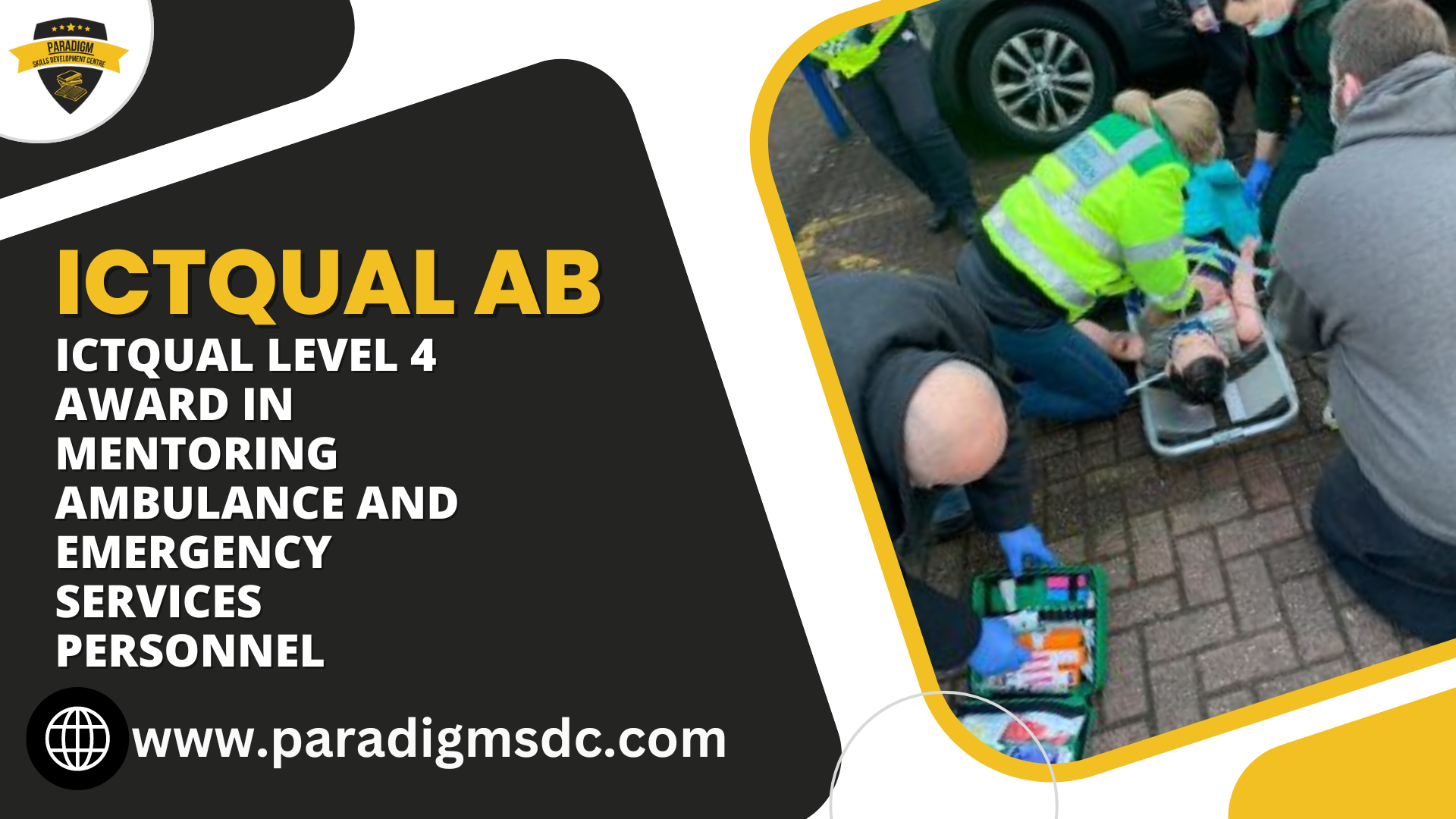
The ICTQual Level 4 Award in Mentoring Ambulance and Emergency Services Personnel is a specialized qualification aimed at those who are involved in mentoring or coaching within the ambulance and emergency services sectors. The course equips participants with the competencies required to guide, support, and develop personnel, ensuring that they meet the demanding standards of these vital roles.
Course Overview
This award focuses on enhancing the mentoring capabilities of professionals working in emergency services. It covers various aspects of mentoring, including practical techniques, communication skills, and the development of effective mentoring relationships. Participants will gain a deep understanding of the role of a mentor and learn how to apply best practices to foster growth and performance in their mentees.
Course Study Units
The ICTQual Level 4 Award is structured into several key units:
- Introduction to Emergency Response Systems
- Psychological Support and Resilience Building
- Professional Development and Career Guidance
- Ethical and Legal Considerations
- Evaluation and Continuous Improvement
Learning Outcomes
Upon completion of the ICTQual Level 4 Award, participants will be able to:
- Introduction to Emergency Response Systems:
- Understand the structure and organization of ambulance and emergency services systems.
- Identify the roles and responsibilities of different emergency responders within the system.
- Explain the importance of coordination, communication, and collaboration in emergency response operations.
- Demonstrate knowledge of relevant laws, regulations, and protocols governing emergency response activities.
- Analyze real-life scenarios to apply theoretical knowledge to practical situations in emergency response.
- Psychological Support and Resilience Building:
- Recognize signs of stress, trauma, and burnout in emergency service personnel.
- Apply techniques for providing immediate psychological support during and after critical incidents.
- Implement strategies to promote resilience and coping mechanisms among emergency responders.
- Communicate effectively with individuals experiencing psychological distress, demonstrating empathy and compassion.
- Develop personal self-care plans to mitigate the impact of exposure to traumatic events in the workplace.
- Professional Development and Career Guidance:
- Assist mentees in setting SMART (Specific, Measurable, Achievable, Relevant, Time-bound) goals for their professional development.
- Identify relevant training, educational, and certification opportunities within the emergency services field.
- Provide guidance on career progression pathways and leadership development initiatives.
- Support mentees in developing skills such as problem-solving, decision-making, and communication to advance their careers.
- Foster a culture of continuous learning and self-improvement among mentees through regular feedback and reflection.
- Ethical and Legal Considerations:
- Understand the ethical principles and professional standards governing mentorship relationships.
- Adhere to confidentiality requirements and respect the privacy rights of mentees.
- Navigate ethical dilemmas and conflicts of interest that may arise in mentorship contexts.
- Comply with relevant legal and organizational guidelines when providing mentorship services.
- Uphold integrity and transparency in all interactions with mentees, colleagues, and stakeholders.
- Evaluation and Continuous Improvement:
- Establish clear criteria and benchmarks for evaluating mentee progress and performance.
- Solicit feedback from mentees, peers, and supervisors to assess the effectiveness of mentorship interventions.
- Use data and feedback to identify areas for improvement in mentorship practices.
- Engage in reflective practice to evaluate personal strengths, weaknesses, and areas for growth as a mentor.
- Develop action plans for ongoing professional development and enhancement of mentoring skills.
Course Benefits
The ICTQual Level 4 Award offers numerous benefits, including:
- Enhanced Mentoring Skills: Participants gain advanced skills in mentoring, which can significantly improve the performance and development of their mentees.
- Professional Development: The course supports personal growth and enhances career prospects for professionals in emergency services.
- Improved Team Performance: Effective mentoring can lead to better team cohesion, higher job satisfaction, and improved overall performance in emergency services.
- Recognition: Achieving this award demonstrates a commitment to high standards in mentoring and can enhance professional credibility.
Who is This Course For?
The ICTQual Level 4 Award is ideal for:
- Experienced professionals working in ambulance and emergency services who are involved in mentoring or coaching roles.
- Team leaders, supervisors, and managers who wish to develop their mentoring skills and enhance their ability to support and guide their team members.
- Those aspiring to move into mentoring roles within the emergency services sector.
Future Progression
Completing the ICTQual Level 4 Award in Mentoring Ambulance and Emergency Services Personnel opens several avenues for further development:
- Advanced Qualifications: Participants may pursue higher-level qualifications in leadership, management, or specialized mentoring to further enhance their skills.
- Career Advancement: The skills gained can lead to advanced roles within emergency services, such as senior management or specialized training positions.
- Professional Development: Continuous professional development opportunities, including workshops and additional certifications, can further support career growth and effectiveness in mentoring roles.
In summary, the ICTQual Level 4 Award in Mentoring Ambulance and Emergency Services Personnel provides a robust framework for developing high-quality mentoring skills. It supports professionals in enhancing their ability to guide and support their colleagues, ultimately leading to improved performance and career advancement in the emergency services sector.