Course Introduction
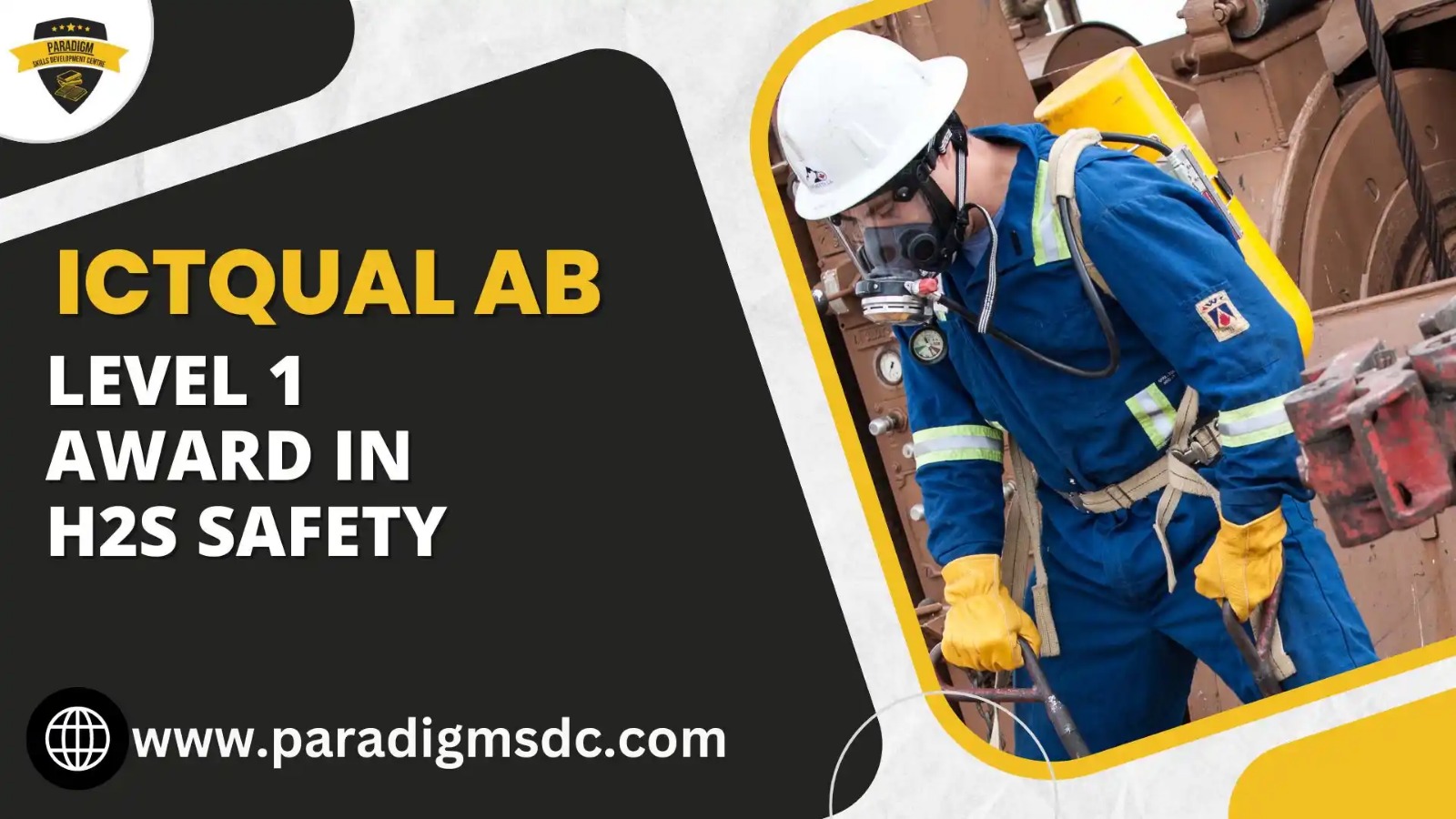
Hydrogen Sulfide (H2S) is a highly toxic gas that poses significant risks in various industrial settings, particularly in oil and gas operations. The ICTQual Level 1 Award in H2S Safety course is designed to equip individuals with the essential knowledge and skills to recognize, respond to, and mitigate the dangers associated with H2S exposure. This foundational course ensures that participants are prepared to work safely in environments where H2S is a potential hazard.
Course Overview
The ICTQual Level 1 Award in H2S Safety provides a comprehensive introduction to H2S safety principles and practices. Participants will learn about the properties of H2S, detection methods, personal protective equipment (PPE), and emergency response procedures. The course combines theoretical knowledge with practical exercises to ensure that participants can apply what they have learned in real-world situations.
Course Study Units
- Introduction to Hydrogen Sulfide (H2S)
- Health Risks and Symptoms of H2S Exposure
- Detection and Monitoring of H2S
- Safety Procedures and Emergency Response
- Personal Protective Equipment (PPE)
- Legislative and Regulatory Requirements
Learning Outcomes
Upon completing the course, participants will:
. Introduction to Hydrogen Sulfide (H2S)
- Understand the basic properties and characteristics of hydrogen sulfide (H2S).
- Identify common sources and environments where H2S may be present.
- Describe the physical and chemical properties of H2S, including its smell, color, and states under various conditions.
- Recognize the industrial processes and natural occurrences that can produce H2S.
2. Health Risks and Symptoms of H2S Exposure
- Explain how hydrogen sulfide affects human health.
- Identify the short-term and long-term health effects of H2S exposure.
- Recognize the early warning signs and symptoms of H2S poisoning.
- Understand the stages of H2S exposure and the corresponding symptoms at different concentration levels.
3. Detection and Monitoring of H2S
- Demonstrate knowledge of different types of H2S detection equipment, including portable and fixed gas detectors.
- Properly use and maintain H2S detection devices.
- Implement monitoring techniques to measure H2S levels in the workplace accurately.
- Interpret readings from H2S detection equipment and understand the significance of detection limits.
4. Safety Procedures and Emergency Response
- Follow standard operating procedures for working safely in areas where H2S is present.
- Develop and implement effective pre-entry and post-exit procedures for H2S-prone areas.
- Execute emergency response actions in the event of an H2S leak or exposure incident.
- Create and follow evacuation plans, including identifying muster points and ensuring proper communication.
- Provide first aid and appropriate medical response for H2S exposure victims.
5. Personal Protective Equipment (PPE)
- Identify the types of personal protective equipment (PPE) used for H2S protection.
- Select appropriate PPE based on the level of H2S risk and workplace requirements.
- Properly don, doff, inspect, and maintain H2S-related PPE, including respirators and gas masks.
- Ensure the effective use and longevity of PPE through proper maintenance and storage practices.
6. Legislative and Regulatory Requirements
- Understand the local and international regulations and standards related to H2S safety.
- Comprehend compliance requirements and the legal responsibilities of employers and employees regarding H2S safety.
- Apply industry best practices for H2S safety as recommended by regulatory bodies and safety organizations.
- Stay informed about updates and changes in legislation and standards concerning H2S.
Course Benefits
- Enhanced Safety: Gain crucial knowledge to ensure personal and team safety in H2S environments.
- Practical Skills: Acquire hands-on experience with detection equipment and emergency response.
- Compliance: Ensure adherence to industry regulations and standards regarding H2S safety.
- Career Advancement: Improve qualifications and employability in industries where H2S exposure is a risk.
- Peace of Mind: Work confidently in hazardous environments knowing you are well-prepared for H2S risks.
Who is this Course For?
This course is ideal for:
- Oil and gas industry workers
- Chemical plant operators
- Industrial maintenance personnel
- Safety officers and supervisors
- Emergency response teams
- Anyone working in environments where H2S may be present
Future Progression
After completing the ICTQual Level 1 Award in H2S Safety, participants can advance their knowledge and skills through further training and certifications, such as:
- ICTQual Level 2 Award in H2S Safety and Risk Management
- Advanced H2S Safety and Response courses
- Certifications in industrial safety and emergency response
- Specialized training in hazardous materials management
By investing in the ICTQual Level 1 Award in H2S Safety, individuals and organizations can significantly enhance their preparedness and response capabilities, ensuring safer working conditions and compliance with safety regulations. This course is a vital step towards building a robust safety culture in any industry where H2S exposure is a concern.