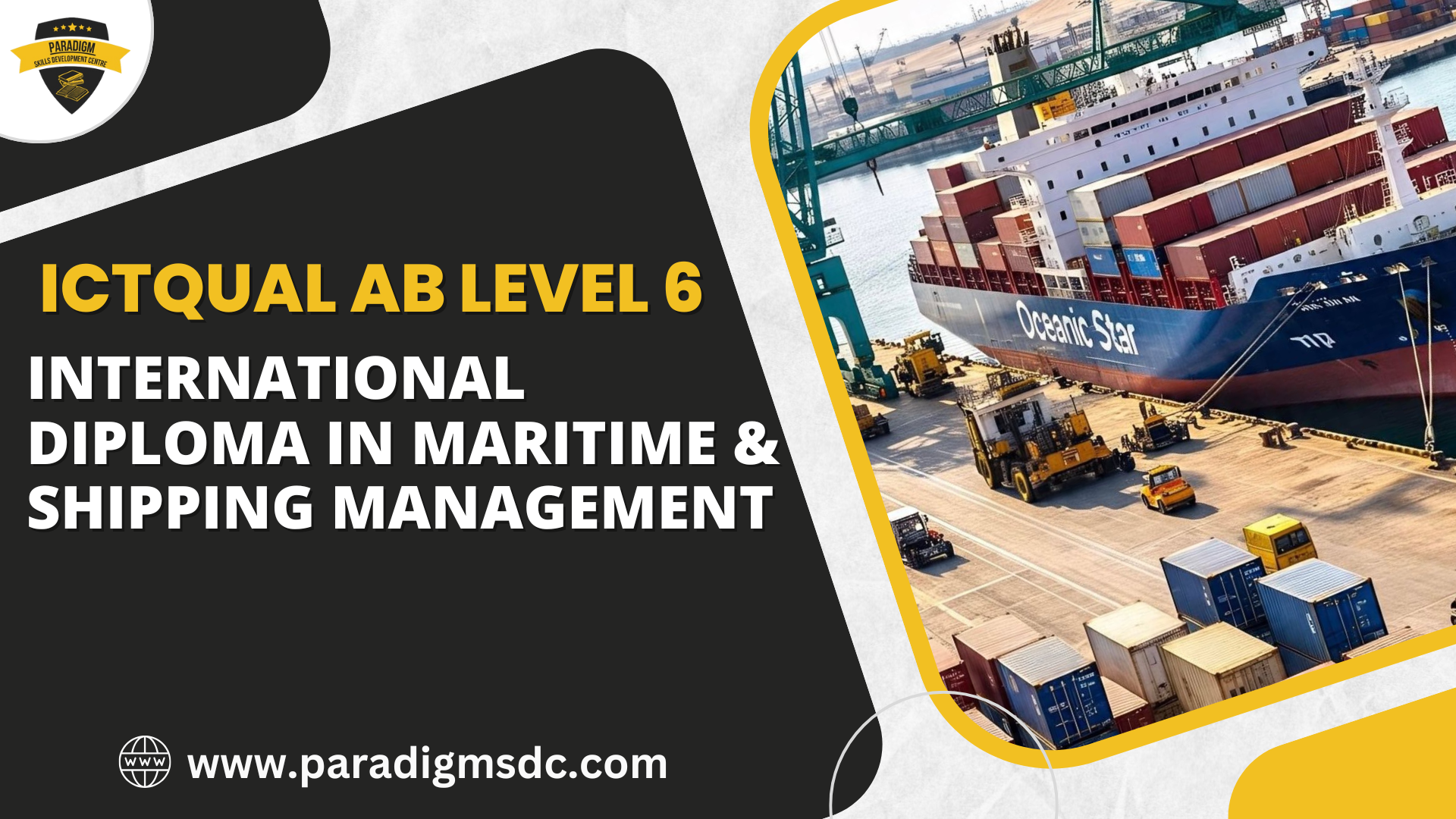
The global maritime and shipping industry is the backbone of international trade, carrying more than 80% of the world’s goods. As the sector continues to expand and adapt to new technologies, sustainability standards, and global trade complexities, the need for highly skilled maritime professionals has never been greater.
The ICTQual AB Level 6 International Diploma in Maritime & Shipping Management is a three-year, 360-credit programme designed to prepare learners for leadership and specialised roles across this dynamic industry. Unlike general management courses, this qualification focuses directly on the realities of maritime operations, logistics coordination, port and vessel management, maritime law, and shipping administration.
Learners will gain an in-depth understanding of how ships, ports, and global supply chains function, while also developing expertise in international trade practices, environmental compliance, risk management, and emerging maritime technologies. Through a combination of theoretical learning, case studies, and applied simulations, the programme blends academic knowledge with practical maritime management skills.
This diploma is suited to both newcomers and working professionals. Fresh learners will develop a solid grounding in shipping operations, maritime safety, and logistics management, progressing toward advanced decision-making and leadership competencies. Experienced learners, particularly those already in the shipping, logistics, or trade sectors, can build on their prior knowledge to strengthen strategic insight and industry influence.
By the end of the programme, graduates will be ready to take on roles that demand responsibility, analytical thinking, and operational expertise in the maritime and shipping domain. Whether advancing toward port management, shipping consultancy, or international logistics leadership, learners will be equipped to contribute to a safer, more efficient, and more sustainable global shipping industry.
Entry Requirements
To enrol in the ICTQual AB Level 6 International Diploma in Maritime & Shipping Management, learners must meet the following criteria:
- Age Requirement: Minimum 18 years at the time of registration.
- Educational Background: A recognised Level 5 qualification in maritime studies, logistics, shipping management, international trade, or a related discipline.
- Candidates without formal qualifications but with significant professional experience may be considered.
- Professional Experience:
- Fresh learners: No prior experience required.
- Experienced learners: 3–5 years of relevant work in shipping, maritime operations, logistics, or port management preferred.
- English Proficiency: IELTS 5.5 or equivalent, or proof of prior study/work in English.
- Commitment: Ability to complete a three-year (360-credit) programme, including practical and applied learning activities.
Programme Structure
The qualification consists of 36 mandatory study units delivered across three academic years.
Year 1 – Foundations of Maritime & Shipping Management
- Introduction to Maritime & Shipping Industry
- Principles of Shipping Operations
- International Trade and Logistics Fundamentals
- Maritime Law and Regulatory Frameworks
- Port Operations and Management Basics
- Ship Types, Classification, and Vessel Management
- Maritime Safety and Security Principles
- Environmental Sustainability in Shipping
- Supply Chain and Transport Management
- Principles of Risk Management in Maritime Operations
- Introduction to Maritime Economics
- Professional Ethics and Communication in Shipping
Year 2 – Applied Maritime Operations & Management
- Advanced Shipping Operations and Planning
- Vessel Chartering and Freight Management
- Maritime Logistics and Supply Chain Integration
- Port Management and Terminal Operations
- Maritime Insurance and Risk Mitigation
- Crisis Management and Emergency Response in Shipping
- Shipping Finance and Budgeting
- Environmental Compliance and Marine Pollution Control
- Technology and Digitalisation in Maritime Industry
- Project Management in Maritime Operations
- Human Resource Management in Shipping Organisations
- Applied Case Studies and Operational Simulations
Year 3 – Strategic Leadership & Advanced Maritime Management
- Strategic Management in Maritime & Shipping Industry
- International Maritime Policies and Governance
- Maritime Trade Law and Contract Management
- Leadership and Decision-Making in Shipping Operations
- Advanced Risk and Safety Management in Maritime Sector
- Port and Terminal Strategic Planning
- Global Supply Chain Management for Maritime Trade
- Innovation and Emerging Technologies in Shipping
- Sustainability and Climate Change Adaptation in Shipping
- Research Methods for Maritime Management
- Independent Research Project in Maritime & Shipping Management
- Capstone Project: Applied Maritime & Shipping Strategy
Career Opportunities
Graduates will be prepared for a variety of specialised and leadership positions in the maritime and shipping sector, such as:
- Maritime Operations Manager – Oversee vessel operations, crew management, and cargo handling.
- Shipping and Logistics Coordinator – Manage international shipping schedules and optimise supply chains.
- Port and Terminal Manager – Lead port operations, ensure safety and regulatory compliance.
- Maritime Safety and Compliance Officer – Develop and monitor adherence to safety protocols and maritime laws.
- Fleet and Vessel Manager – Manage ship performance, maintenance, and operational planning.
- Crisis and Emergency Response Coordinator – Direct contingency operations for maritime incidents.
- Shipping Consultant / Advisory Specialist – Provide expert guidance on shipping operations and regulations.
- Environmental & Sustainability Officer – Implement green shipping initiatives and monitor environmental impacts.