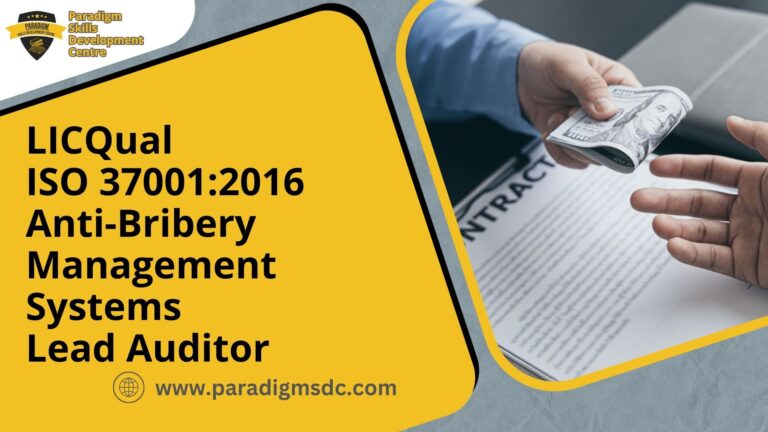
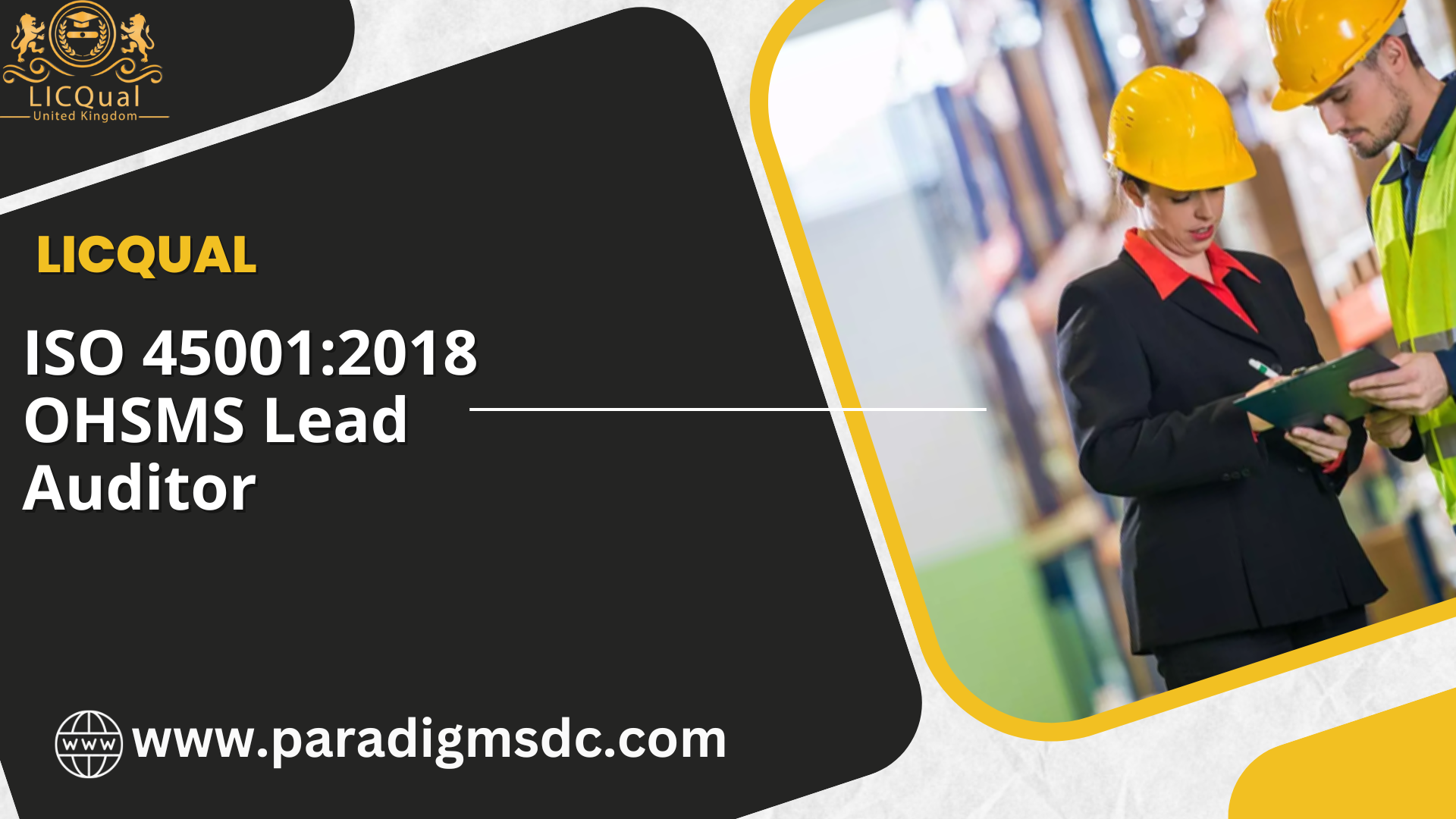
The LICQual ISO 45001:2018 OHSMS course is designed for professionals who want to develop advanced skills in auditing Occupational Health and Safety Management Systems (OHSMS) according to ISO 45001:2018 standards. This globally recognized course provides in-depth knowledge of the ISO 45001:2018 framework, equipping participants with the tools to assess, audit, and improve safety management systems within any organization.
Whether you’re aiming to become a certified lead auditor or enhance your auditing capabilities, this course will give you the expertise to ensure your organization meets high safety and compliance standards.
ISO 45001:2018 provides a comprehensive approach to improving occupational health and safety (OHS) within organizations by reducing workplace hazards and enhancing overall safety culture. The LICQual ISO 45001:2018 OHSMS course covers the key principles of ISO 45001:2018, including risk assessment, hazard identification, and the development of safety management systems. Participants will gain hands-on experience in planning, conducting, and reporting on OHSMS audits, ensuring that safety protocols are effectively implemented.
The course emphasizes practical auditing skills, such as audit planning, evidence collection, and reporting audit findings, while ensuring that safety management systems meet the ISO 45001:2018 requirements. By the end of the course, you’ll be fully equipped to lead ISO 45001 audits, assess OHSMS effectiveness, and provide valuable insights into improving organizational health and safety practices.
Ideal for OHS managers, auditors, and safety professionals, this course offers the knowledge and tools needed to elevate your organization’s commitment to employee safety and regulatory compliance.
Study Units:
| Qualification# | Unit Title | Credits | GLH |
|---|---|---|---|
| LICQ2200097-1 | Introduction to ISO 45001:2018 and OHSMS | 8 | 24 |
| LICQ2200097-2 | Risk Assessment and Hazard Identification in OHSMS | 8 | 24 |
| LICQ2200097-3 | Planning and Conducting OHSMS Audits | 6 | 18 |
| LICQ2200097-4 | Leadership and Employee Involvement in OHSMS | 6 | 18 |
| LICQ2200097-5 | Internal Auditing and Corrective Actions in OHSMS | 6 | 18 |
| LICQ2200097-6 | Continuous Improvement and Compliance in OHSMS | 6 | 18 |
Learning Outcome:
Introduction to ISO 45001:2018 and OHSMS
- Demonstrate a clear understanding of the ISO 45001:2018 standard and the core principles of Occupational Health and Safety Management Systems (OHSMS).
- Analyze the structure and objectives of ISO 45001:2018, recognizing its significance in enhancing workplace safety.
- Identify the key components of an effective OHSMS and explain their roles in reducing workplace hazards and ensuring regulatory compliance.
Risk Assessment and Hazard Identification in OHSMS
- Apply risk assessment methodologies to identify and evaluate workplace hazards in compliance with ISO 45001:2018.
- Develop effective strategies to mitigate identified risks, enhancing the overall safety culture within the organization.
- Demonstrate the ability to integrate risk management processes into the OHSMS, ensuring continual safety improvements.
Planning and Conducting OHSMS Audits
- Plan, execute, and manage OHSMS audits in alignment with ISO 45001:2018 standards.
- Collect evidence, analyze audit results, and report audit findings effectively, ensuring the health and safety management system is operating as required.
- Demonstrate proficiency in audit techniques, such as sampling, interviewing, and observation, to assess OHSMS performance.
Leadership and Employee Involvement in OHSMS
- Understand the leadership roles and responsibilities in implementing and maintaining an effective OHSMS.
- Recognize the importance of employee participation in fostering a strong safety culture and continuous improvement in health and safety practices.
- Develop leadership strategies to encourage organizational commitment to ISO 45001:2018’s health and safety goals.
Internal Auditing and Corrective Actions in OHSMS
- Conduct thorough internal audits of OHSMS processes, identifying non-conformities and areas for improvement.
- Recommend and follow up on corrective actions to address identified deficiencies, ensuring corrective measures align with ISO 45001:2018 requirements.
- Improve internal auditing practices and the overall effectiveness of the OHSMS through continuous monitoring and evaluation.
Continuous Improvement and Compliance in OHSMS
- Apply principles of continuous improvement to optimize OHSMS performance and ensure long-term compliance with ISO 45001:2018.
- Use audit findings, risk assessments, and employee feedback to drive ongoing enhancements in health and safety management.
- Demonstrate the ability to integrate corrective actions, lessons learned, and performance metrics into a cycle of continual safety system improvement.